Coloring tips: How to color Clover And Little Pond coloring page well?
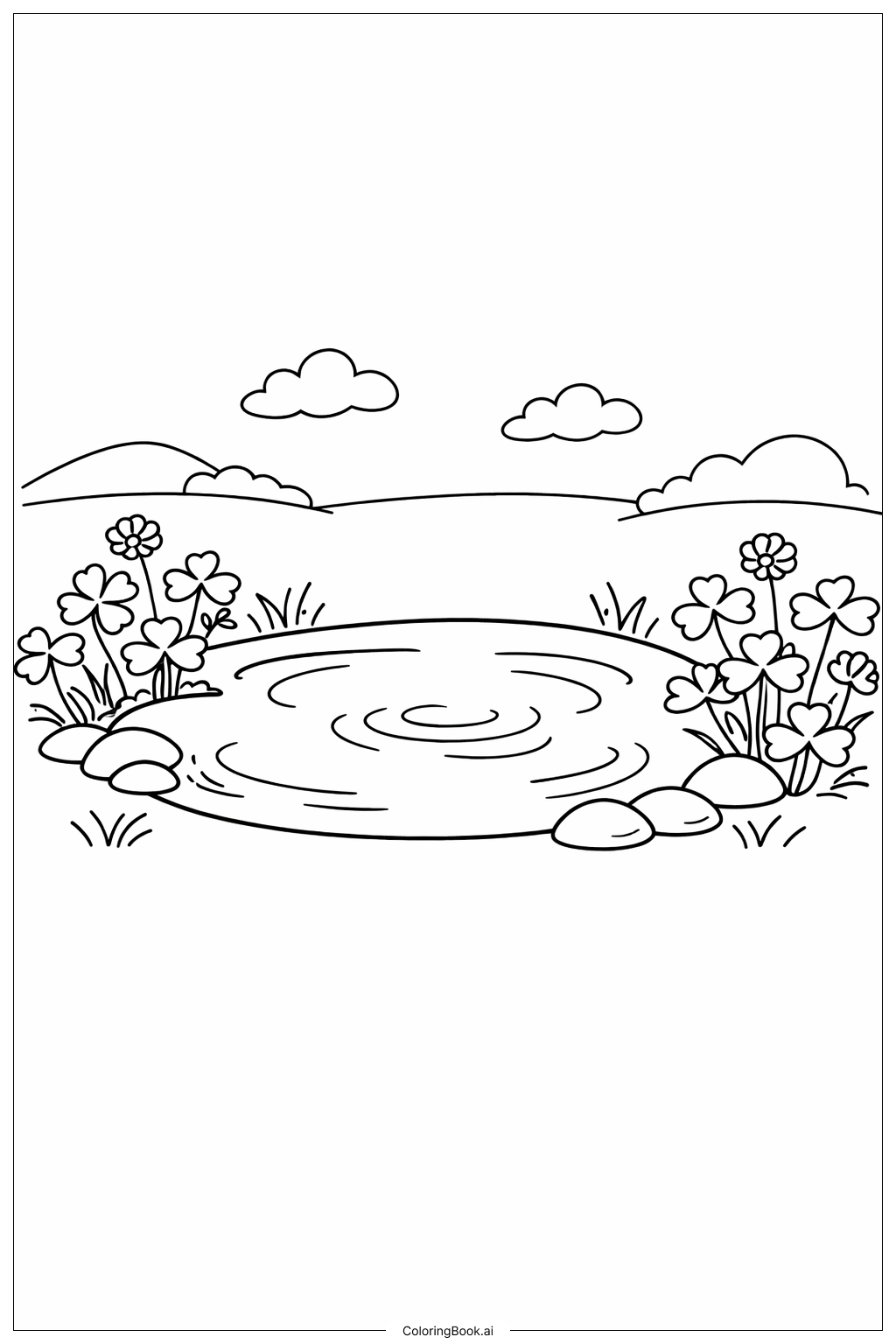
Start with the clover leaves using different shades of green. Mix light green and dark green to give each leaf depth and variety. Use a slightly darker green for the stems and veins on the leaves. For the pond, try soft blues and blue-greens to capture still, calm water. Add lighter streaks or white space to show reflections and gentle ripples on the surface. Color the lily pads with a medium green and give them a darker outline. Paint the frogs in bright green or olive tones, with lighter bellies. Use tan, beige, or golden yellow for the reeds and grasses. Small flowers can be colored in white, yellow, or soft pink to add cheerful pops of color. Feel free to add a light blue or pale lavender sky peeking in at the edges. Keep the overall palette fresh and natural, sticking to greens, blues, and earthy tones for a calming, nature-inspired look.
Coloring challenges: Which parts are difficult to color and need attention for Clover And Little Pond coloring page?
• Clover Leaf Clusters: The overlapping clover leaves create many small, closely packed shapes. Staying inside the lines of each individual leaf without smudging neighboring areas can be tricky. Using a sharp pencil or a fine-tipped marker will help you keep edges clean and neat.
• Water Ripple Effects: Coloring the pond to look like real water takes patience. The ripple lines are thin and circular, and blending blues smoothly without streaks requires a light hand. Layering colors gradually from darker edges to a lighter center can help create a convincing water effect.
• Lily Pad Details: Each lily pad has subtle line details and a small notch cut into it. These fine lines are easy to accidentally color over. Try outlining each lily pad carefully first, then fill in color, leaving the detail lines visible for a polished result.
• Frog and Tiny Animal Features: The small frogs have tiny facial features and textured skin patterns. These details are very small, making them hard to color neatly. A fine-point tool works best here, and you can use slightly different tones of green to suggest texture without losing the details.
• Background Grasses and Reeds: The tall reeds and grasses in the background overlap each other and the main scene elements. Deciding which grass blade goes in front of another and keeping their colors distinct requires careful attention. Using two or three slightly different shades of tan and gold will help separate them visually without making the background too busy.
Benefits of coloring books: Advantages of drawing Clover And Little Pond coloring page
Coloring this Clover And Little Pond page offers a wide range of benefits for children and adults alike. The natural, calming theme of clover and water helps reduce stress and promotes a sense of relaxation while you color. Focusing on the many small details, like individual clover leaves, rippling water, and tiny frogs, strengthens fine motor skills and hand-eye coordination, especially in younger children. Choosing colors for plants, water, and animals encourages creative thinking and decision-making. Kids learn about nature as they identify and color different elements like lily pads, reeds, and frogs, making this a fun and educational activity. The layering of textures, from smooth water to rough grass, also introduces basic artistic concepts such as shading and color blending in a low-pressure way. For older children and adults, the intricate patterns offer a meditative, screen-free way to unwind and practice mindfulness. Completing the page gives a satisfying sense of accomplishment that builds confidence and encourages a love of art. This page is suitable for Boys, Girls, and Adults of all skill levels.