Coloring tips: How to color Clover Under Moon coloring page well?
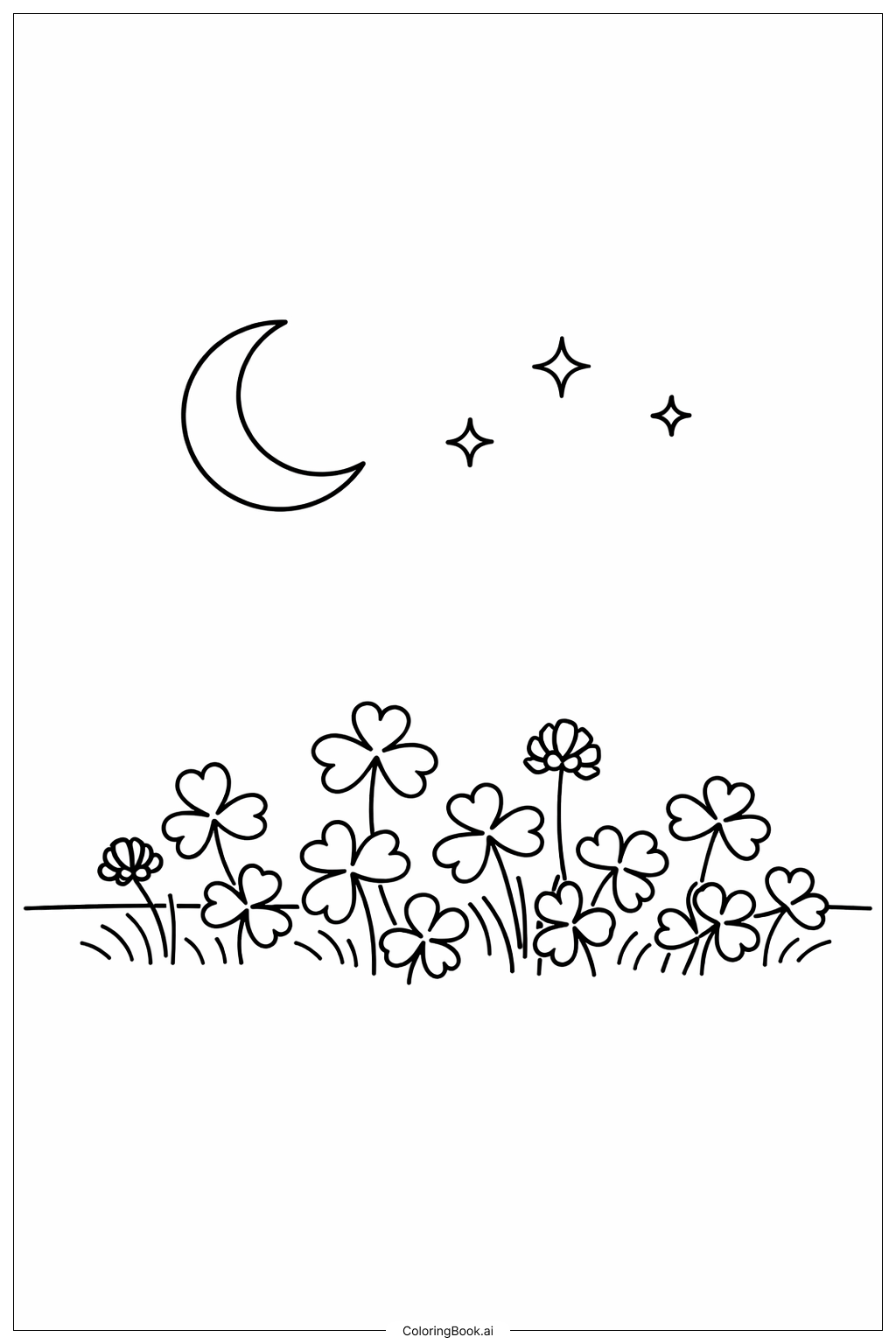
Try using cool colors like soft blues and purples for the night sky to create a calm, soothing background. The moon can be colored in pale yellows and light grays to show its gentle glow. For the clover leaves, use various shades of green, from light to dark, to give them a rich appearance. Add touches of lighter green or even a hint of silver to show how the moonlight reflects on the leaves. The grass and small flowers around the clover can be colored with soft browns and pastel colors to keep the focus on the clover and moon. Feel free to add stars or a gradient in the sky to make the scene more magical.
Coloring challenges: Which parts are difficult to color and need attention for Clover Under Moon coloring page?
• Fine Details: The small blades of grass and tiny flowers around the clover require careful coloring to stay inside the lines, which can be challenging for younger children.
• Shading the Moon: Achieving the soft glow of the moon involves blending light colors smoothly, which may be difficult for beginners.
• Leaf Variation: The clover leaves have distinct shapes and veins, and coloring each leaf with slight color differences while keeping the image cohesive takes attention and patience.
• Night Sky Gradient: Creating a smooth gradient from dark to light blues or purples for the sky can be tricky and may need layering techniques.
• Maintaining Contrast: Coloring the clover and foreground details without losing visibility against the moonlit background requires thoughtful color choices to avoid the image looking flat.
Benefits of coloring books: Advantages of drawing Clover Under Moon coloring page
Coloring this image helps develop fine motor skills as children carefully fill in small details like leaves and flowers. It encourages creativity in choosing colors that represent night and nature, promoting an understanding of light and shadow. The soothing theme of moonlight and clover can be calming and relaxing, supporting mindfulness and focus. Completing the scene also provides a sense of accomplishment and boosts confidence. For older children, experimenting with shading and blending improves artistic techniques and attention to detail. Overall, coloring this image is a fun and educational activity that nurtures artistic skills and appreciation of nature.