Coloring tips: How to color Clover With Swing coloring page well?
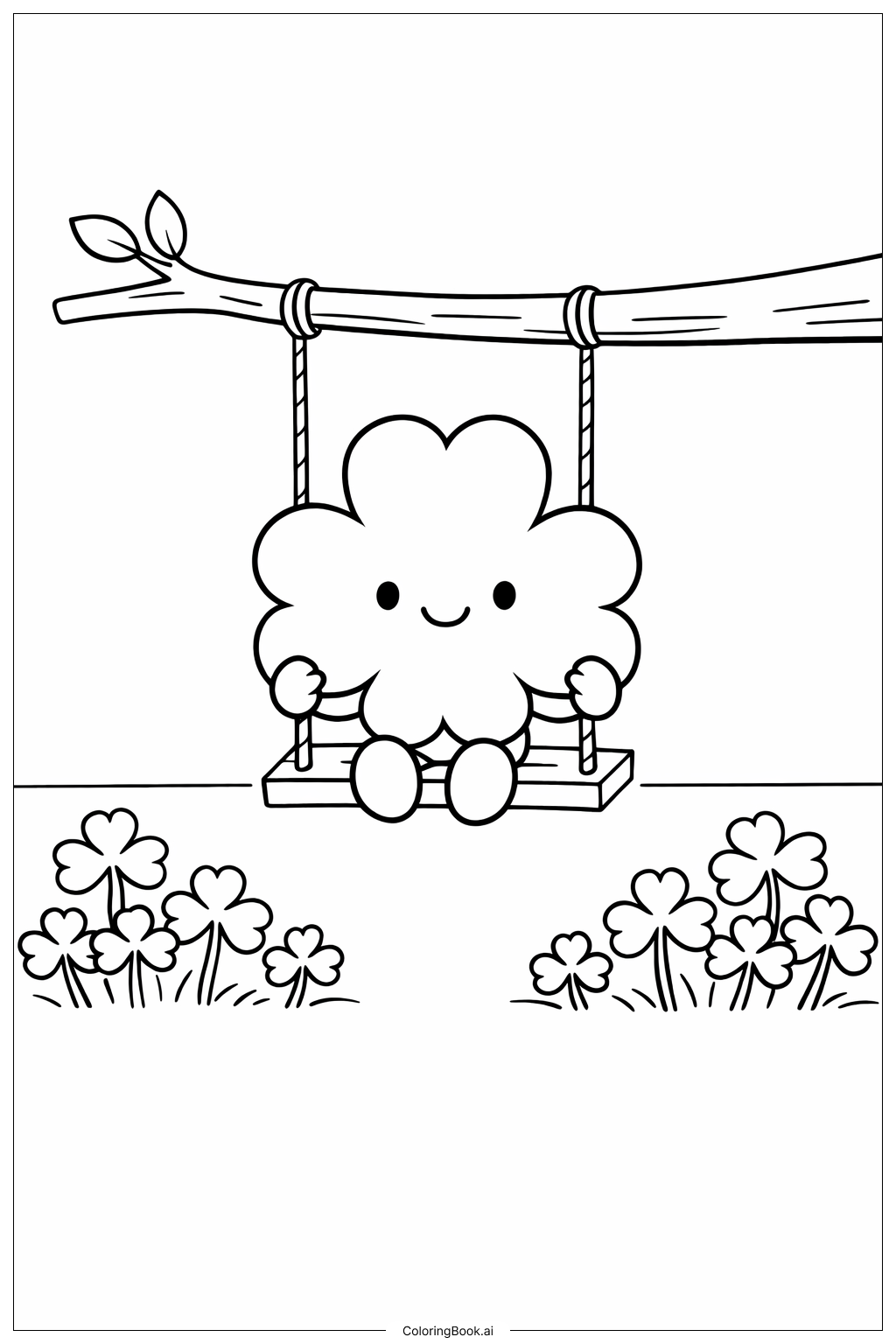
Start by coloring the clover leaves in bright, fresh greens. You can use a lighter green for the inside of the leaves and a darker green along the edges and veins to add depth. For the stem, use a medium green or earthy olive tone to give it a sturdy, natural look. The swing seat can be colored in warm brown or tan to look like real wood. Color the ropes in beige, cream, or light gray to mimic natural fiber or twine. If there are dewdrops on the leaves, try light blue or leave them white with a soft blue outline. You can also add a cheerful background — a soft sky blue or pale yellow works beautifully. Feel free to add your own creative touches, like polka dots on the leaves or colorful patterns on the swing seat. Have fun and make it your own!
Coloring challenges: Which parts are difficult to color and need attention for Clover With Swing coloring page?
• Tiny Leaf Vein Details: The clover leaves have fine, delicate vein lines running through them. Staying inside these small lines without going over them requires a sharp-tipped colored pencil or a fine-tipped marker. Young colorists may find this especially tricky and should take their time with slow, careful strokes.
• Shading the Rounded Leaves: Each leaflet has a round, curved shape. To make them look three-dimensional, you need to blend lighter and darker shades of green smoothly. Achieving a natural gradient from light center to darker edges can be challenging, especially for beginners who are still learning blending techniques.
• Rope Texture on the Swing: The swing ropes have a twisted or braided texture with many small overlapping lines. Coloring each strand individually while keeping the overall rope shape clean and consistent takes patience and a steady hand. It is easy to accidentally color outside the rope lines.
• Small Swing Seat Proportions: The swing seat is a relatively small area compared to the large leaves. Working carefully in this tight space without muddying the colors or overlapping into surrounding areas demands precision. Using a fine-tipped tool is strongly recommended for this section.
• Balancing the Overall Color Composition: Because the image is dominated by green clover leaves, choosing accent colors for the swing and background that complement without clashing requires some color planning. Picking the wrong tone combinations can make the image look flat or unbalanced, so thinking ahead about your color palette is an important step.
Benefits of coloring books: Advantages of drawing Clover With Swing coloring page
Coloring this Clover With Swing page offers a wonderful range of benefits for children and creative minds alike. The image connects kids with the natural world, sparking curiosity about plants, outdoor play, and the tiny wonders found in a garden. As children choose colors for the leaves, swing, and ropes, they practice color recognition and develop their own sense of artistic style. The detailed vein lines and small sections of the swing encourage fine motor skill development, helping to strengthen the small muscles in fingers and hands — skills that are directly useful for writing and drawing. Focusing on filling in each section carefully also builds concentration and patience, training young minds to slow down and pay attention to detail. The playful theme of a swing attached to a clover creates room for storytelling and imaginative thinking — kids might wonder who sits on the swing or what tiny creatures live among the leaves. This kind of creative thinking supports healthy cognitive development. Finally, the quiet, repetitive nature of coloring promotes relaxation and emotional calm, making it a great activity for winding down after a busy day. It is a simple, screen-free joy that delivers real developmental value.