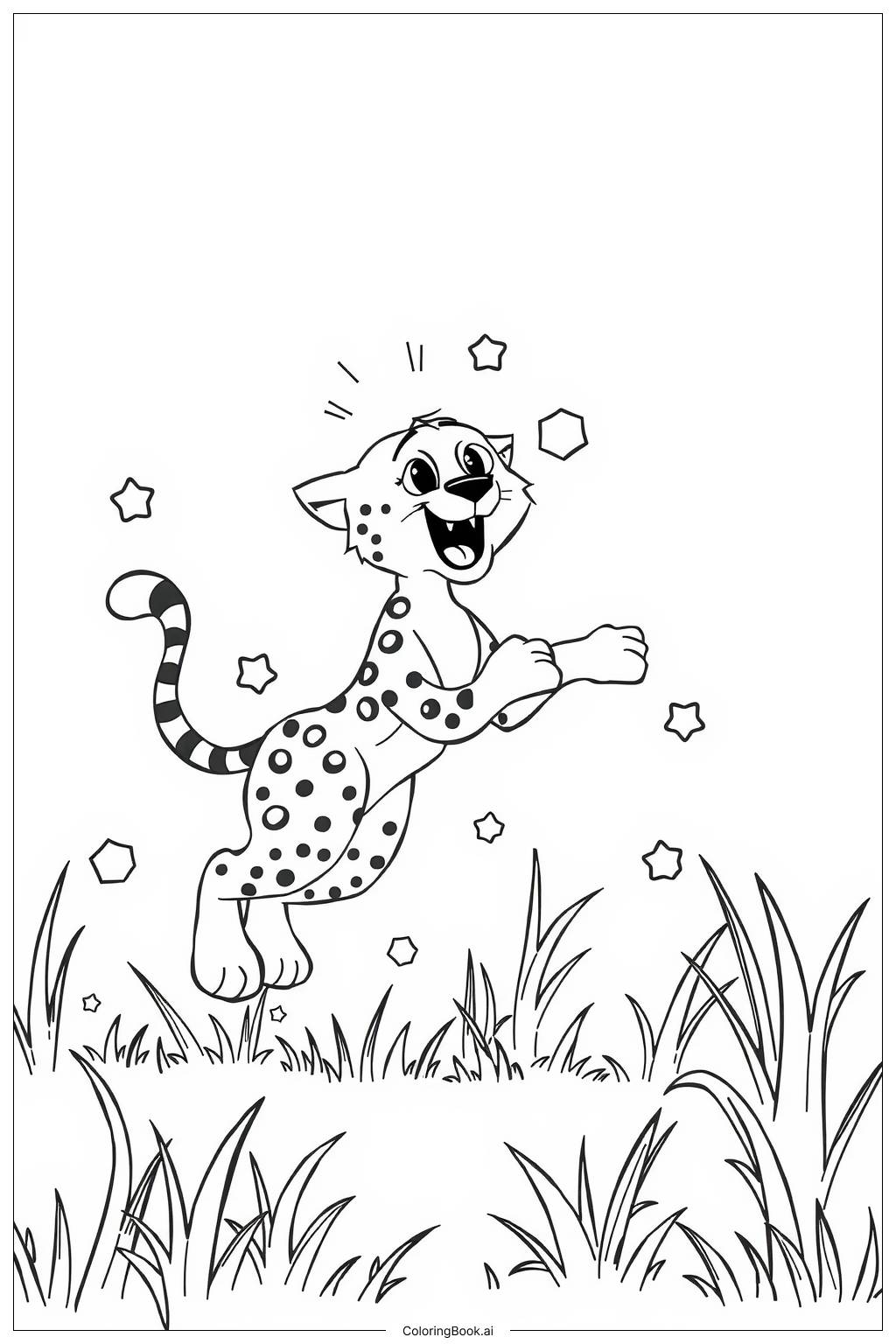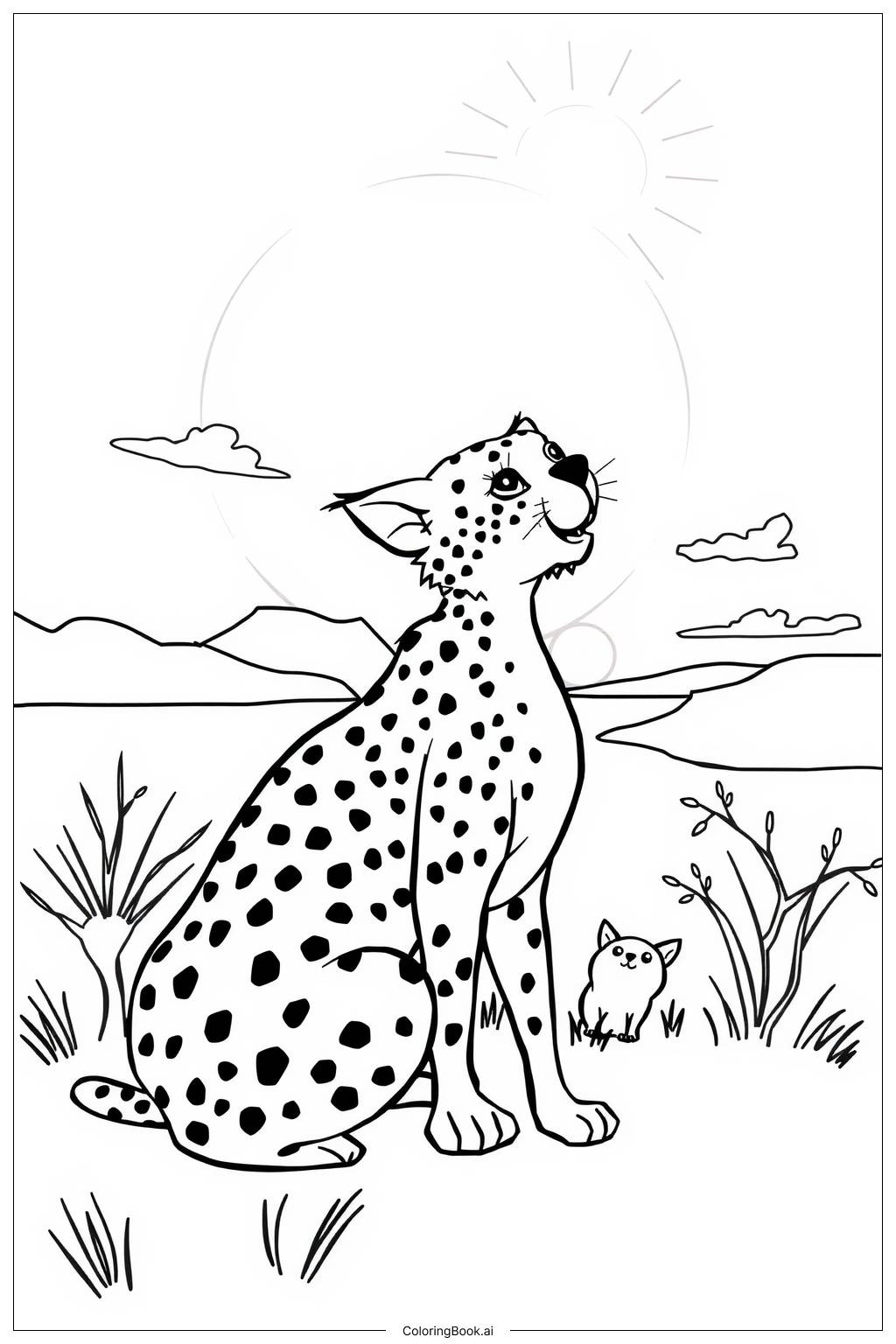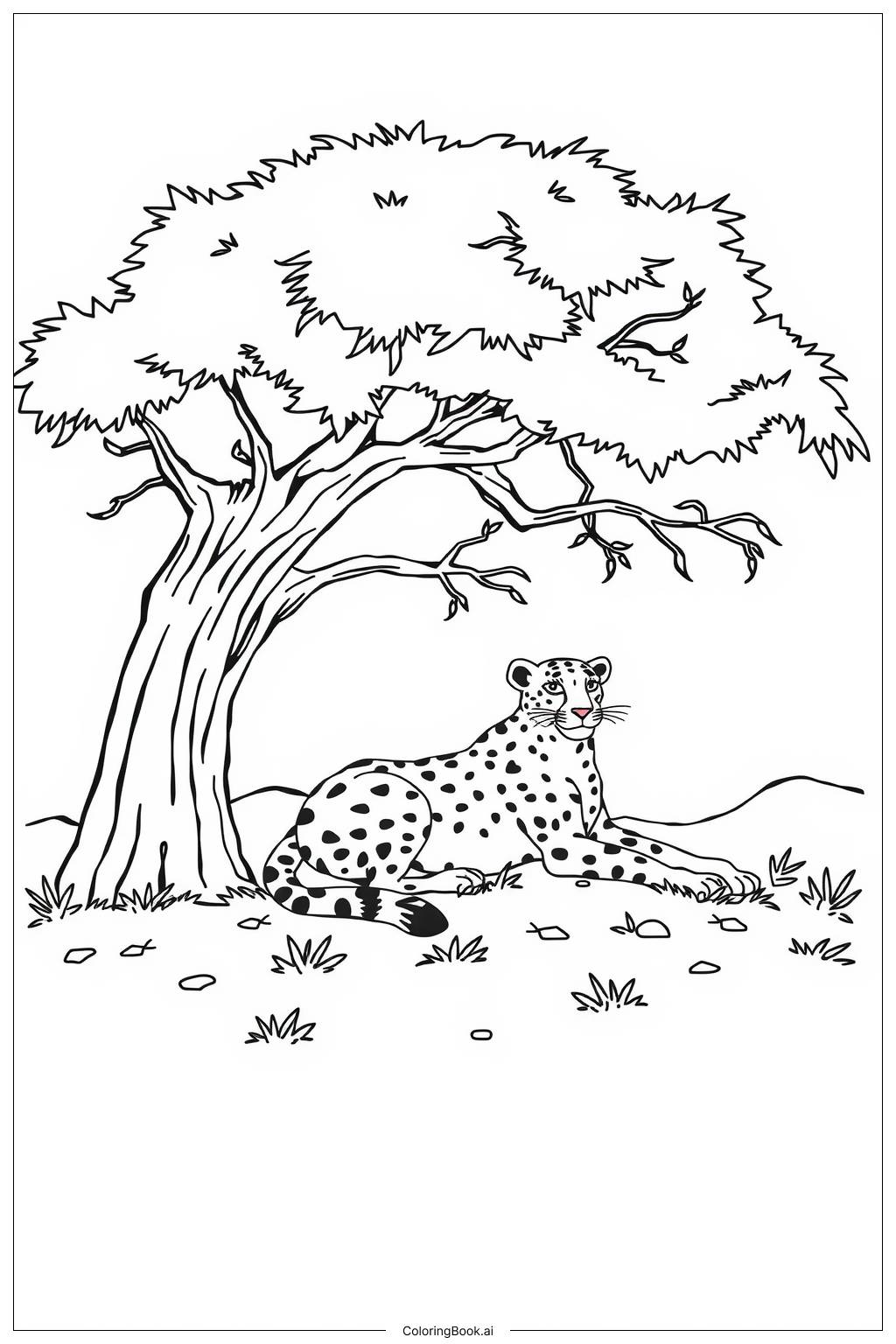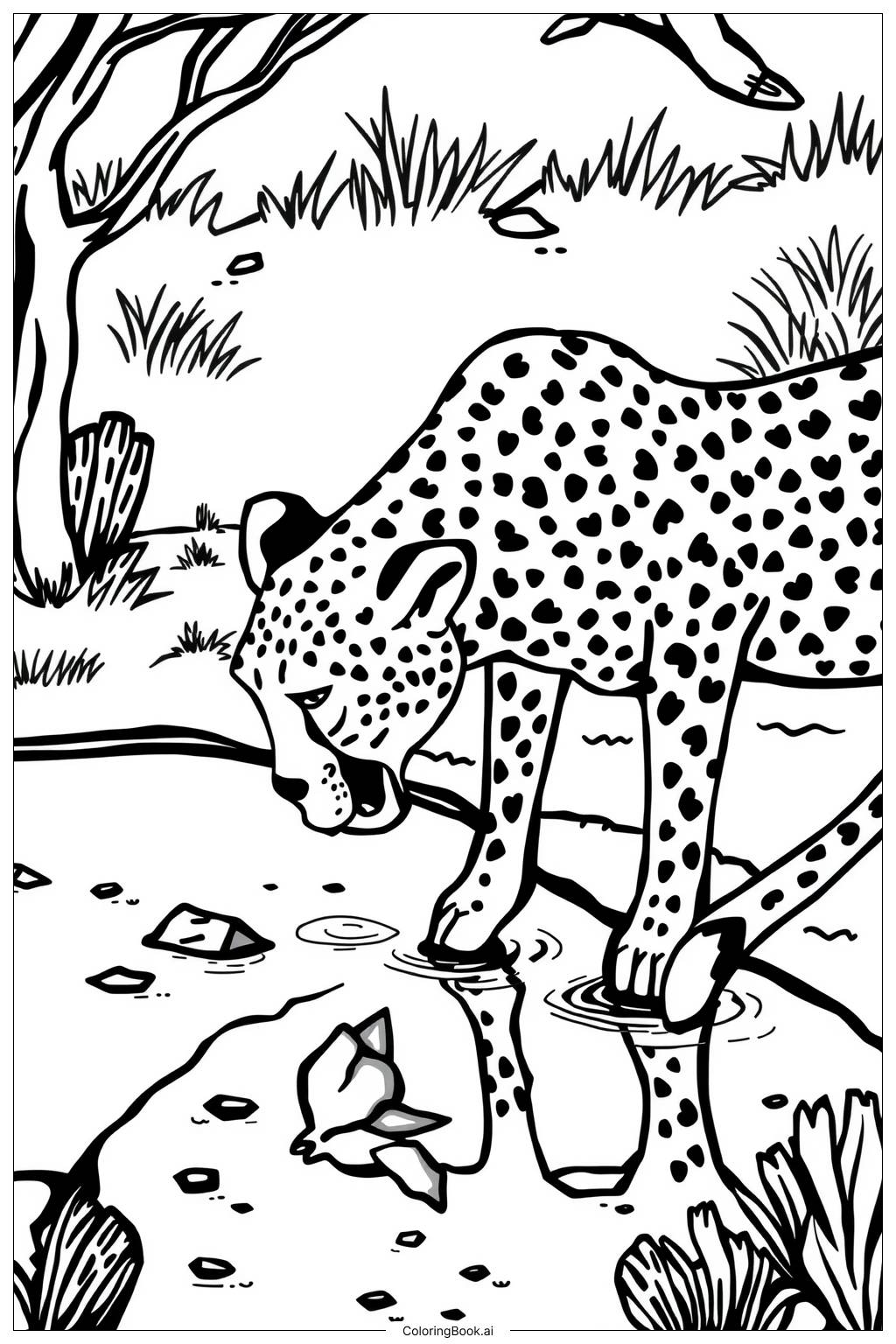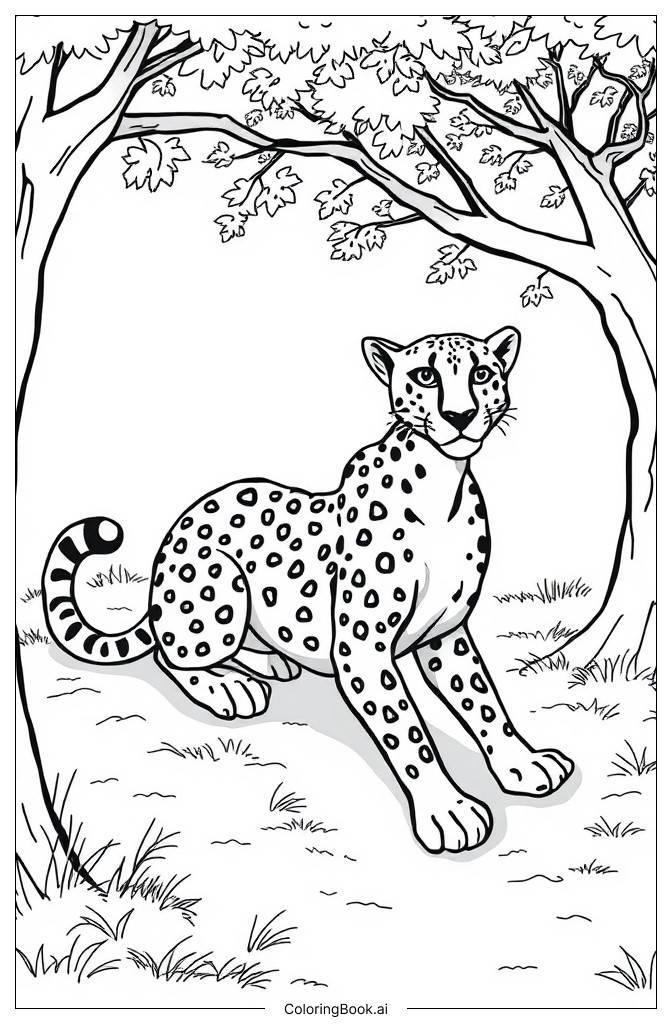
Coloring tips: How to color Resting Cheetah coloring page well?
Start with the cheetah's base coat. Use a warm golden yellow or tan color across the body. Then add the black spots in a darker shade, spacing them evenly across the fur. Use a lighter cream or white for the belly and inner legs. The tear stripes under the eyes should be solid black. For the eyes, try a bright amber or golden green to make them pop. The nose can be a soft pink or dark brown. The background grass or savanna can be colored in earthy tones like light brown, tan, and pale green. Use blending or shading to give the fur a soft, layered look. Light strokes work best for the fur texture. This image is great for beginners and kids who want to practice layering colors.
Coloring challenges: Which parts are difficult to color and need attention for Resting Cheetah coloring page?
• Spotted Coat Pattern: The cheetah's body is covered in many small, irregularly shaped black spots spread across a golden coat. Keeping each spot consistent in size and spacing without making them look too uniform or too random takes patience and a steady hand. Rushing this step can make the coat look unnatural.
• Fur Texture and Shading: Capturing the soft, short texture of a cheetah's fur is tricky. Simply filling in flat color will make the animal look stiff. Adding light directional strokes and subtle shading along the edges of the body helps create a sense of depth and three-dimensional form, but this requires good control of your coloring tool.
• Tear Stripe Details: The two bold black lines that run from the eyes to the mouth are a defining feature of the cheetah. These markings are narrow and must be colored carefully to avoid smudging into the surrounding golden fur. Precision is key here, especially when working with markers or thick crayons.
• Facial Expression: The face holds the most detail. The eyes, nose, whisker dots, and mouth all sit close together. Coloring each element separately without bleeding into the next area can be challenging, especially for younger children. Using fine-tipped tools for this area is strongly recommended.
• Background Integration: Blending the cheetah naturally into the savanna background requires color harmony. If the background tones are too similar to the cheetah's coat, the animal can get lost in the scene. Choosing slightly cooler or more muted tones for the background helps the cheetah stand out clearly.
Benefits of coloring books: Advantages of drawing Resting Cheetah coloring page
Coloring this resting cheetah brings a wide range of benefits for children and adults alike. For kids, it builds fine motor skills as they carefully fill in spots, stripes, and fine facial details. The focused attention required helps strengthen hand-eye coordination and pencil control, skills that support writing and drawing development.
Learning about cheetah markings while coloring sparks curiosity about wildlife and nature. Children naturally begin to ask questions about why cheetahs have spots or what they eat, turning a creative activity into a learning moment.
The calm, resting pose of the cheetah also sets a relaxed tone for the coloring session. It encourages a slower, more mindful pace, which can help reduce stress and anxiety in both kids and adults. Sitting quietly and focusing on color choices promotes a sense of calm focus.
For older children and teens, the complexity of the spotted pattern offers a satisfying challenge. Completing the full image builds a sense of accomplishment and confidence. Adults may find the detailed work meditative and rewarding.
Overall, this page blends creativity, nature appreciation, and relaxation into one engaging activity suitable for a wide range of ages.