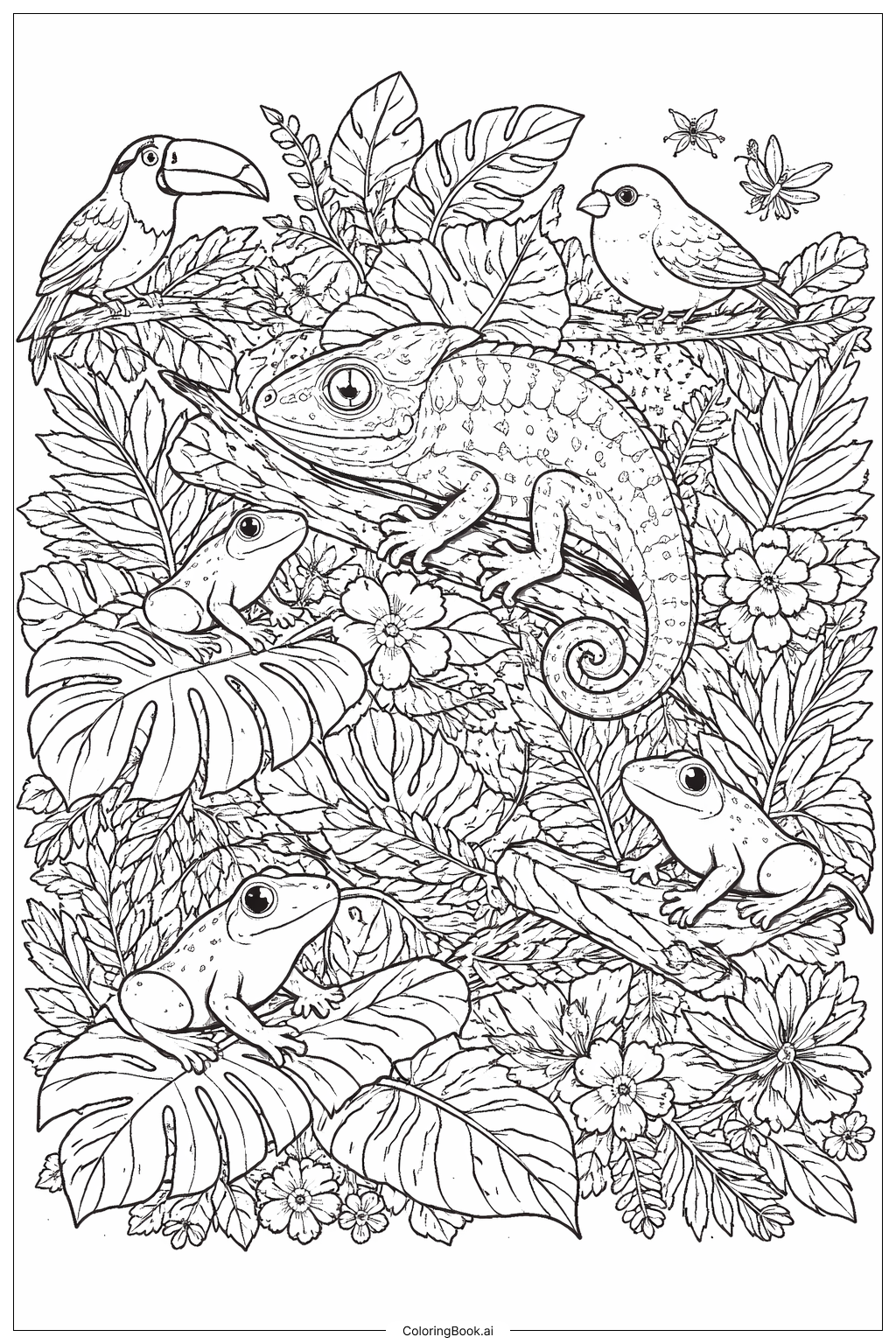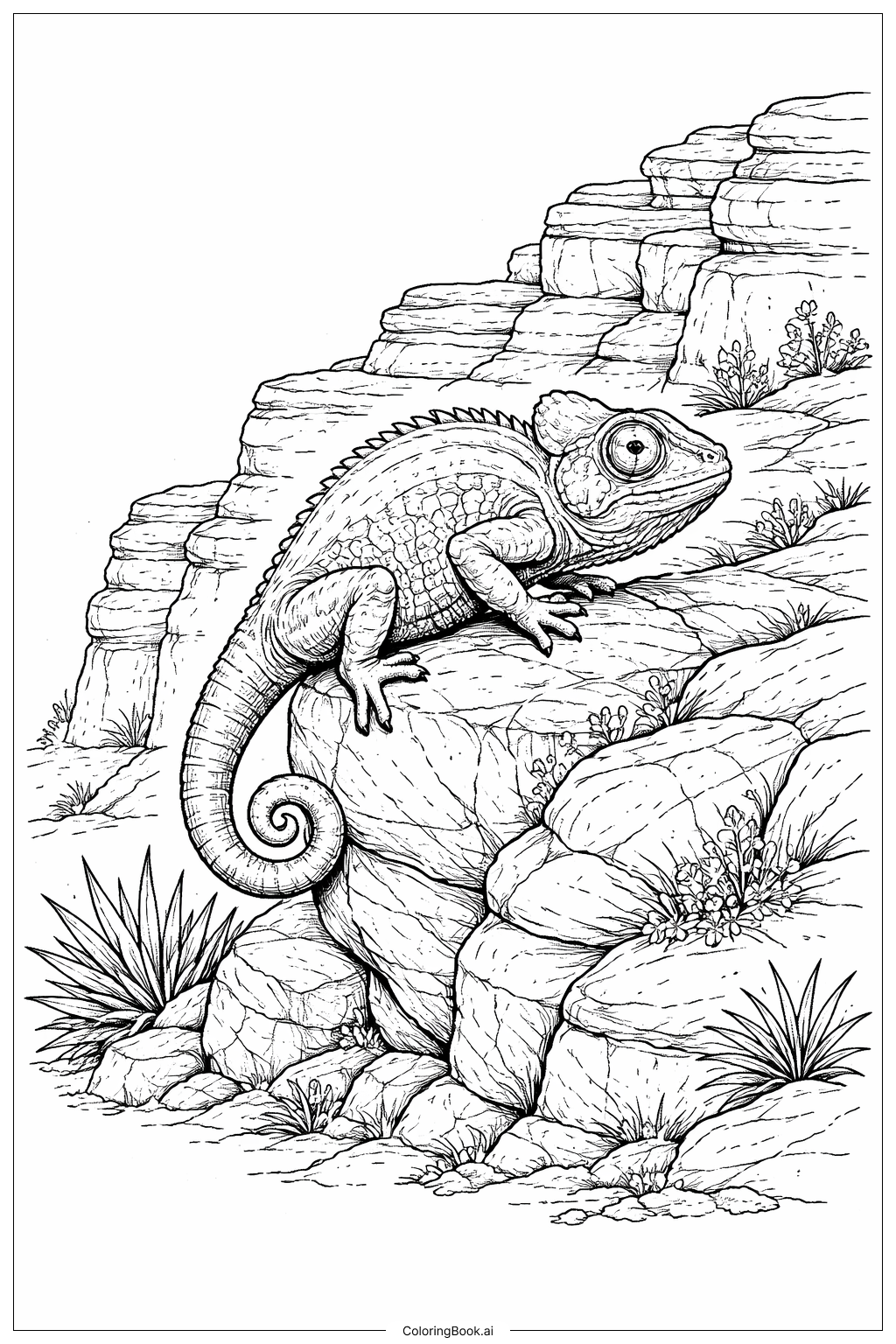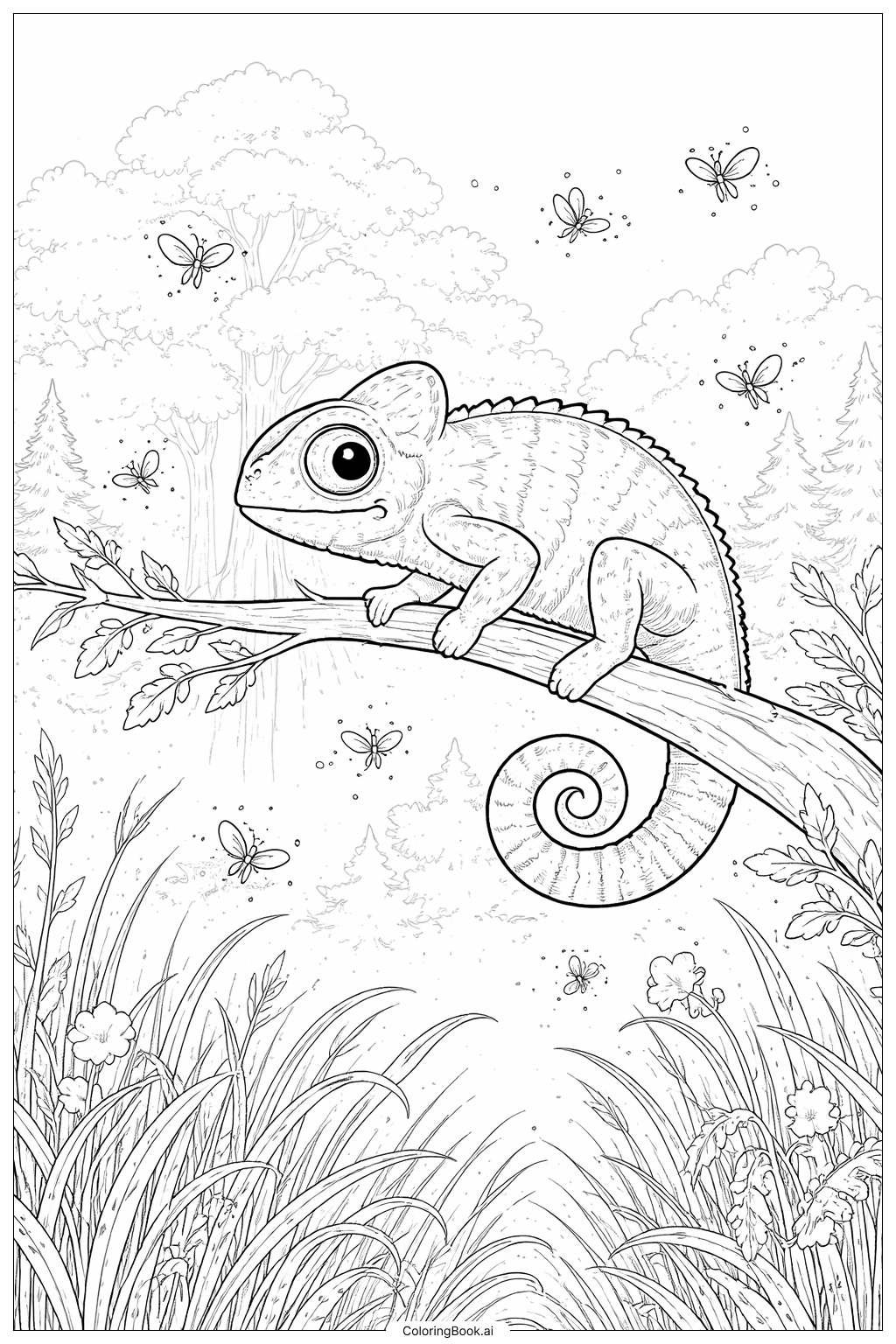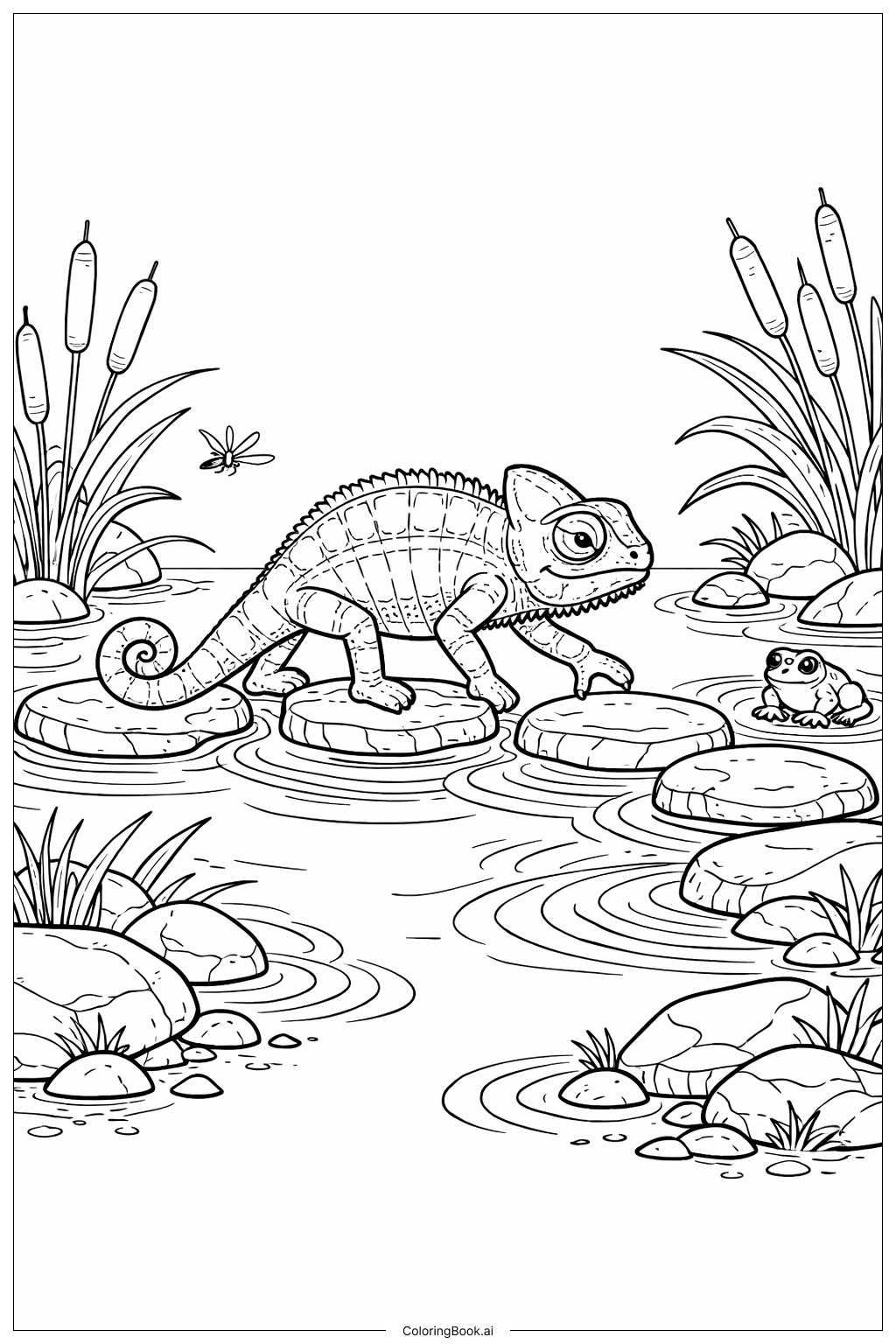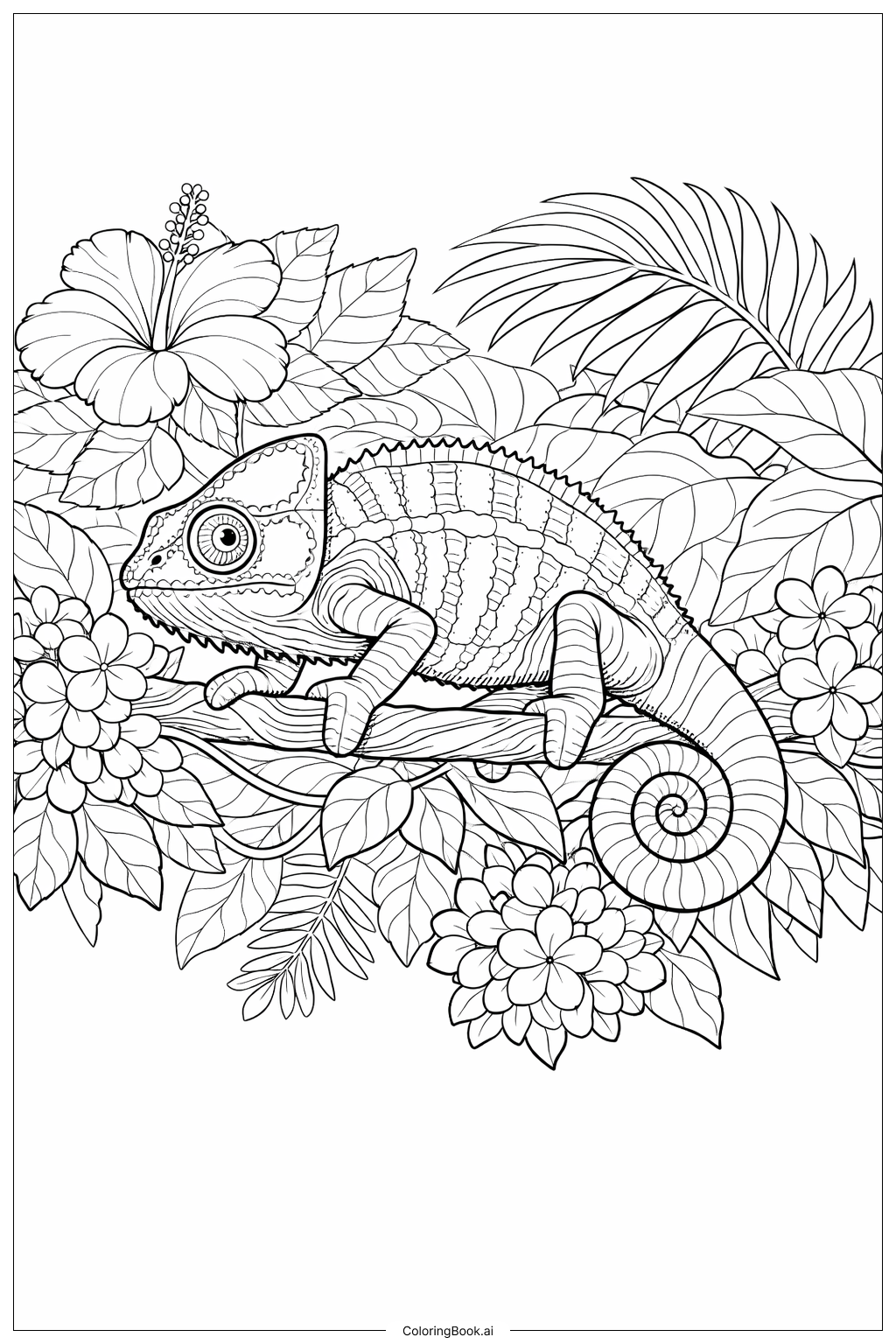
Coloring tips: How to color Chameleon On A Flowering Vine coloring page well?
To color this image, try using bright and lively colors for the chameleon to show how it can blend into nature. Greens, yellows, and blues work well for its body. You might add hints of orange or red for detail on its crest and tail. For the flowers on the vine, choose soft pinks, purples, or whites to make them stand out gently. Use different shades of green for the leaves and vine to create depth. Don’t forget to color the eyes carefully to give the chameleon a lively expression. Adding some gentle shadows underneath the vine can create a more three-dimensional effect.
Coloring challenges: Which parts are difficult to color and need attention for Chameleon On A Flowering Vine coloring page?
• Detail Work: The chameleon’s scales and textured skin require careful coloring to show their pattern without smudging or going outside lines.
• Small Areas: The vine’s twisting shape includes many tiny leaves and flowers that can be challenging to color without overlapping.
• Color Blending: Achieving a natural look means blending different shades smoothly, especially on the chameleon’s body where colors shift.
• Maintaining Contrast: Since the chameleon and the vine share similar colors, it can be tricky to make the chameleon stand out while keeping everything harmonious.
• Fine Lines: Coloring inside the thin outlines around flower petals and the chameleon’s eyes demands precision and patience.
Benefits of coloring books: Advantages of drawing Chameleon On A Flowering Vine coloring page
Coloring this image helps develop fine motor skills through working on small, detailed areas. It encourages creativity when choosing colors to bring the chameleon and flowering vine to life. This picture offers a great opportunity to practice blending and layering shades for a natural effect. It also promotes focus and attention to detail because of the delicate lines and textures. Finally, coloring a scene from nature like this can be calming and enjoyable, inspiring curiosity about animals and plants.