Coloring tips: How to color Chameleon Crossing A Stream coloring page well?
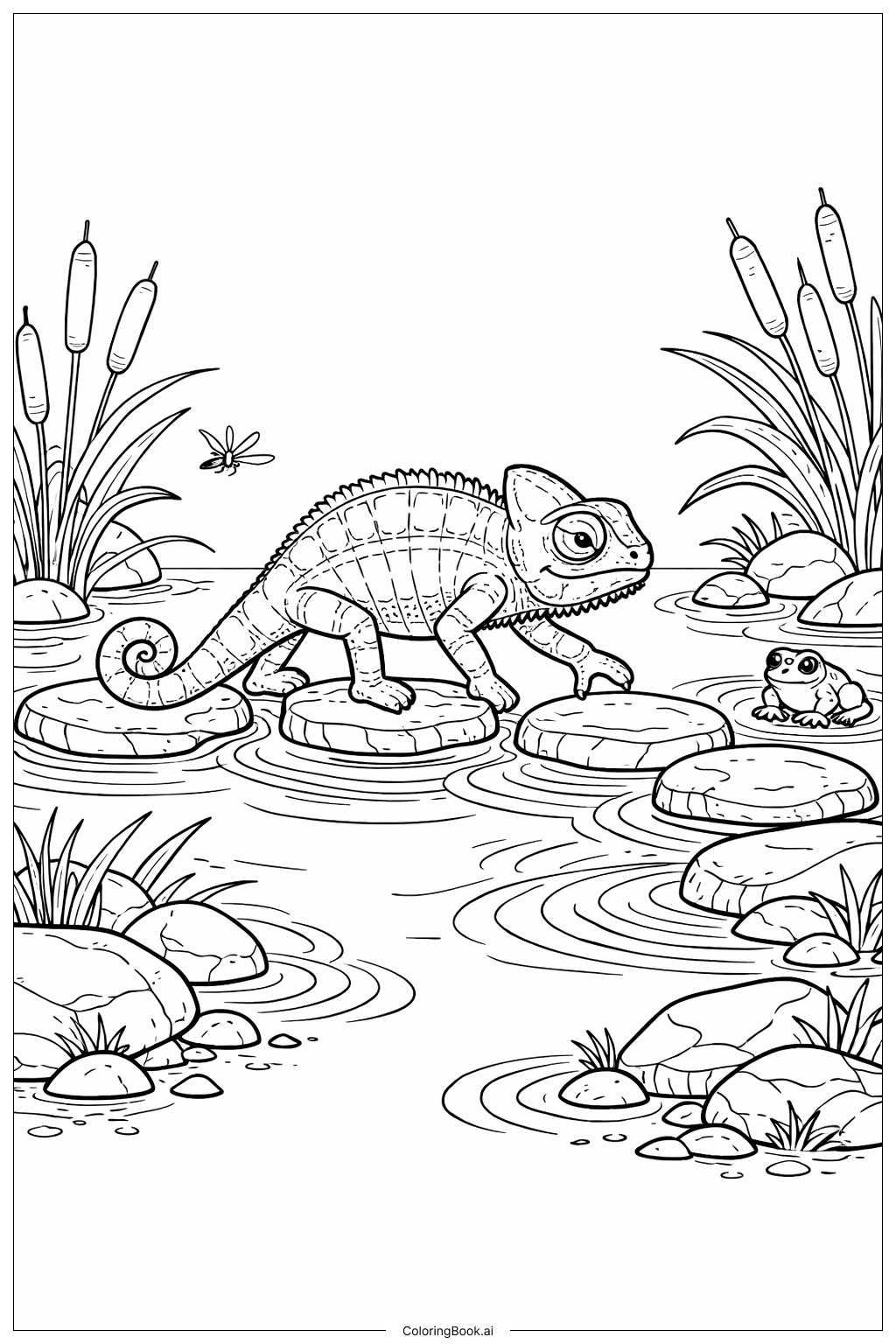
Use a variety of green shades for the chameleon to show its color-changing ability. Add yellow or light green highlights to parts of its body for depth. Color the stones in brown, gray, or sandy tones to make them look natural. Make the water blue or light blue with white areas for reflections. Use dark and light greens for the reeds to create contrast. The frog can be green or brown with some spots. The dragonfly can have bright, colorful wings like blue or purple. Try to keep the colors bright and lively to bring the scene to life.
Coloring challenges: Which parts are difficult to color and need attention for Chameleon Crossing A Stream coloring page?
1. Coloring the chameleon’s detailed skin texture and the tiny lines on its body can be tricky. Focus on smooth strokes and layering colors for depth.
2. Balancing colors between the stones and water is a challenge because they overlap. Use lighter tones for water and darker for stones.
3. The small frog has details that need careful coloring, especially the eyes and feet.
4. The reeds have long, thin shapes and vary in shades which requires careful shading.
5. Making the water ripples look natural with shadows and highlights needs patience and blending skills.
Benefits of coloring books: Advantages of drawing Chameleon Crossing A Stream coloring page
Coloring this picture helps improve focus and attention to detail, especially when working on the chameleon’s skin and tiny elements. It encourages creativity by choosing colors for different natural parts like water, plants, and animals. The activity enhances hand-eye coordination and fine motor skills through precise coloring. It also teaches about nature, animals, and different environments while having fun.