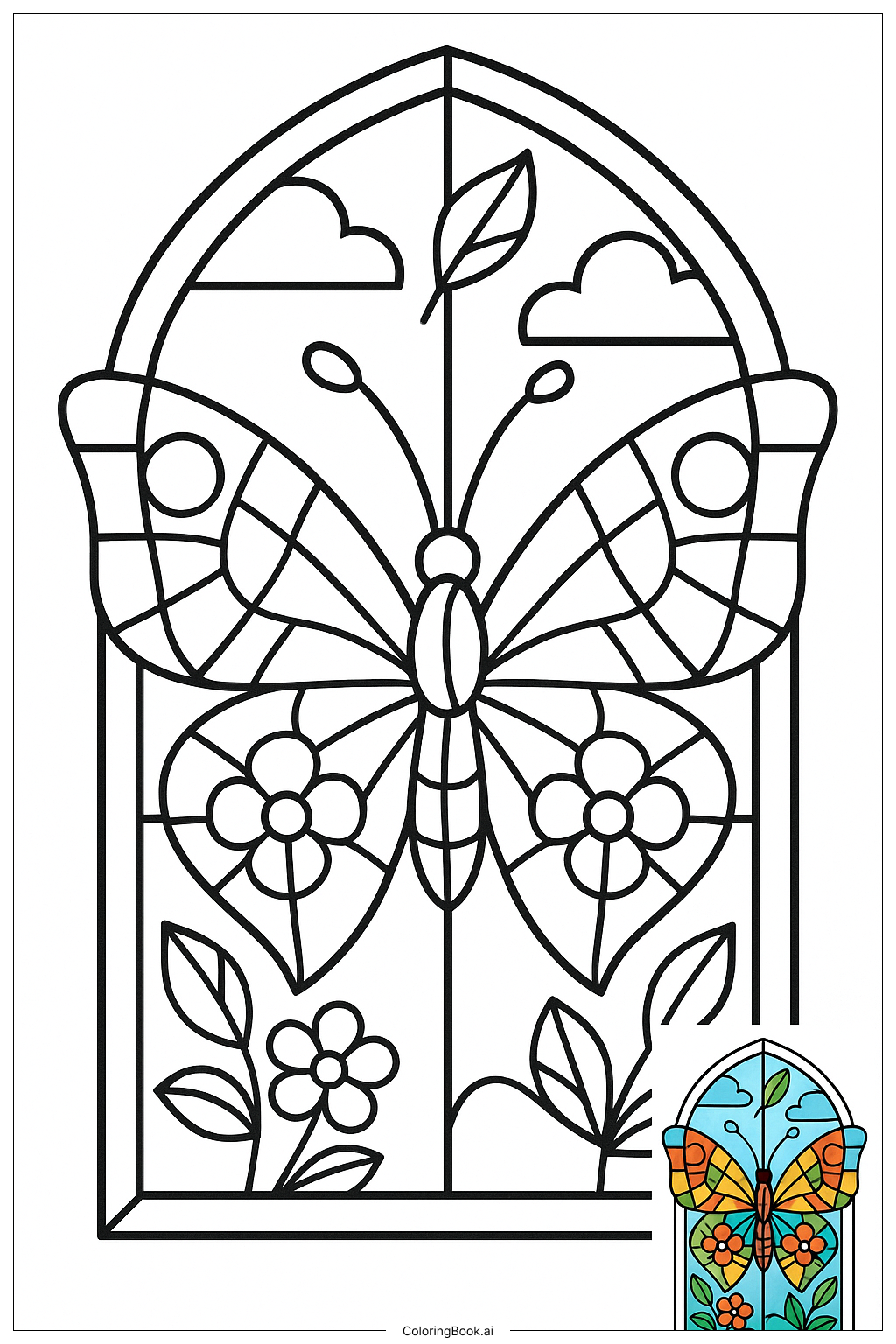
Coloring tips: How to color Stained Glass Butterfly Window Art coloring page well?
Start by choosing a bright, jewel-toned color palette — deep blues, rich purples, emerald greens, ruby reds, and golden yellows work beautifully for a stained glass effect. Color each section individually, keeping neighboring sections in contrasting colors so they stand out from each other, just like real stained glass panels. Use a darker shade along the edges of each segment to add depth and mimic the look of thick glass. Leave the bold outlines uncolored or trace them in black or dark gray to represent the lead lines. For a glowing effect, try blending lighter tones in the center of each section and deeper shades near the borders. Kids can also experiment with warm sunset colors like orange, pink, and red for a totally different but equally beautiful look. There are no wrong choices here — just have fun with bold, confident colors!
Coloring challenges: Which parts are difficult to color and need attention for Stained Glass Butterfly Window Art coloring page?
• Managing Many Small Sections: The wings are divided into numerous small, bordered segments. Staying inside the lines of each tiny area without accidentally coloring over the outlines takes steady hands and careful attention. Younger colorists may find this especially tricky and should use fine-tipped markers or sharpened colored pencils for better control.
• Keeping Colors Consistent and Balanced: Because stained glass designs rely on strong visual contrast between neighboring sections, choosing and applying colors that work well together is a real challenge. If two adjacent sections end up the same color, the stained glass effect is lost. Planning your color layout in advance — or lightly penciling in colors before committing — can help avoid this issue.
• Achieving a Glowing Stained Glass Effect: Real stained glass glows because light passes through it. Recreating that luminous quality on paper requires blending skills, such as adding lighter tones in the center of each section and darker shades toward the edges. This gradient technique can be difficult for beginners who are still learning how to blend colors smoothly.
• Handling Symmetry Across Both Wings: The butterfly's wings are mirror images of each other. Maintaining color symmetry — using the same colors in the same positions on both sides — demands careful planning and focus. Losing track of which color goes where can make the final result look unbalanced.
• Detailing the Body and Central Veins: The butterfly's body and the central vein lines dividing the wings are narrow and intricate. Applying color neatly in these thin areas without smudging or bleeding into adjacent sections is one of the more demanding aspects of this particular design.
Benefits of coloring books: Advantages of drawing Stained Glass Butterfly Window Art coloring page
Coloring this Stained Glass Butterfly Window Art page offers a wide range of wonderful benefits for both kids and Adults. The intricate geometric sections encourage fine motor skill development, as children must carefully guide their tools within defined boundaries, strengthening hand control and pencil grip. Planning a color palette that works harmoniously across the entire design also builds early color theory awareness and artistic decision-making. The repetitive, focused nature of filling in each segment one at a time promotes mindfulness and concentration, helping kids and Adults alike settle into a calm, meditative state. Completing a complex design like this also builds a meaningful sense of accomplishment and boosts self-confidence. For younger colorists, the butterfly theme sparks curiosity about nature and the natural world. For older kids and Adults, the stained glass style offers a creative challenge that connects them to traditional art forms and craftsmanship. Overall, this coloring page is a joyful, screen-free activity that nurtures creativity, patience, and focus at any age.