Coloring tips: How to color Butterfly Migration Path coloring page well?
Start with the sky background using a soft blue or warm golden tone to set the mood of the journey. For the monarch butterflies, use bright orange on the large wing panels and fill the border sections with deep black. Add small white dots near the wing edges for a realistic touch. The butterflies resting on flowers can be colored with slightly deeper shades to show depth. Use greens and yellows for the hills and trees below, and a light blue or teal for the river. Flowers in the foreground look great in purples, pinks, or reds. Try using darker shades on butterfly wings that are farther away to give a sense of distance and perspective. This makes the whole scene feel alive and full of motion. Have fun mixing warm and cool colors to make the migration feel both exciting and peaceful.
Coloring challenges: Which parts are difficult to color and need attention for Butterfly Migration Path coloring page?
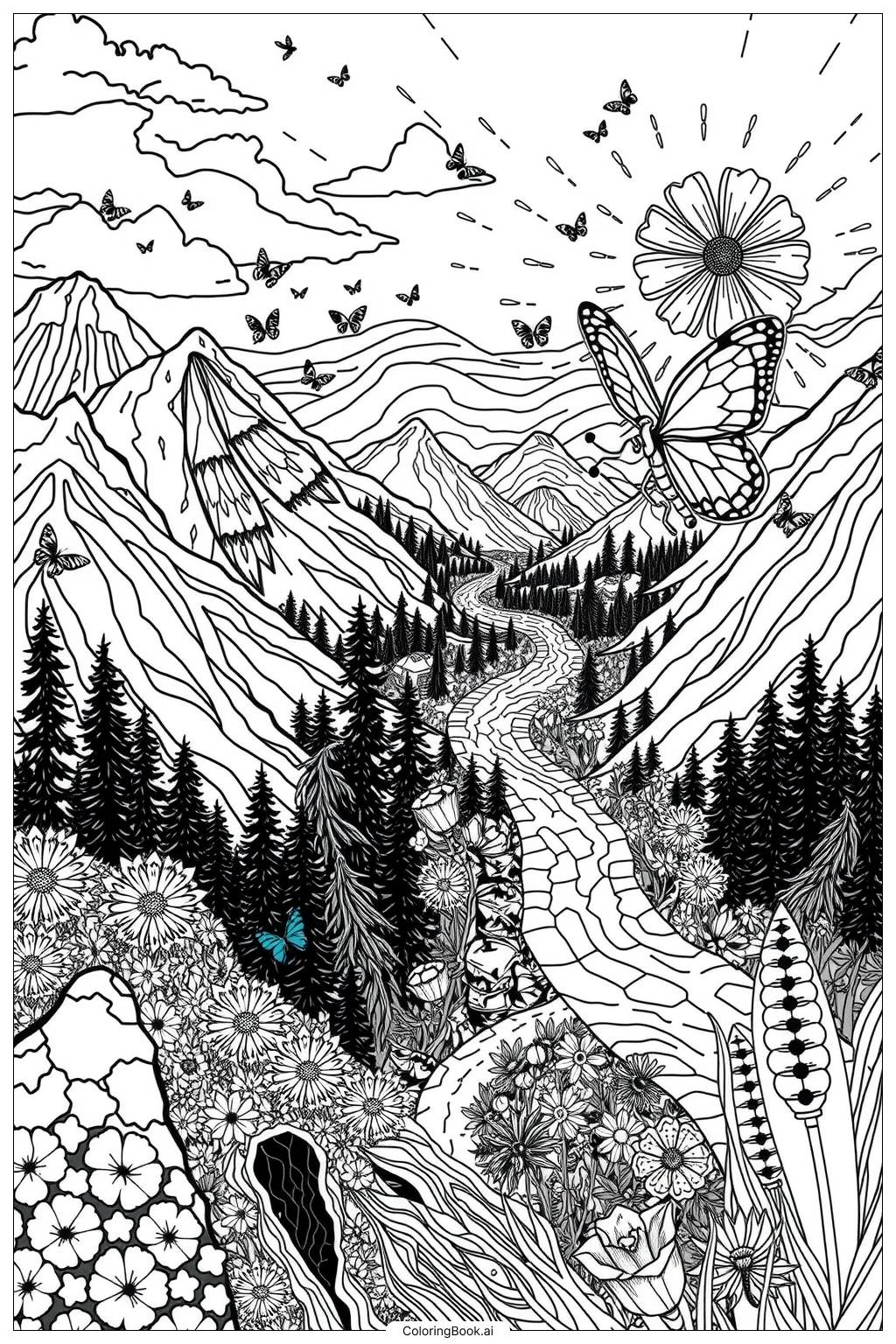
• Wing Pattern Precision: Each butterfly has detailed wing markings made up of small sections divided by thin lines. Staying within these tiny areas without overlapping is tricky, especially for younger colorists. A fine-tipped colored pencil or marker works best for these small zones. Take your time and work slowly from the center of each section outward.
• Depth and Distance: The scene includes butterflies both near and far. Showing this depth through color alone can be challenging. Butterflies in the foreground should be colored more brightly and with more detail, while those in the background can be done in lighter, softer shades. Getting this gradual shift right takes patience and planning.
• Background Blending: The sky transitions from one part of the scene to another, and blending colors smoothly without harsh lines requires a light hand. Using circular strokes or layering two close shades can help create a natural-looking gradient across the sky.
• Crowd of Butterflies: With so many butterflies filling the page, deciding which colors to use for each one without making the scene look too chaotic is a real challenge. A simple color scheme repeated across groups of butterflies can bring order and harmony to the composition.
• Foreground Flower Details: The flowers and leaves in the foreground have their own small petals and vein lines. Coloring these neatly while also making them stand out from the butterflies resting on them requires careful color choices and steady hands.
Benefits of coloring books: Advantages of drawing Butterfly Migration Path coloring page
Coloring this butterfly migration scene offers wonderful benefits for kids and beginners alike. Following the wing patterns helps build fine motor skills and hand control, which are important for writing and other detailed tasks. Choosing colors for so many butterflies and the landscape below encourages creative thinking and artistic decision-making. Kids learn about nature and science through the act of coloring, discovering how real monarchs travel thousands of miles each year. The repetitive motion of filling in wing sections is calming and helps reduce stress. It also builds focus and patience, since the scene has many small areas that need careful attention. Completing a complex, beautiful image like this gives a strong sense of achievement and pride. For older children and teens, experimenting with shading and color gradients adds an extra creative challenge. Parents and children can color together, making it a fun bonding activity while sparking conversations about wildlife and migration. Overall, this page combines artistic fun with natural discovery in one rewarding experience.