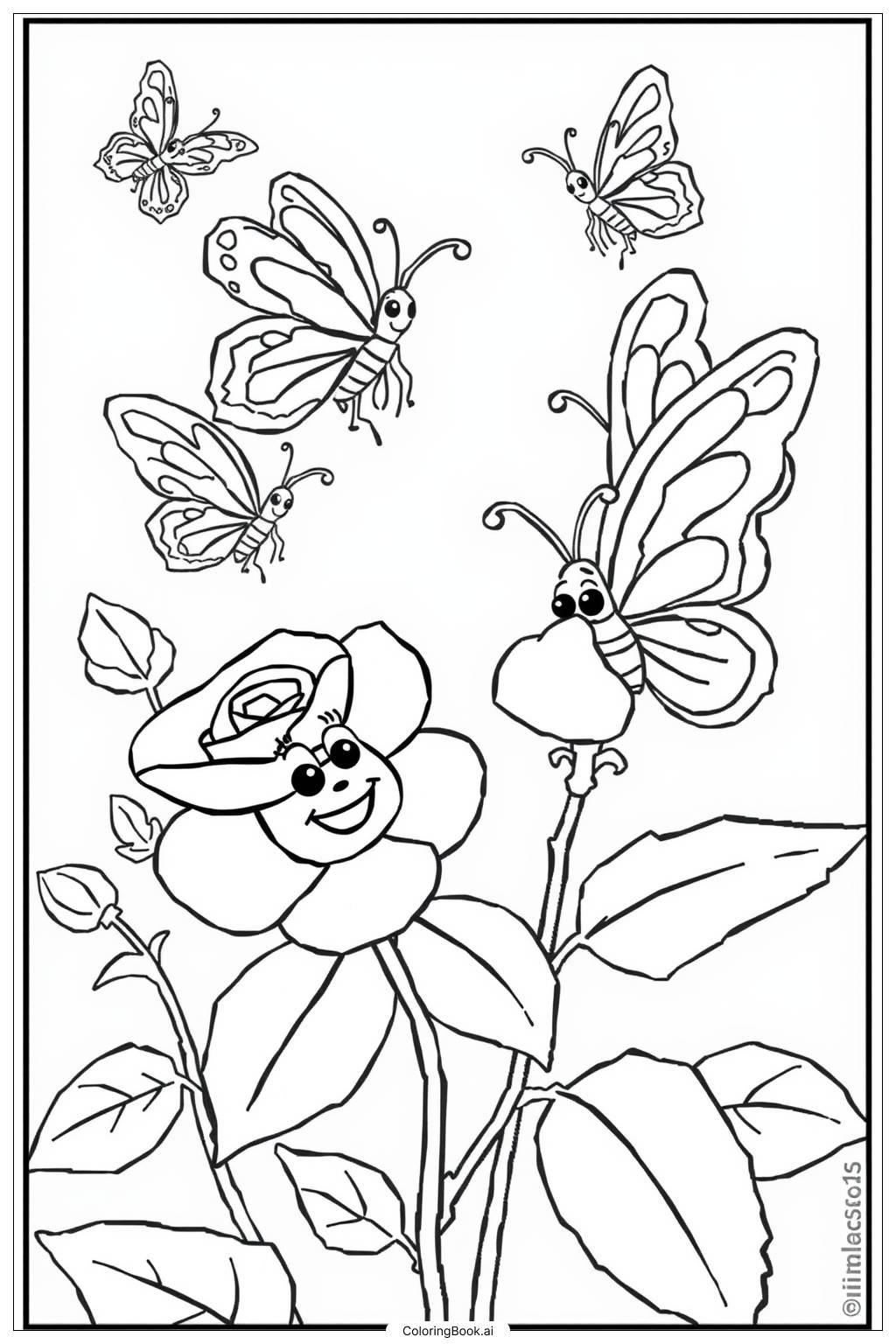
Coloring tips: How to color Roses Butterflies Dance coloring page well?
Start by coloring the roses first. Classic red or pink roses look stunning, but you can also try purple, peach, or yellow for a more playful feel. Use a darker shade along the inner petals and a lighter shade near the edges to create depth.
For the butterflies, let your imagination go wild. Try orange and black like a monarch butterfly, or use soft blues, purples, and yellows for a fantasy look. Add small dots or gradient shading on the wings for extra detail.
Color the leaves in different shades of green — dark green for the larger leaves and light green or yellow-green for the smaller ones. The background swirls can be filled with soft lavender, sky blue, or left lightly shaded to keep the focus on the roses and butterflies.
Use fine-tipped colored pencils or thin markers for the tiny wing patterns and petal edges. Crayons work great for large areas like leaves and background fills.
Coloring challenges: Which parts are difficult to color and need attention for Roses Butterflies Dance coloring page?
• Butterfly Wing Patterns: The butterfly wings are filled with fine lines, veins, and small circular spots. Staying inside these tiny shapes requires a steady hand and a sharp, fine-tipped tool. Young colorists may find it tricky to color each section without going over the lines. Taking it slowly and using thin markers or sharpened colored pencils can make this much easier.
• Rose Petal Layering: Roses have many overlapping petals that curve and fold over one another. To make them look three-dimensional, you need to use at least two or three shades of the same color — a light tone, a mid tone, and a darker shadow tone. Blending these smoothly without making the petals look flat or muddy is one of the biggest challenges in this image.
• Intricate Background Details: The background is filled with swirls, small buds, and decorative curves. These elements are close together, making it easy to accidentally color outside the lines or fill the wrong section. Choosing soft, lighter colors for the background helps it stay in the back without competing with the main flowers and butterflies.
• Leaf and Stem Variation: There are many leaves and stems of different sizes throughout the image. Using the same green for all of them can make the image look flat. The challenge is to vary the greens and add subtle shading along the stem edges to give the plants a natural, lively appearance.
• Overall Color Balance: With so many elements — roses, butterflies, leaves, and background — keeping the whole image balanced and harmonious is a real artistic challenge. Picking a color palette ahead of time and sticking to it helps create a unified, beautiful final result.
Benefits of coloring books: Advantages of drawing Roses Butterflies Dance coloring page
Coloring this Roses Butterflies Dance page offers a wonderful range of benefits for children and young artists.
First, it builds fine motor skills. Filling in the small wing patterns and petal details requires careful control of hands and fingers, which strengthens the muscles used for writing and drawing.
Second, it encourages creativity. Choosing colors for the roses and butterfly wings lets kids express their own sense of style and imagination. There is no single right answer, which builds confidence in personal choices.
Third, it teaches color theory in a natural, hands-on way. Kids learn how mixing light and dark shades creates depth and how complementary colors make an image pop.
Fourth, coloring helps children focus and practice patience. Complex scenes like this one reward slow, careful work and teach kids the value of taking their time.
Fifth, it is calming and relaxing. The flowing shapes of roses and butterflies have a soothing, rhythmic quality. Spending time coloring this page can reduce stress and create a sense of peaceful accomplishment.
Finally, completing a full page builds a sense of pride and achievement. Children can display their finished artwork and feel genuinely proud of what they have created.