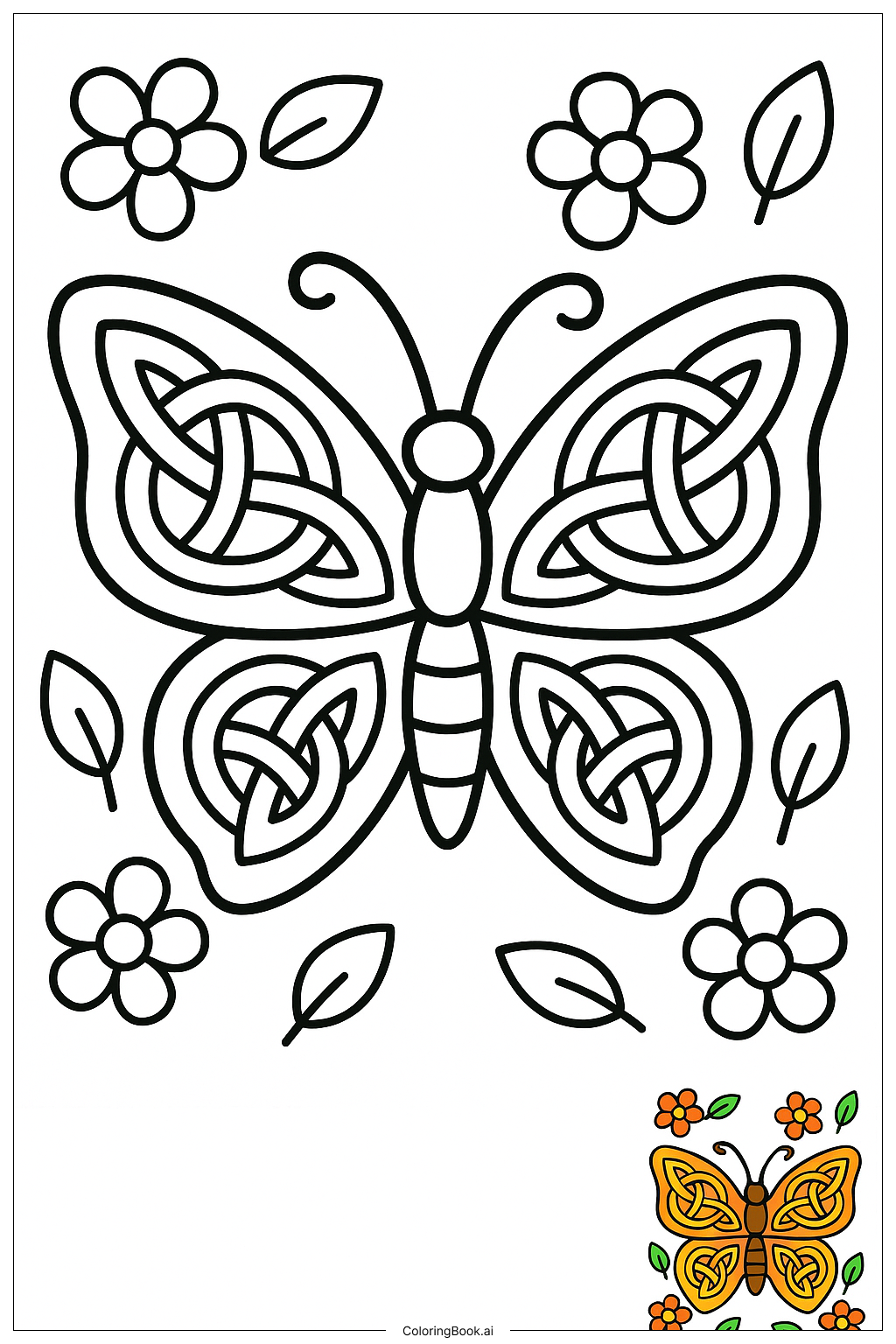
Coloring tips: How to color Butterfly With Celtic Knot Borders coloring page well?
Start with the butterfly's body — use dark brown or black to give it a solid, grounded look. For the wings, choose colors that mirror each other on both sides to keep the symmetry beautiful. Try warm tones like orange, yellow, and red for a monarch butterfly feel, or go cool with purples and blues for a fantasy look. Use a lighter shade first, then layer a darker tone on the edges to add depth. For the Celtic knot border, pick two or three colors that contrast well — like gold and green, or navy and silver — and alternate them as the knots weave over and under each other. This makes the interlocking pattern really pop. Colored pencils work great here for staying inside the fine lines, while gel pens can add a shiny finish to the border details. Take your time and enjoy the process!
Coloring challenges: Which parts are difficult to color and need attention for Butterfly With Celtic Knot Borders coloring page?
• Butterfly Wing Symmetry: The butterfly's wings are mirror images of each other, which means you need to use the same colors and patterns on both sides. This takes careful attention and planning. It helps to decide on your color scheme before you start and work on both wings at the same time, section by section, so they stay balanced throughout.
• Intricate Wing Patterns: The interior of the wings contains detailed swirling and geometric designs with many small sections. Coloring within these fine lines requires a sharp pencil or a fine-tipped marker. Rushing through these areas can result in colors bleeding into neighboring sections, so slow, steady strokes are important here.
• Celtic Knot Border Complexity: The border is made of continuously looping Celtic knot patterns where lines weave over and under each other repeatedly. To color this correctly, you must track each strand of the knot carefully and decide which strand goes on top and which goes underneath. Alternating two or three colors along the strands helps make the over-under weaving pattern visually clear and satisfying.
• Small Gap Between Border and Butterfly: There may be a narrow transition zone between the central butterfly and the surrounding Celtic border. Coloring this tight space neatly without accidentally overlapping into either element requires a fine-tipped tool and a steady hand.
• Color Harmony Across the Page: Choosing colors that work well for both the butterfly and the Celtic border at the same time is a real creative challenge. The two elements have very different styles — organic and geometric — so finding a palette that ties them together without clashing takes thoughtful color planning.
Benefits of coloring books: Advantages of drawing Butterfly With Celtic Knot Borders coloring page
Coloring this butterfly and Celtic knot page offers a wide range of wonderful benefits for kids and beginners alike. First, it builds fine motor skills. Carefully tracing along the thin lines of the wing patterns and knot borders trains the small muscles in your hands and fingers, which also helps with handwriting. Second, it encourages focus and patience. The detailed sections of the image ask you to slow down, concentrate, and work carefully — skills that are useful in school and everyday life. Third, it sparks creativity. Choosing which colors to use for the wings and the border gives you a chance to express yourself and experiment with color combinations. There is no wrong answer, only your own unique style. Fourth, it introduces art history in a fun way. The Celtic knot design connects kids to an ancient artistic tradition, making learning feel natural and exciting. Fifth, it is calming and relaxing. The repetitive, flowing nature of coloring the knot patterns can ease stress and help you feel peaceful and centered. Overall, this coloring page is a rewarding activity that combines creativity, culture, and mindfulness all in one beautiful image.