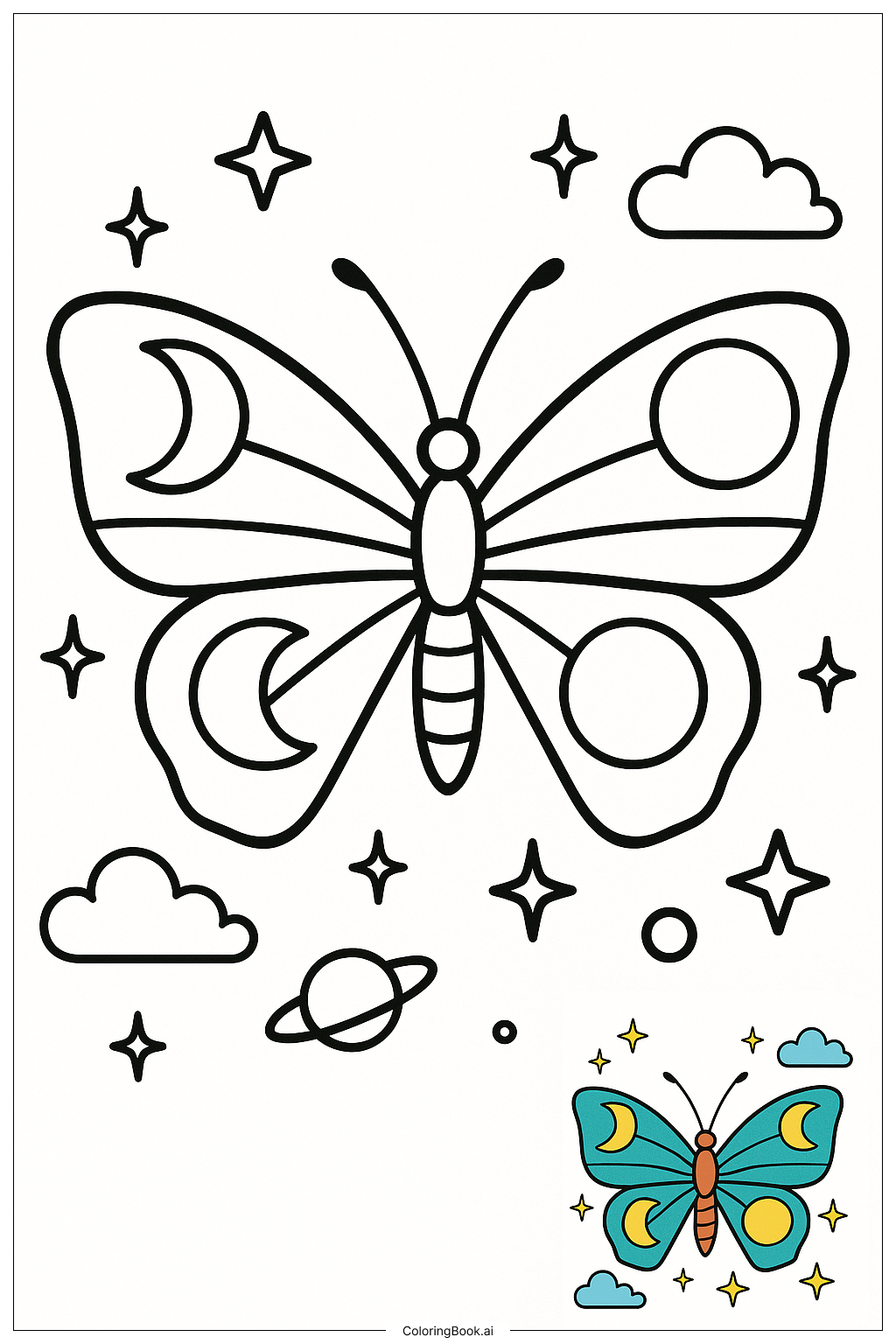
Coloring tips: How to color Butterfly With Celestial Moon Phases coloring page well?
Start with the background. Use deep navy blue or dark purple to give the image a night-sky feel. Then move to the wings. Each moon phase can be a different shade — pale silver for the crescent, soft gold for the quarter moon, and bright white or ivory for the full moon. Try using light blue, lavender, or teal for the decorative swirls and starbursts on the wings. The butterfly's body can be dark indigo or black to anchor the design. Add small dots of yellow or gold to the stars for a glowing effect. Blend colors gently where the moon phases meet to create a smooth, cosmic gradient. Use fine-tipped colored pencils or markers for the tiny details inside the wings. Keep your colors consistent on both sides of the butterfly so it looks balanced and symmetrical.
Coloring challenges: Which parts are difficult to color and need attention for Butterfly With Celestial Moon Phases coloring page?
• Moon Phase Details: Each moon phase symbol on the wings has small curved lines and shading cues built into the outline. Filling these tiny sections neatly without going outside the lines can be tricky, especially for younger colorists. Take your time and use a sharp pencil tip for the smallest areas.
• Wing Symmetry: The butterfly's wings are mirror images of each other. Keeping the colors on the left and right sides matching requires careful attention. It helps to plan your color choices before you start and color both sides at the same time, section by section.
• Gradient and Blending: To make the cosmic background and wing patterns look smooth and glowing, blending colors is important. Transitioning from dark to light — like moving from deep blue to soft silver — takes practice. If you are using colored pencils, layer the colors slowly and use light pressure at first.
• Fine Line Work: The swirling celestial lines, tiny stars, and decorative borders between sections are very narrow. Staying inside these fine outlines without smudging nearby areas is a real challenge. Using fine-tipped tools and letting each section dry before moving to the next can help prevent mistakes.
• Background Balance: The background behind the butterfly is open but connected to the wing design through stars and cosmic swirls. Deciding how dark or light to make the background without overwhelming the butterfly takes some planning. A background that is too dark can hide the wing details, while one that is too light may not capture the night-sky mood.
Benefits of coloring books: Advantages of drawing Butterfly With Celestial Moon Phases coloring page
Coloring this butterfly and moon phases image is a wonderful activity for kids and adults alike. It helps children practice focus and patience, especially when working through the small, detailed sections of the wings. Staying inside the fine lines builds hand control and improves fine motor skills, which are important for writing and drawing.
The celestial theme sparks imagination and curiosity about the night sky. Kids may become interested in learning about the real moon phases after coloring them. This makes the activity both creative and educational.
Choosing colors for a cosmic scene encourages creative thinking. There are no wrong color choices — a child might pick pink moons or rainbow wings, and that is perfectly wonderful. This freedom builds confidence and self-expression.
For older children and adults, the repetitive, detailed work of filling in intricate patterns has a calming effect. It can reduce stress and help the mind relax after a long day. Many people find coloring to be a gentle form of mindfulness.
Finishing a complex image like this also gives a strong sense of accomplishment. Seeing a completed, colorful butterfly on paper is a proud and satisfying moment for colorists of any age.