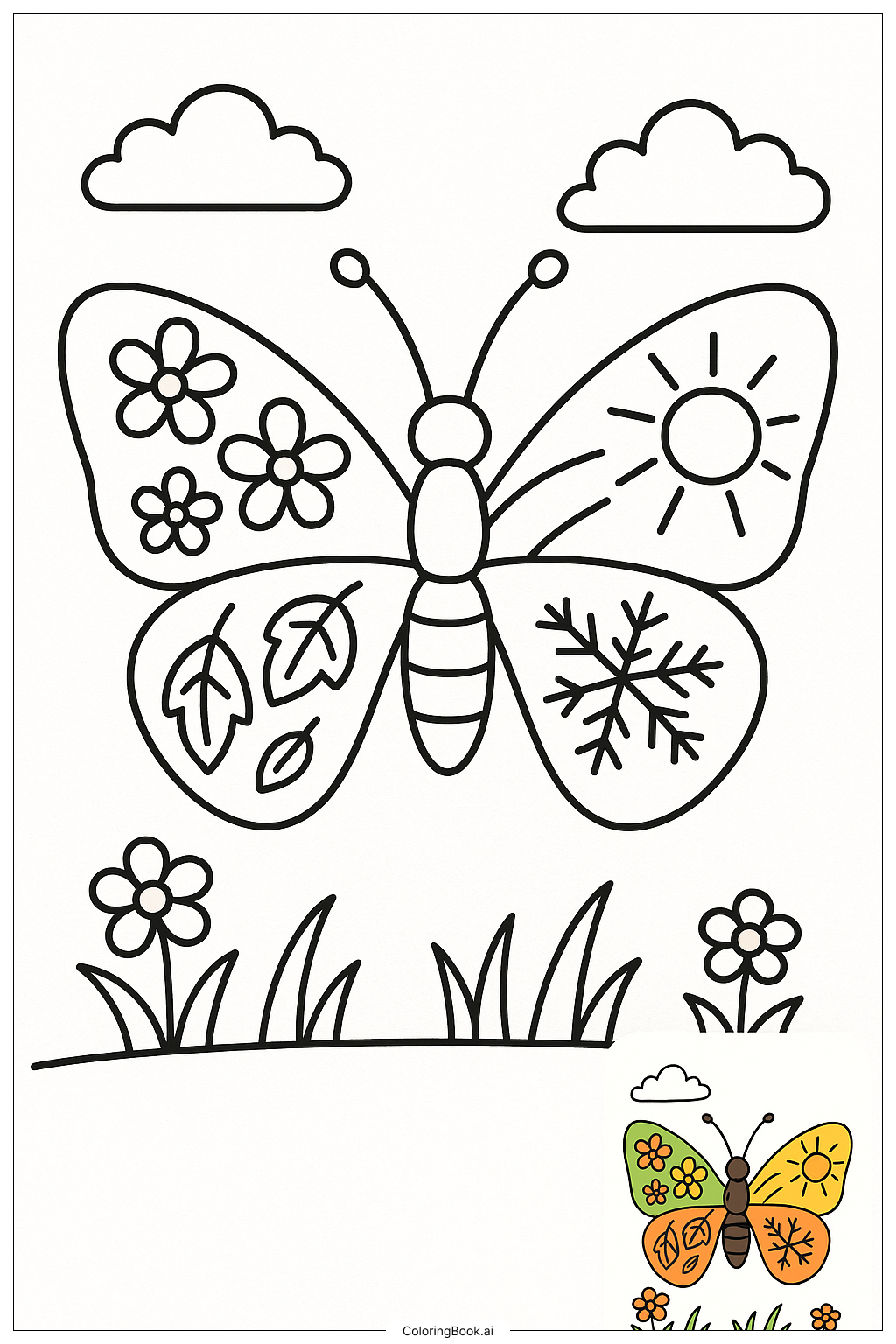
Coloring tips: How to color Butterfly Seasonal Wing Transformations coloring page well?
Start by lightly sketching out your color plan for each wing section before you begin. Use soft pinks and greens for the spring section to capture fresh new growth. For summer, go bold with bright yellows, oranges, and deep greens. The autumn section looks beautiful with warm reds, burnt oranges, and golden browns. Keep the winter section cool and calm using pale blues, silver, and white with light gray shading. Use a darker shade along the wing edges to help each season stand out. The butterfly's body can be a rich brown or deep purple to tie all four seasons together. Take your time with the small details — tiny flowers, snowflakes, and leaves make this image really shine. Coloring each season separately helps keep the colors clean and distinct.
Coloring challenges: Which parts are difficult to color and need attention for Butterfly Seasonal Wing Transformations coloring page?
• Seasonal Color Boundaries: Each wing section represents a different season, and keeping the colors from bleeding into each other is tricky. You need to stay precise along the dividing lines so that spring, summer, autumn, and winter each look clearly separate. Using fine-tipped markers or sharpened pencils helps a lot here.
• Intricate Wing Patterns: The wings are filled with detailed line work including flowers, leaves, snowflakes, and vines. These tiny shapes are packed closely together, making it hard to color each one neatly without accidentally going outside the lines. Patience and small tools are your best friends in these areas.
• Balancing Color Temperature: Each season has its own color mood. Spring and summer feel warm and bright, while autumn is rich and deep, and winter is cool and pale. Getting all four to look balanced on the same butterfly without one season overpowering the others takes careful planning and color mixing.
• Smooth Gradient Shading: Many parts of the wing design benefit from smooth shading that gives the butterfly a sense of depth and movement. Creating even gradients with colored pencils or watercolors without streaks or harsh lines can be challenging, especially in the smaller petal and leaf shapes.
• Tiny Detail Spaces: Some of the smallest features — like snowflake arms, acorn caps, and flower centers — are very small and easy to fill in messily. These require a very steady hand and a sharp, fine tool to color cleanly and make the finished piece look polished.
Benefits of coloring books: Advantages of drawing Butterfly Seasonal Wing Transformations coloring page
Coloring this butterfly page is a wonderful activity for kids and adults alike. It helps build focus and patience, since the detailed wing designs ask you to slow down and pay close attention to small spaces. Working through four seasons in one image also sparks creativity, as you get to explore a wide range of colors and moods all on one page.
For younger children, matching colors to seasons is a fun way to learn about nature and the changing world around them. It encourages them to think about what each season looks and feels like, which builds both imagination and vocabulary.
For older kids and adults, the challenge of balancing warm and cool tones across the wings develops real color theory skills. Practicing smooth shading and staying within fine lines improves hand control and attention to detail.
This page is also deeply relaxing. The flowing, symmetrical butterfly shape and the rich seasonal patterns create a calming rhythm as you work through each section. It feels satisfying to watch each season come to life with color.
Most of all, finishing this page gives a real sense of pride and accomplishment. The result is a beautiful, unique piece of art that captures the magic of nature through all four seasons.