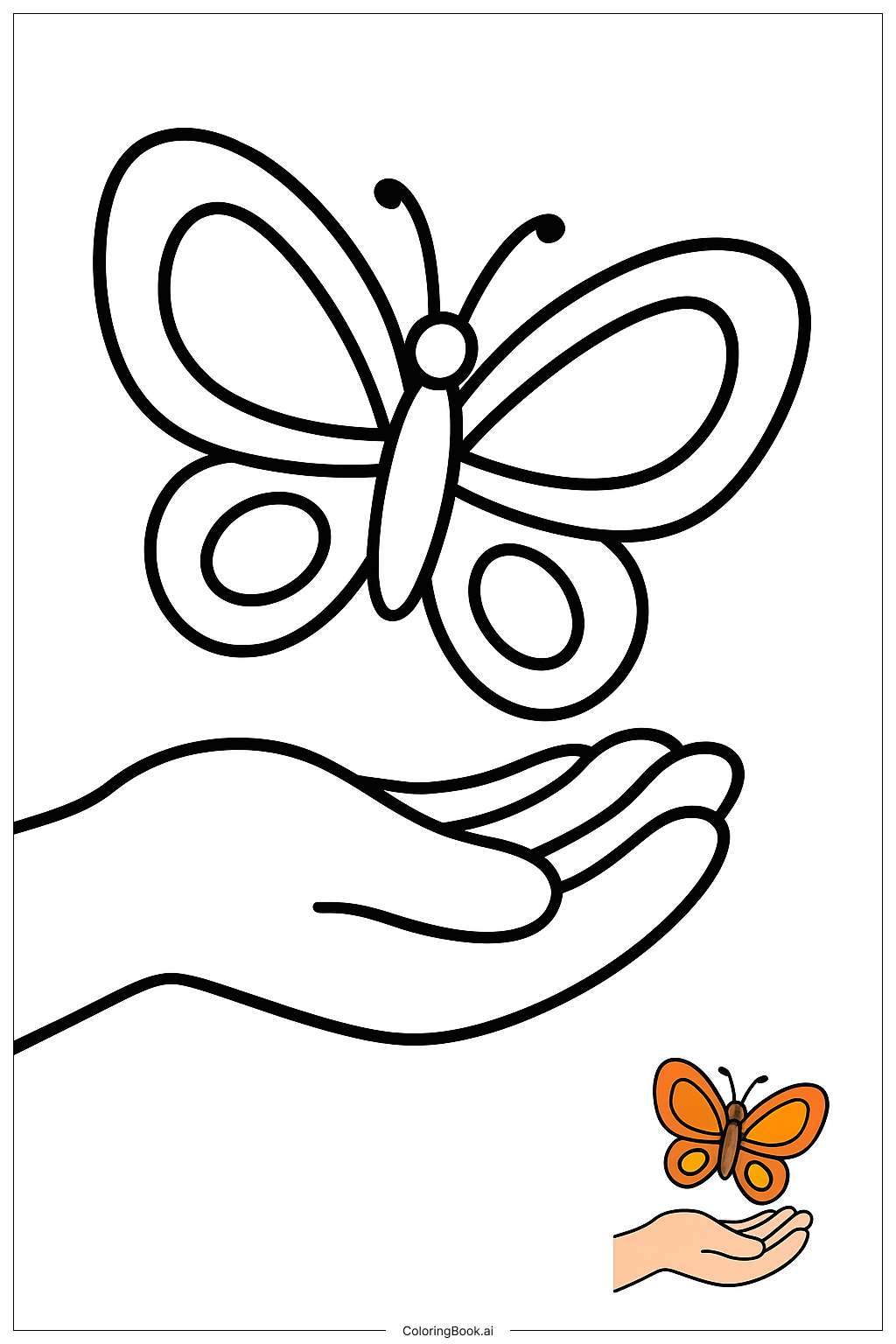
Coloring tips: How to color Butterfly Landing On Child's Hand coloring page well?
Start with the butterfly's wings since they are the most eye-catching part. Use bright, warm colors like orange, yellow, and red for a monarch-style look, or go cool with blue, purple, and teal for a fantasy feel. Add black or dark brown along the wing edges and vein lines to make the pattern pop. Use small dots of white or yellow inside the wing markings for extra detail. For the child's hand and arm, choose a soft skin tone such as peach, tan, or light brown. Keep the skin shading gentle and smooth. You can add a faint pink blush to the fingertips. If there is a background, try a light sky blue or soft green to suggest an outdoor setting. Let kids pick their own wing colors too — there are no wrong choices here!
Coloring challenges: Which parts are difficult to color and need attention for Butterfly Landing On Child's Hand coloring page?
• Wing Pattern Symmetry: The butterfly's wings have matching patterns on both sides. Keeping the colors and markings balanced across both wings can be tricky. It helps to color one wing first, then carefully repeat the same colors on the other side. Take your time and check both wings often as you go.
• Small Wing Details: The wings contain tiny dots, curved lines, and scale-like textures. These small areas require a sharp pencil or a fine-tipped marker to fill in neatly without going outside the lines. Younger children may find these details harder to control, so using colored pencils with pointed tips works best.
• Skin Tone Blending: Coloring the child's hand naturally takes care and patience. Skin tones look best when shaded smoothly, with slightly deeper color in the creases between fingers and along the edges. Blending two similar shades together gives a more realistic and soft appearance than using a single flat color.
• Contrast Between Subjects: Making the butterfly stand out against the child's hand requires thoughtful color choices. If the hand is a warm peach or tan, choosing cool or bright wing colors like blue, purple, or bright orange will create a pleasing contrast. Avoid using very similar shades for both, as this can make the image look flat and hard to read at a glance.
• Antenna and Fine Lines: The butterfly's antennae are very thin lines. Coloring them without smearing nearby areas or losing their delicate shape is a small but real challenge. Use a very fine tip and a steady hand, or simply outline them carefully in black last.
Benefits of coloring books: Advantages of drawing Butterfly Landing On Child's Hand coloring page
Coloring this image of a butterfly resting on a child's hand offers many wonderful benefits for kids and families alike. First, it builds fine motor skills. Carefully filling in the butterfly's small wing patterns and the child's fingers strengthens hand control and coordination. Second, it encourages focus and patience. Staying inside the detailed lines and matching wing patterns on both sides teaches children how to slow down and concentrate. Third, it sparks creativity. Choosing colors for the wings is a fun, open-ended decision that helps kids express themselves freely. There are no rules — a child can create a rainbow butterfly or a realistic one. Fourth, it connects children with nature. The gentle scene of a butterfly landing on a hand opens conversations about insects, habitats, and caring for living things. Fifth, it promotes calm and relaxation. The quiet, repetitive action of coloring is soothing and can help children manage stress or wind down after a busy day. Sharing this page with a parent or friend also makes it a great bonding activity. Overall, this image is a joyful and enriching coloring experience for children of all ages.