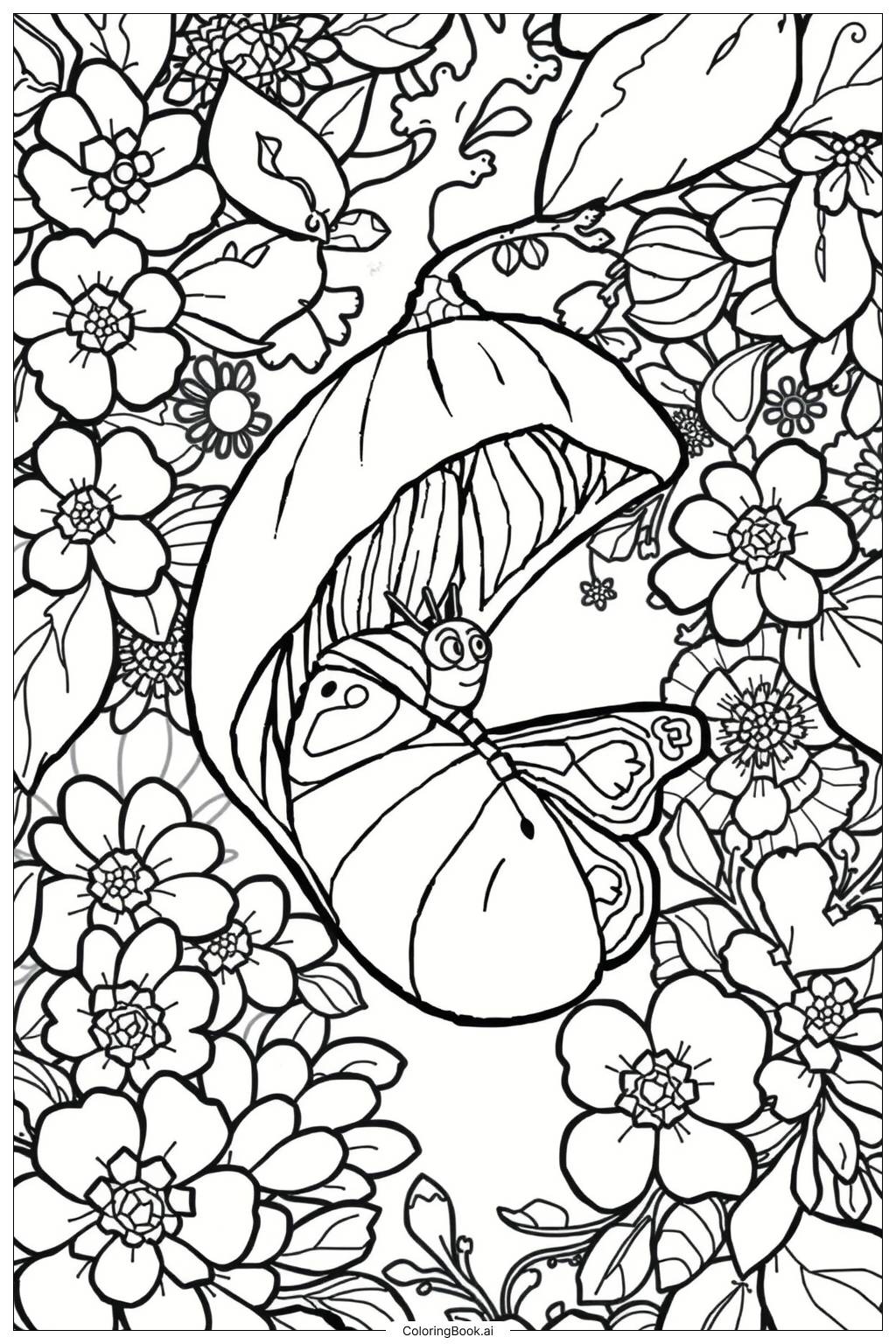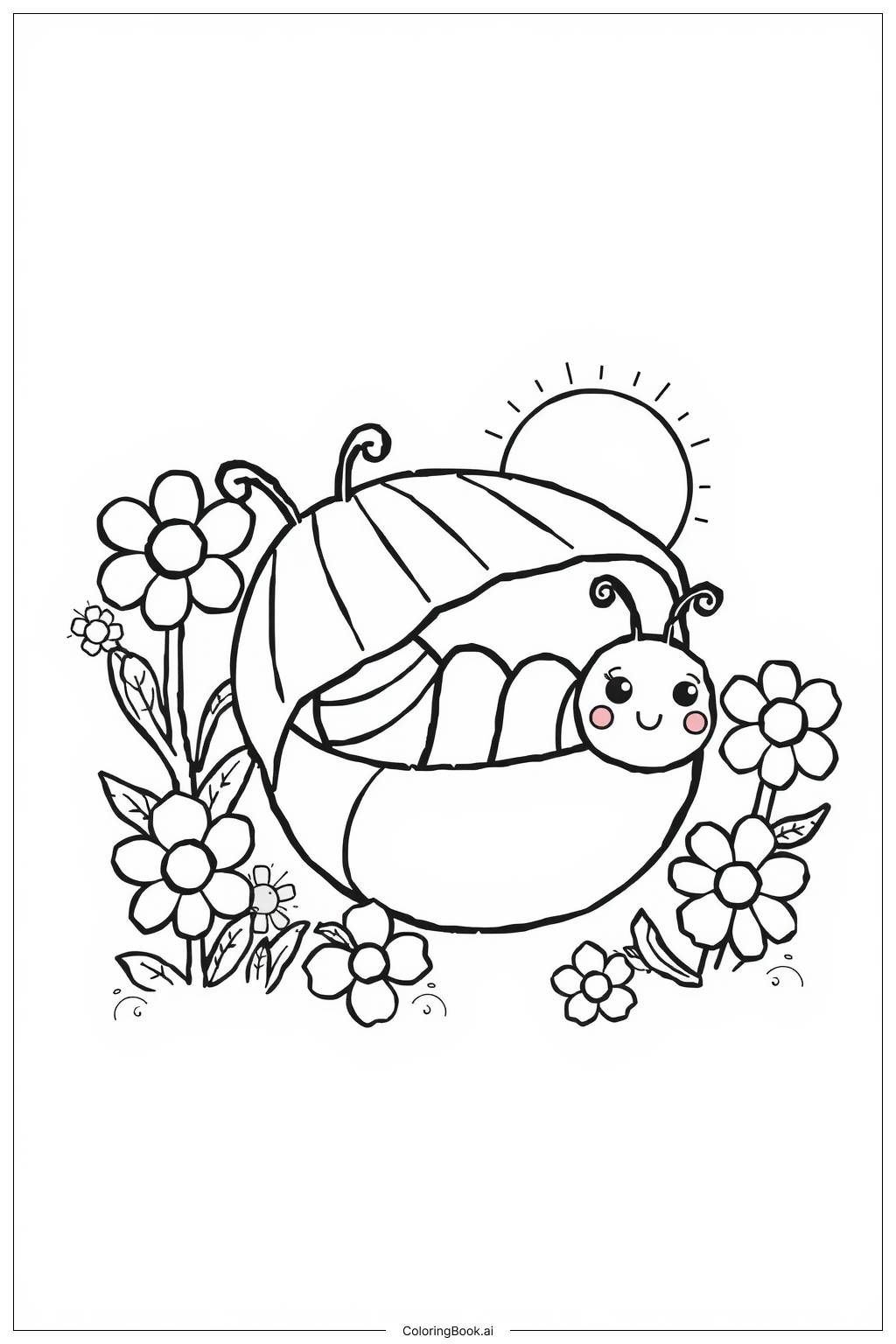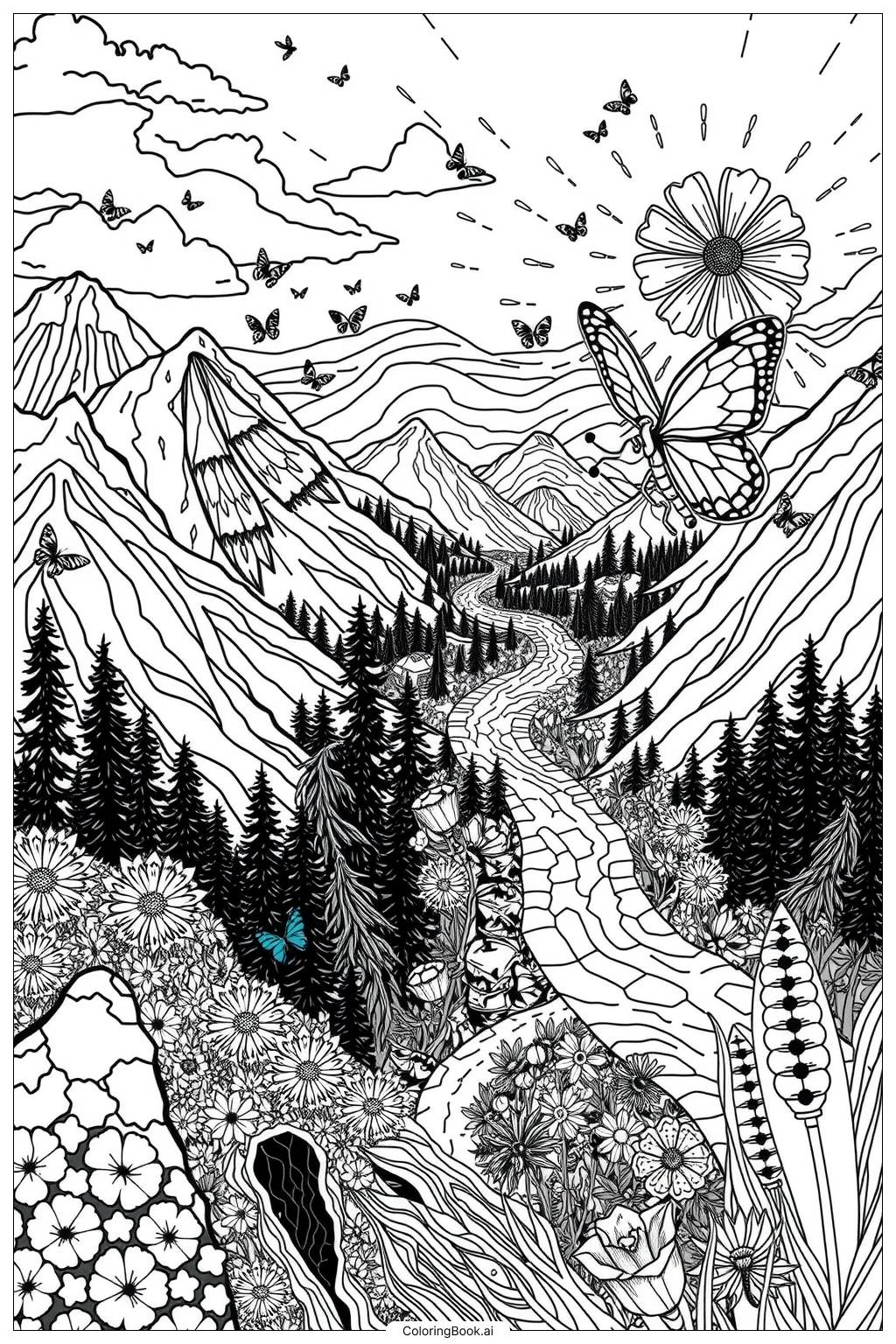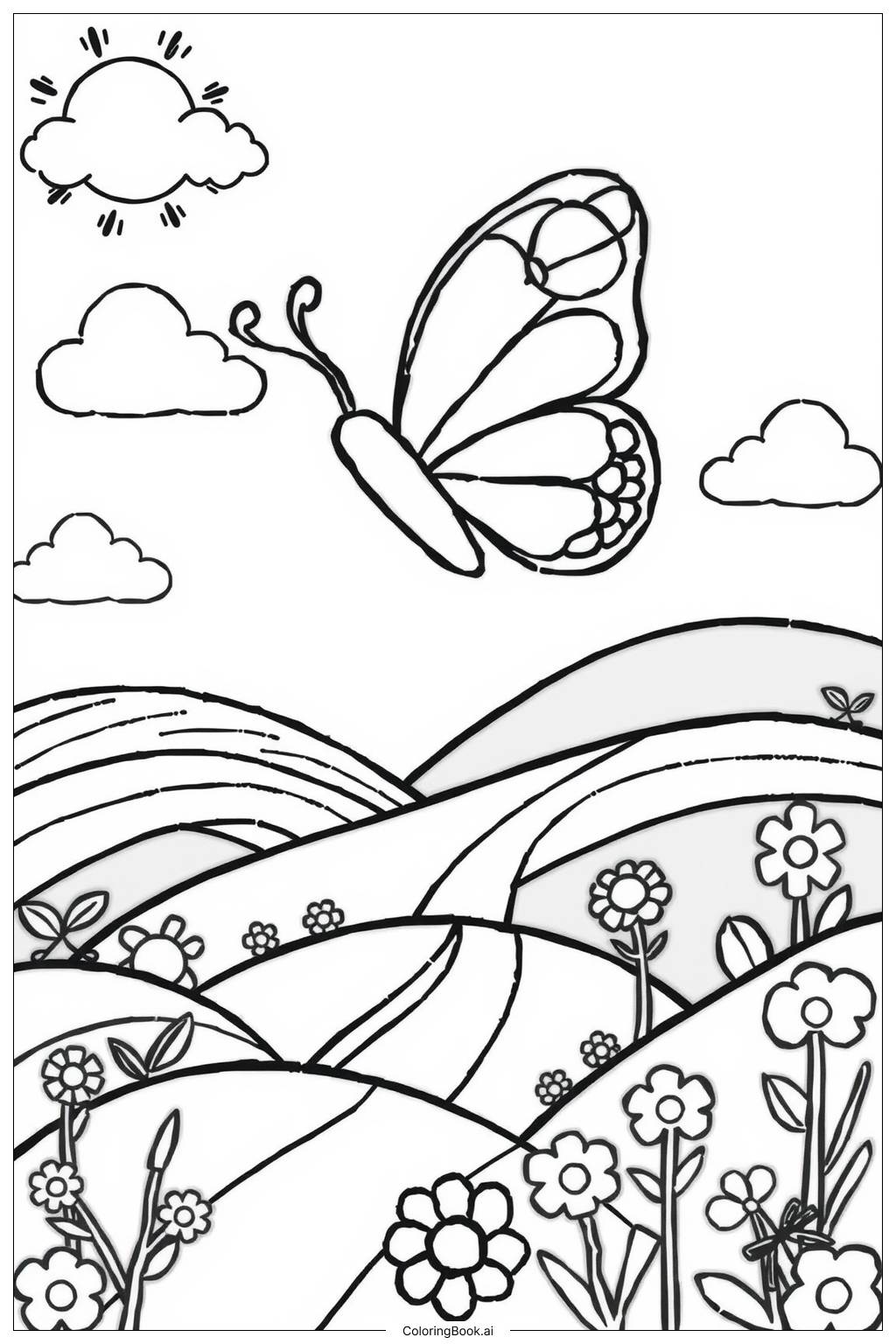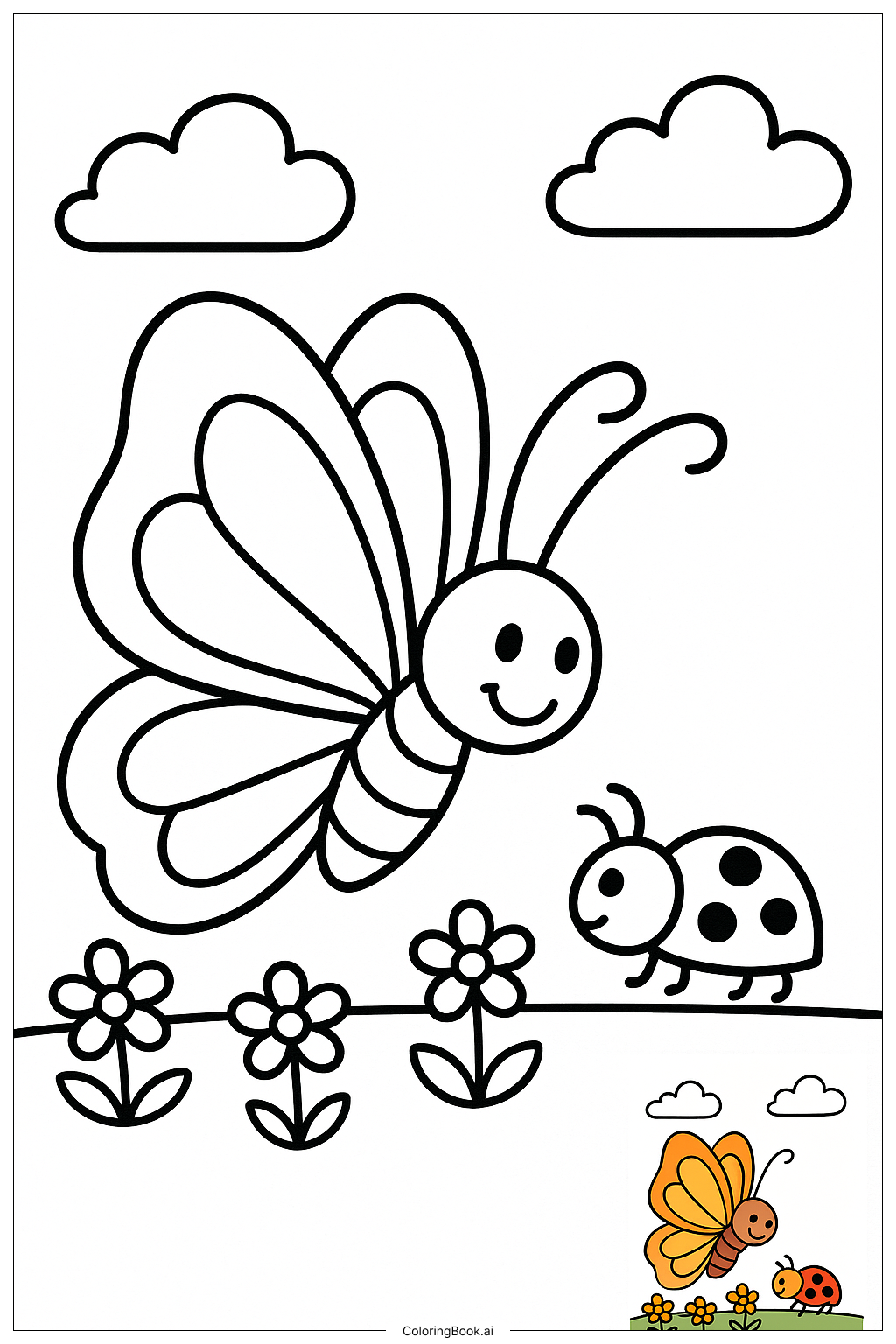
Coloring tips: How to color Butterfly Guiding Lost Ladybug coloring page well?
Start with the butterfly's wings. Use bright, cheerful colors like orange, yellow, or purple. You can add a second color near the edges to make the wings look layered and alive. For the wing patterns, try using a darker shade of the same color to make the swirls and dots stand out.
Color the ladybug red with black spots. Keep it bold and simple so it pops against the green leaves. Use different shades of green for the leaves — light green for the tops and darker green for the undersides or shadows.
For the flowers, pick any colors you love — pink, lavender, or sunny yellow all work well. The background can be left white or lightly shaded with a pale blue or soft yellow to give the scene a gentle, airy feeling.
Use thin, careful strokes inside the small details on the butterfly's wings. Colored pencils work great here. For larger areas like leaves and petals, crayons or markers can fill the space quickly and smoothly. Have fun mixing colors — there is no wrong way to color this friendly scene!
Coloring challenges: Which parts are difficult to color and need attention for Butterfly Guiding Lost Ladybug coloring page?
• Butterfly Wing Patterns: The butterfly's wings are filled with fine swirls, dots, and curved lines packed closely together. Staying inside each tiny section without crossing over into neighboring areas takes patience and a sharp, well-pointed coloring tool. Young colorists may find it helpful to slow down and work one small section at a time rather than trying to color the whole wing at once.
• Blending Wing Colors: To make the wings look beautiful and natural, you may want to blend two or more colors together smoothly. Achieving a soft gradient — for example, going from bright orange in the center to deep red at the tips — requires gentle pressure and careful layering. This technique can be tricky for beginners but becomes easier with practice.
• Small Ladybug Details: The ladybug is small and round with tiny spots and a fine dividing line down its back. Coloring these small shapes neatly without smudging or going outside the lines is one of the trickiest parts of this image, especially for younger children using thicker crayons.
• Leaves and Stems: There are several overlapping leaves and stems in the background. Deciding which leaf should be lighter or darker — and keeping those color choices consistent — helps the image look three-dimensional. Mixing too many similar shades in the same area can make it look flat or muddy.
• Overall Color Balance: Because the butterfly is the largest and most detailed element, it can easily dominate the whole picture. Balancing bold wing colors with softer tones for the flowers, leaves, and background takes a thoughtful eye to keep the full scene looking harmonious and pleasing.
Benefits of coloring books: Advantages of drawing Butterfly Guiding Lost Ladybug coloring page
Coloring this image of a butterfly guiding a lost ladybug offers many wonderful benefits for children and creative minds alike.
For young children, carefully coloring the butterfly's detailed wing patterns helps build fine motor skills and improves hand control. Staying inside small, curved lines trains the fingers and wrist to move with greater precision — a skill that helps with writing and drawing too.
The friendly story behind the image — a kind butterfly helping a little ladybug find its way — gently encourages values like empathy, kindness, and helpfulness. Talking about the image while coloring can spark meaningful conversations about looking out for others.
Choosing colors for the wings, flowers, and leaves invites creative thinking and decision-making. Children get to experiment freely, building confidence in their own choices without the fear of a wrong answer.
The calming, repetitive motion of filling in shapes helps reduce stress and supports focus. Many children find it easier to settle their thoughts while doing a quiet, hands-on activity like this one.
For older kids and teens, the intricate wing details offer a satisfying challenge that rewards patience and attention to detail. Completing a complex image builds a sense of accomplishment and pride.
Overall, this sweet and cheerful scene makes coloring feel like both play and learning — all at the same time.