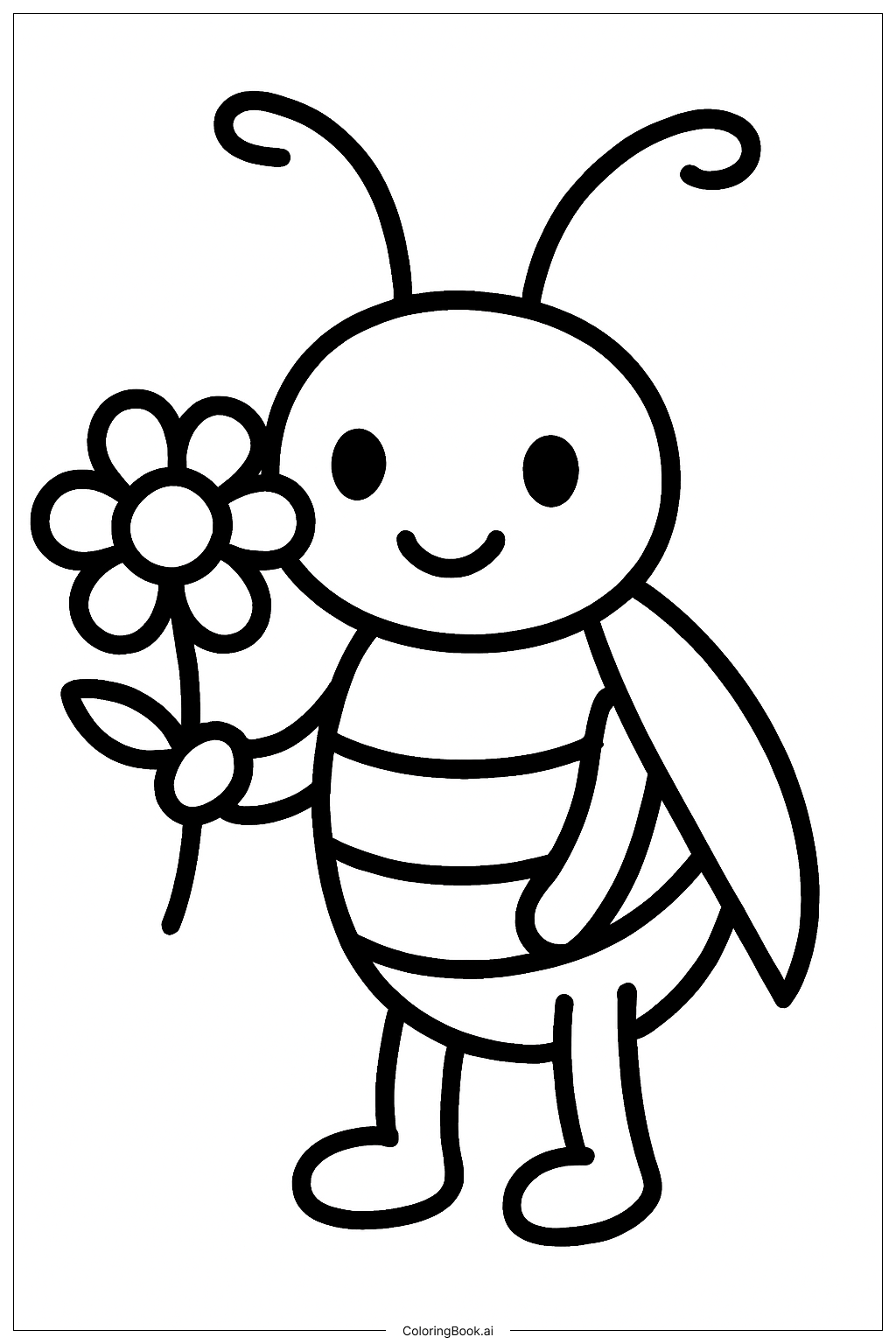
Coloring tips: How to color Bug Holding A Flower coloring page well?
Start with the bug's body. Ladybug red with black spots works great, or try a fun green or purple for a more imaginative look. Use a bright yellow or orange for the flower petals to make them pop. Color the flower's center in deep brown or golden yellow. For the wings, try a soft, translucent look using light blue or pale lavender. The antennae can be colored in a darker shade matching the body. Use light green for any leaves or stem details. Outline areas with a slightly darker version of each base color to add depth. Keep the eyes bright — white with a dark pupil makes them look alive and expressive. Have fun mixing colors and don't be afraid to try bold, unexpected combinations!
Coloring challenges: Which parts are difficult to color and need attention for Bug Holding A Flower coloring page?
• Body Segmentation Details: The bug's body is divided into multiple rounded segments. Keeping each segment a consistent color while smoothly transitioning between sections can be tricky, especially for younger colorists. Take your time and fill one segment at a time before moving to the next.
• Small Wing Areas: The wings are delicate and relatively small compared to the rest of the body. Staying within the fine outlines of the wings without going over the edges requires a steady hand and a sharpened pencil or a fine-tip marker. A light touch works best here.
• Flower Petal Spacing: Each petal of the flower has its own defined border. Coloring each petal neatly and evenly — especially where they meet the center — can be challenging. Using a lighter base coat first and then layering a slightly darker shade toward the edges creates a natural, rounded look.
• Tiny Antennae and Leg Lines: The antennae are thin and curved, and the legs are narrow. These areas are easy to accidentally overfill or smudge. Use a very fine-tipped tool for these sections and work slowly to preserve the clean, curled lines.
• Eye Expression Preservation: The large eyes have multiple layers — an outer circle, an iris, a pupil, and a highlight dot. Coloring each layer separately without muddying the overall look takes patience. Leave the highlight dot white to keep the eyes looking bright and full of life.
Benefits of coloring books: Advantages of drawing Bug Holding A Flower coloring page
Coloring this cheerful bug holding a flower offers a wonderful range of benefits for kids and beginners alike. First, it helps build fine motor skills. Carefully staying within the lines of the small wings, thin antennae, and detailed petals trains hand control and pencil grip. Second, it encourages creativity. There is no single right way to color a bug — kids are free to pick any colors they love, which boosts imagination and self-expression. Third, it teaches focus and patience. Completing a detailed image like this one requires attention and persistence, skills that carry over into school and everyday life. Fourth, it introduces basic concepts about nature in a fun and approachable way. Kids naturally become curious about bugs and flowers as they color them. Finally, finishing the page gives a real sense of accomplishment. Seeing a completed, colorful piece of art that they made themselves builds confidence and pride. This image is a wonderful starting point for young colorists.