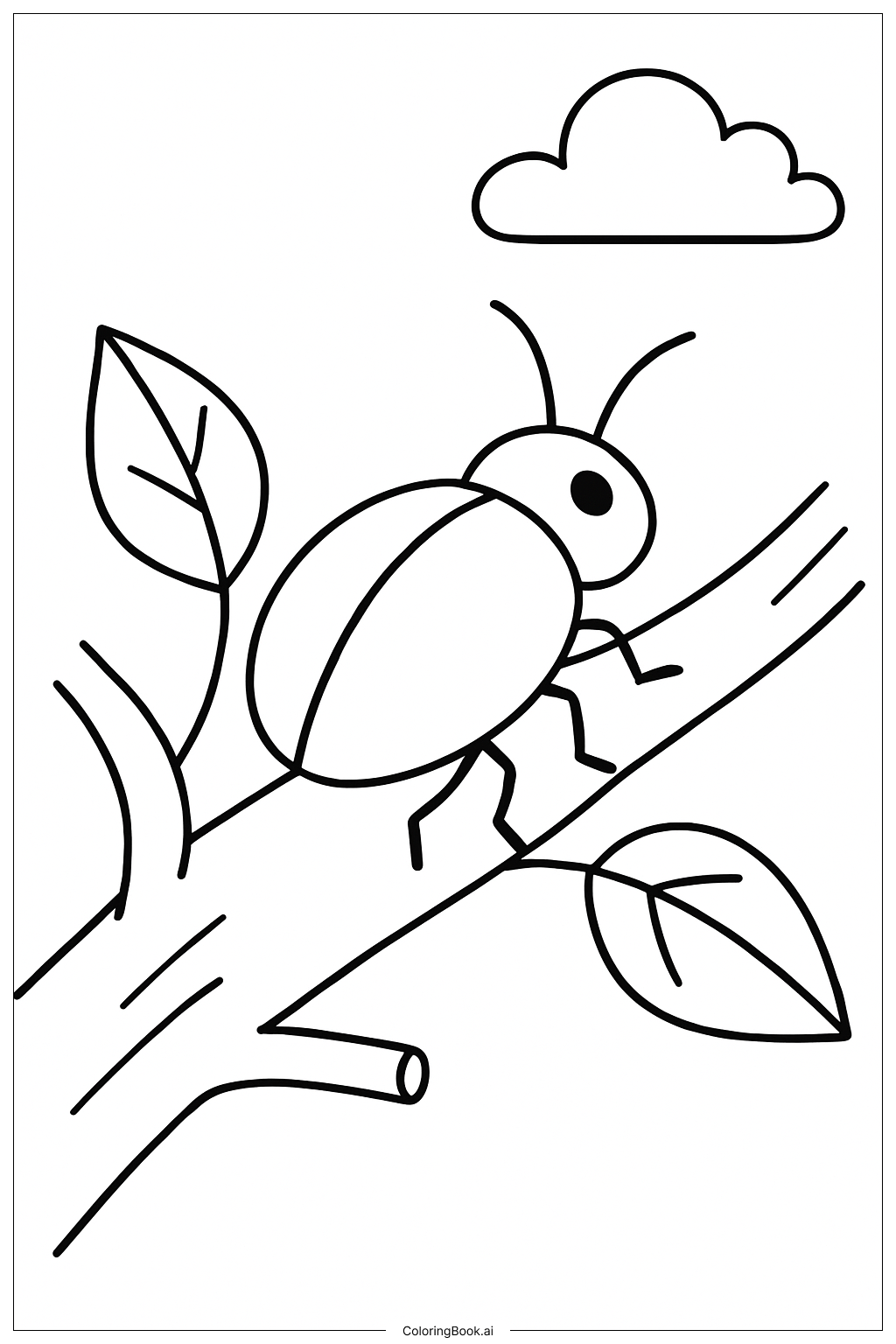
Coloring tips: How to color Bug On A Tree Branch coloring page well?
Start with the bug's body. Use bright, fun colors like red, orange, green, or blue. You can add spots or stripes to make it look unique. Color the wing covers a slightly darker shade than the body to give them depth. Use brown or gray for the tree branch. Add lighter brown streaks along the bark to show the wood grain. For the leaves, try different shades of green. You can make some leaves darker and some lighter to show how light hits them. Use a yellow-green for the veins inside the leaves. The bug's legs and antennae can be dark brown or black. If you want to make the scene feel alive, try adding a soft blue or light yellow background to suggest sky or sunlight. Don't be afraid to mix colors and experiment. There is no wrong way to color this scene!
Coloring challenges: Which parts are difficult to color and need attention for Bug On A Tree Branch coloring page?
• Bug Body Details: The bug's body has small segments and a rounded shape that can be tricky to color neatly. Each section of the body is slightly separate, so staying within the lines takes patience. Using a fine-tipped coloring pencil or marker will help you fill each segment cleanly without bleeding into the next area.
• Leg and Antennae Precision: The six thin legs and long antennae are very narrow areas to color. These small details require a steady hand and a sharp pencil. Going slowly and using light pressure helps you stay on track. You can outline these parts first with a dark color and then fill them in carefully.
• Bark Texture Shading: The tree branch has a rough, lined texture that looks best when colored with layered shading. Using just one flat color can make the bark look dull. Try using two or three shades of brown and blending them to give the bark a realistic, three-dimensional feel.
• Leaf Vein Details: The leaves contain thin vein lines running through them. Coloring around these tiny lines without covering them is a challenge. One approach is to color the leaf first with a light green base and then trace along the veins with a slightly darker shade to make them stand out.
• Balancing the Overall Scene: Because the image has a bug, a branch, and leaves all together, making sure no single part looks too dark or too bright compared to the others can be difficult. Step back and look at the whole picture as you color to keep everything balanced and harmonious.
Benefits of coloring books: Advantages of drawing Bug On A Tree Branch coloring page
Coloring this image of a bug on a tree branch is a wonderful activity for kids and nature lovers alike. It helps children learn about insects and the natural world in a fun and hands-on way. As they choose colors for the bug's body, wings, and legs, they develop creative thinking and decision-making skills. Working on the small details like the legs, antennae, and leaf veins builds fine motor skills and improves hand-eye coordination. This is great practice for writing and other precision tasks. Focusing on staying within the lines also trains concentration and patience, helping kids develop the ability to work carefully on a task from start to finish. The calming nature of coloring can reduce stress and anxiety, making it a healthy way to unwind after a busy day. Coloring nature scenes like this one also sparks curiosity about the outdoors and can encourage kids to look more closely at the world around them. It is a screen-free activity that the whole family can enjoy together, making it both educational and a great bonding experience.