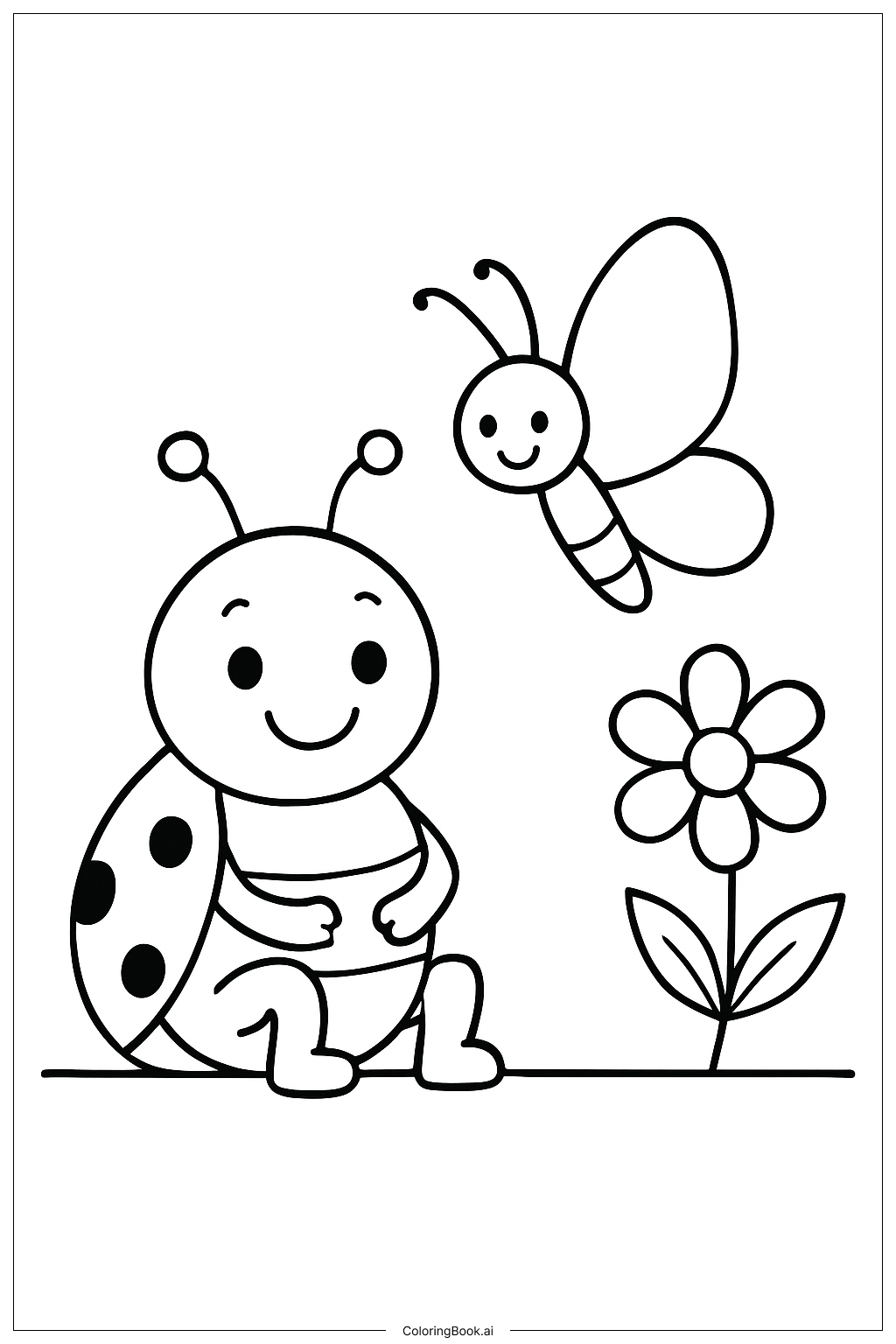
Coloring tips: How to color Bug And Butterfly Friend coloring page well?
Start with the butterfly's wings, as they are the focal point of the image. Use bright, vivid colors like orange, yellow, purple, or blue to make the wing patterns pop. You can mix two or three colors on each wing to create a gradient or mosaic effect. For the wing spots and swirls, try a contrasting color so the details stand out clearly.
For the bug's body, pick a fun color like red, green, or bright blue. Add small dots or stripes to give it personality. Use a darker shade to outline the body segments and legs for definition.
Color the antennae in a complementary color to the body. For background elements like leaves or flowers, use soft greens and pastels so the two main characters remain the visual focus. Let kids experiment freely — there are no wrong color choices here!
Coloring challenges: Which parts are difficult to color and need attention for Bug And Butterfly Friend coloring page?
• Butterfly Wing Patterns: The butterfly's wings are filled with detailed swirls, curved lines, and decorative spots. Staying inside these small, intricate shapes requires a steady hand and a fine-tipped coloring tool. Younger children may find it tricky to fill each section without going over the lines, so using thin markers or sharpened colored pencils is recommended.
• Consistent Wing Symmetry: Butterfly wings are naturally symmetrical, meaning the left and right wings should ideally mirror each other in color and pattern. Keeping both sides balanced while coloring can be a challenge, especially for beginners. It helps to color one wing first and then match the other side section by section.
• Small Bug Details: The bug character has tiny legs, small antennae, and a compact body with distinct segments. These small areas are difficult to color neatly without accidentally coloring over the outlines. Using a very fine coloring tool for these parts will help maintain clean, crisp results.
• Color Transitions Between Characters: The bug and butterfly are positioned close together, which means their colors need to complement each other without clashing or blending into one another visually. Choosing colors that contrast well will help each character stand out as a separate figure in the scene.
• Background Balance: If background elements like leaves or flowers are present, coloring them without overpowering the main characters can be challenging. Using lighter, more muted tones for the background ensures the bug and butterfly remain the clear stars of the page.
Benefits of coloring books: Advantages of drawing Bug And Butterfly Friend coloring page
Coloring this Bug And Butterfly Friend page offers a wonderful range of benefits for children and young artists of all skill levels.
First, it builds fine motor skills. Carefully filling in the butterfly's wing patterns and the bug's small body parts requires precise hand movements, which strengthen the grip and control needed for writing and other detailed tasks.
Second, it encourages creativity. With so many sections to color, children get to experiment with different color combinations, patterns, and shading techniques. There are no rules — every child's page will turn out uniquely their own.
Third, it teaches focus and patience. The detailed designs invite children to slow down, concentrate, and work through each section thoughtfully. This kind of quiet, focused activity is great for building attention spans.
Fourth, it sparks a love of nature. The friendly bug and butterfly characters introduce children to the natural world in a fun, approachable way, making it a great conversation starter about insects, gardens, and ecosystems.
Finally, completing the page gives children a real sense of pride and accomplishment — a finished piece of art they created themselves. That confidence carries over into other areas of learning and play.