Coloring tips: How to color Artemis II Surface Rover And Crewmembers coloring page well?
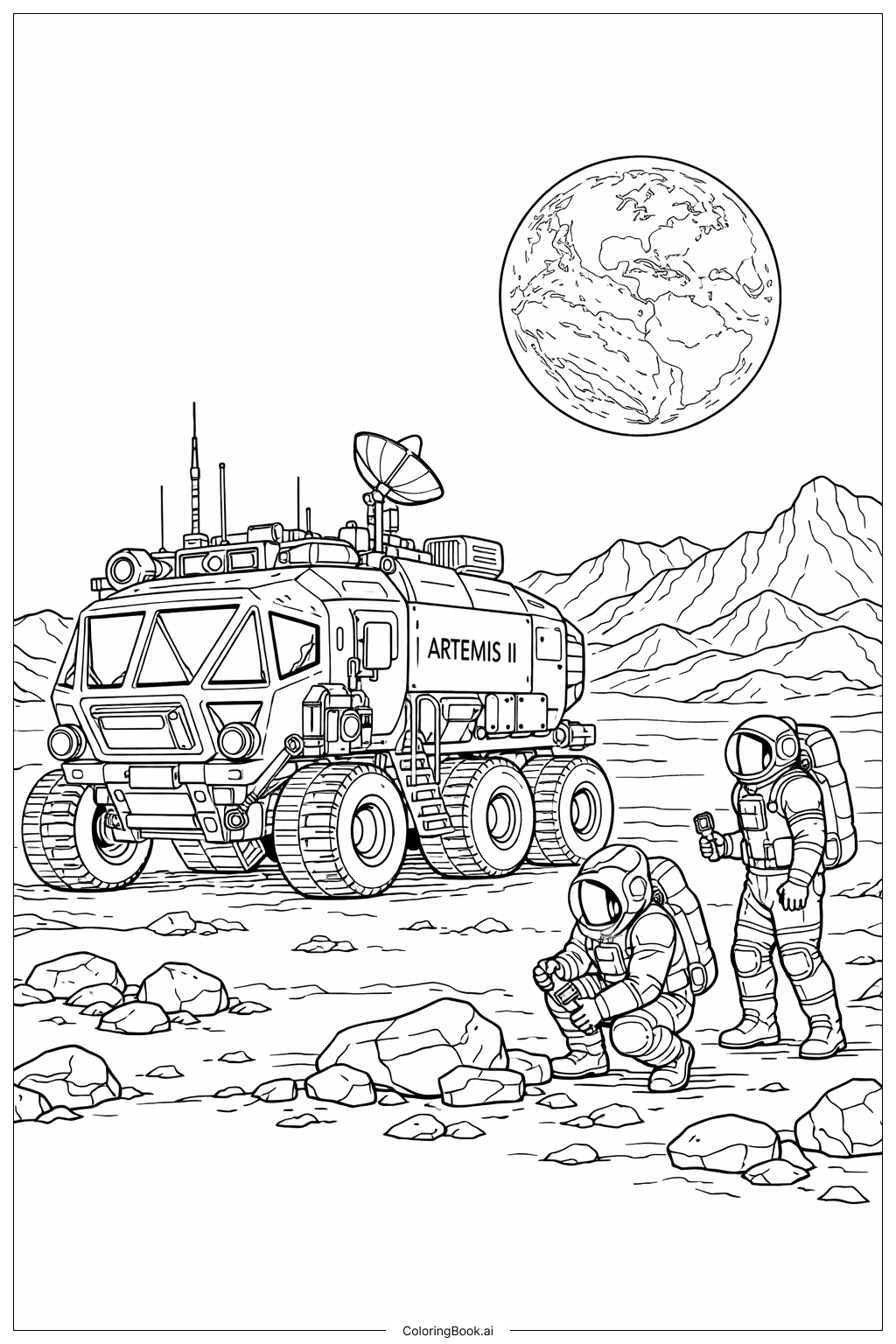
For the Artemis II Surface Rover, think of metallic colors like silver, gray, and white for the body. The tires can be dark gray or black, showing their rugged design. The astronauts’ space suits can be mostly white with splashes of color for patches, gloves, and helmets, such as red, blue, or orange. The lunar surface could be colored in shades of light gray and tan with craters or rocks in darker browns and grays. The sky behind can be deep black or a dark blue to represent space. Try using bright colors for the astronauts’ patches and equipment to create a fun contrast with the mostly neutral tones of the moon and rover.
Coloring challenges: Which parts are difficult to color and need attention for Artemis II Surface Rover And Crewmembers coloring page?
• Detailed Space Suits: The astronauts’ suits have many small parts including tubes, helmets, and gloves, making it tricky to color each section neatly. Staying inside the lines while adding different colors to the patches needs focus. • Rover Wheels: The large wheels have tread patterns that require careful coloring to show texture. It might be hard to add shading to make them look round and realistic. • Background Landscape: The lunar surface has many uneven shapes like rocks and craters. Coloring these so they look 3D and not flat can challenge especially young colorers. • Contrast Balance: The image mixes large blank areas with detailed parts, which means balancing bright and dark colors thoughtfully to keep the picture interesting. • Maintaining Clean Edges: Since the outlines are fine, beginners may find it hard to avoid coloring outside the lines, especially around the complex shapes of the suits and rover parts.
Benefits of coloring books: Advantages of drawing Artemis II Surface Rover And Crewmembers coloring page
Coloring this image helps children develop fine motor skills by requiring control over small details like the astronauts’ equipment and rover components. It encourages creativity as kids decide how to color space suits, rover parts, and the rocky moon surface. The image also inspires interest in space exploration and science, opening up curiosity about Artemis II’s mission. Working on shading the rover’s wheels and lunar terrain supports learning about light and shadow. Overall, coloring stimulates both artistic and cognitive skills while making learning about space fun and engaging.