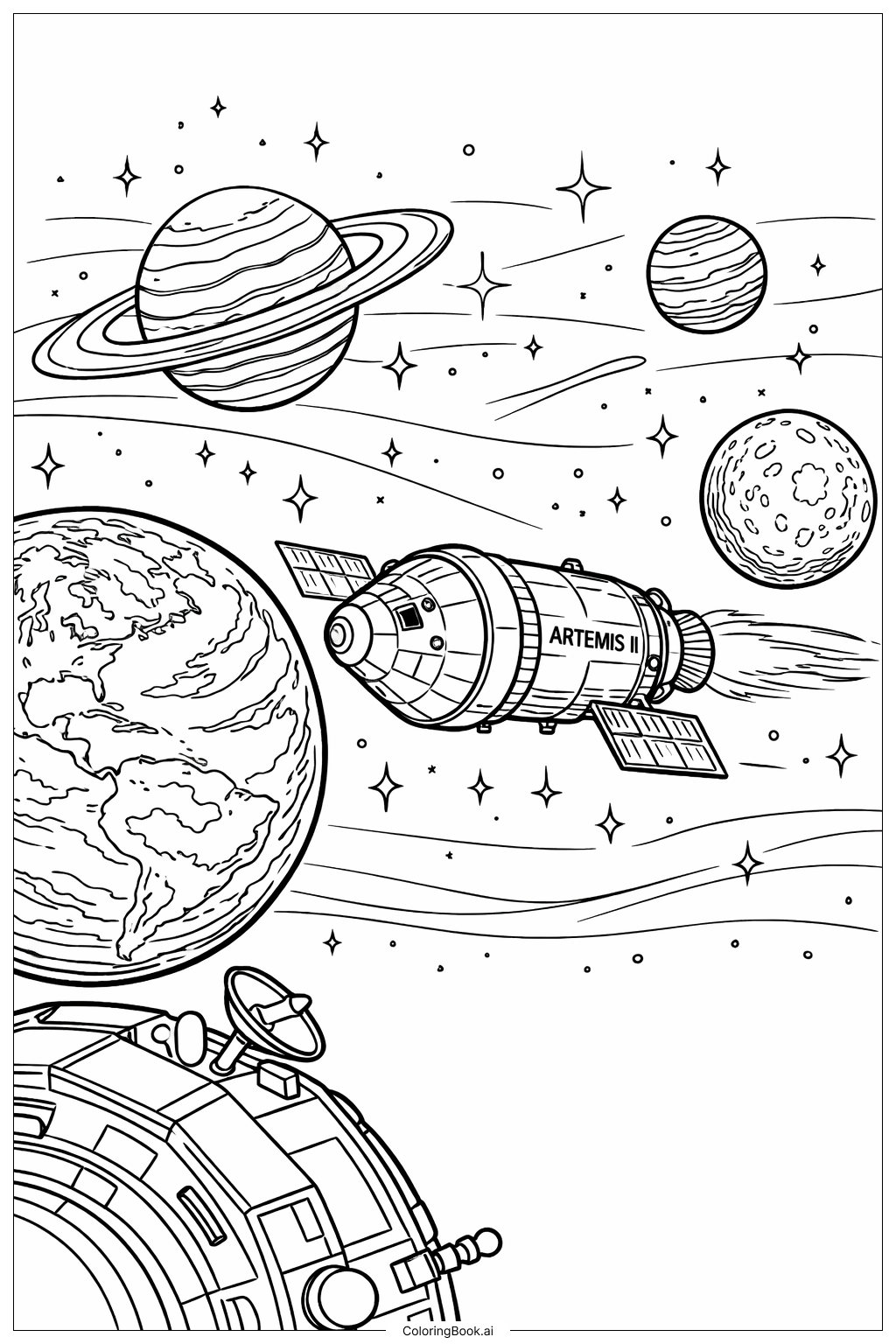
Coloring tips: How to color Artemis II Earth-Moon Transit Panorama coloring page well?
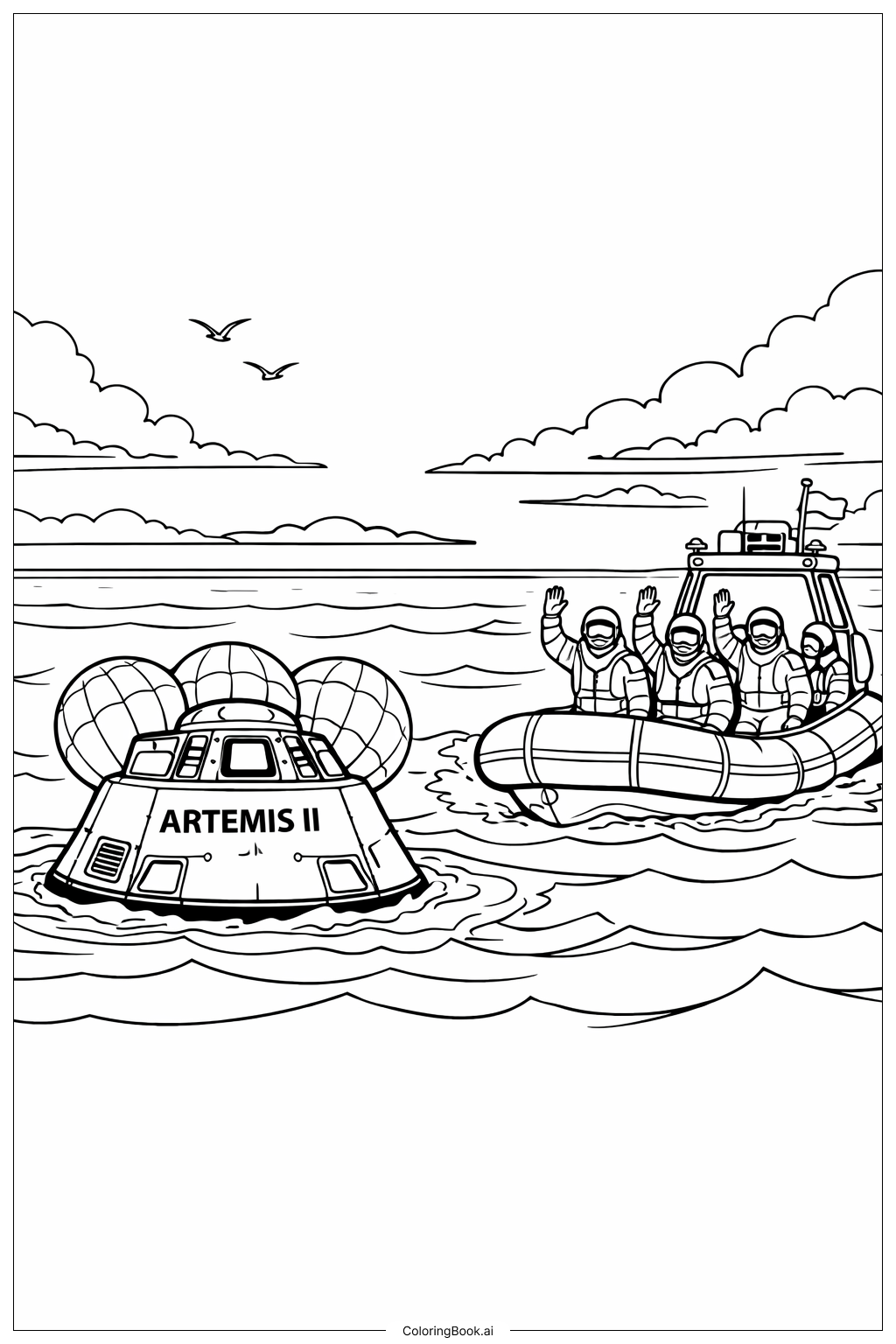
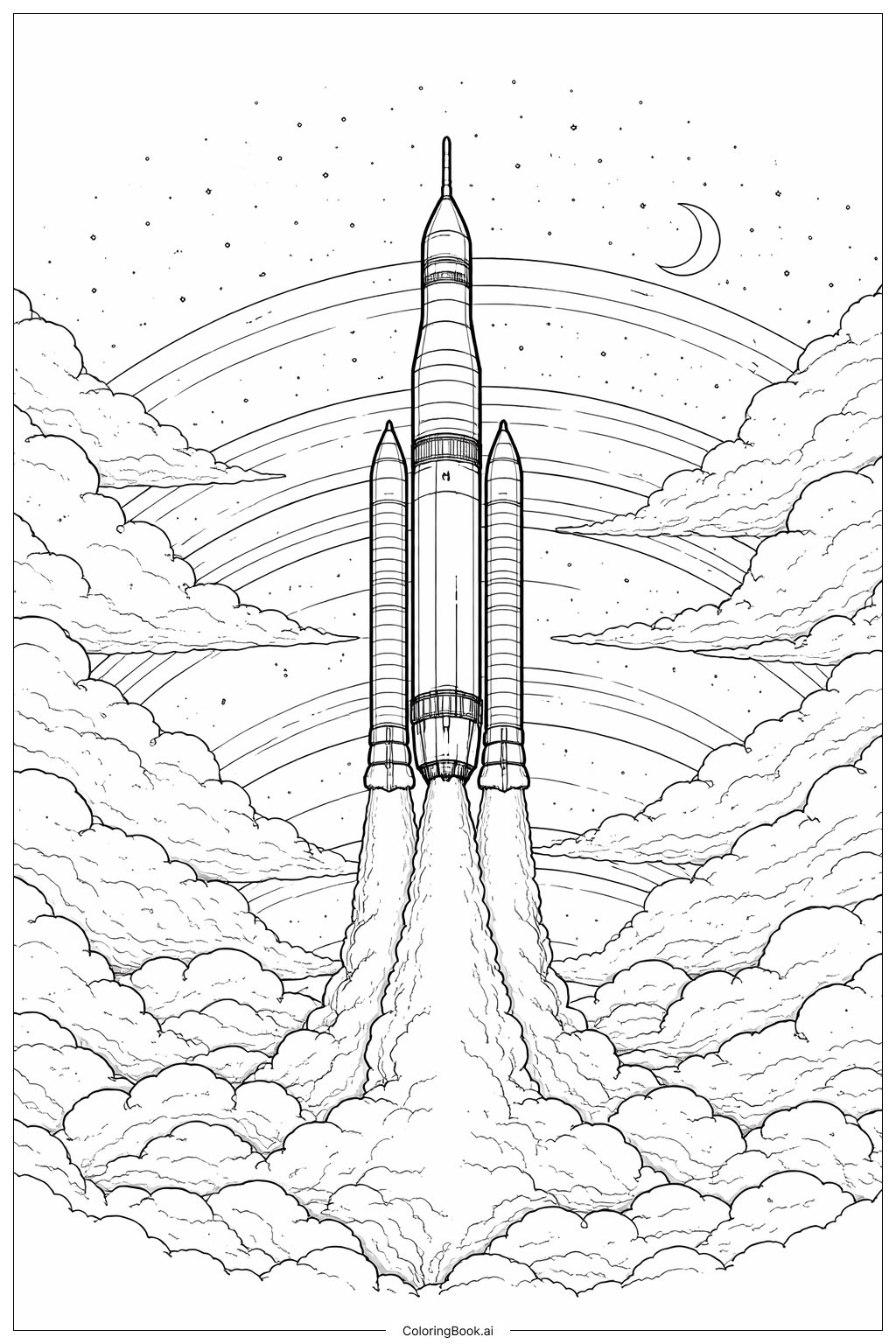
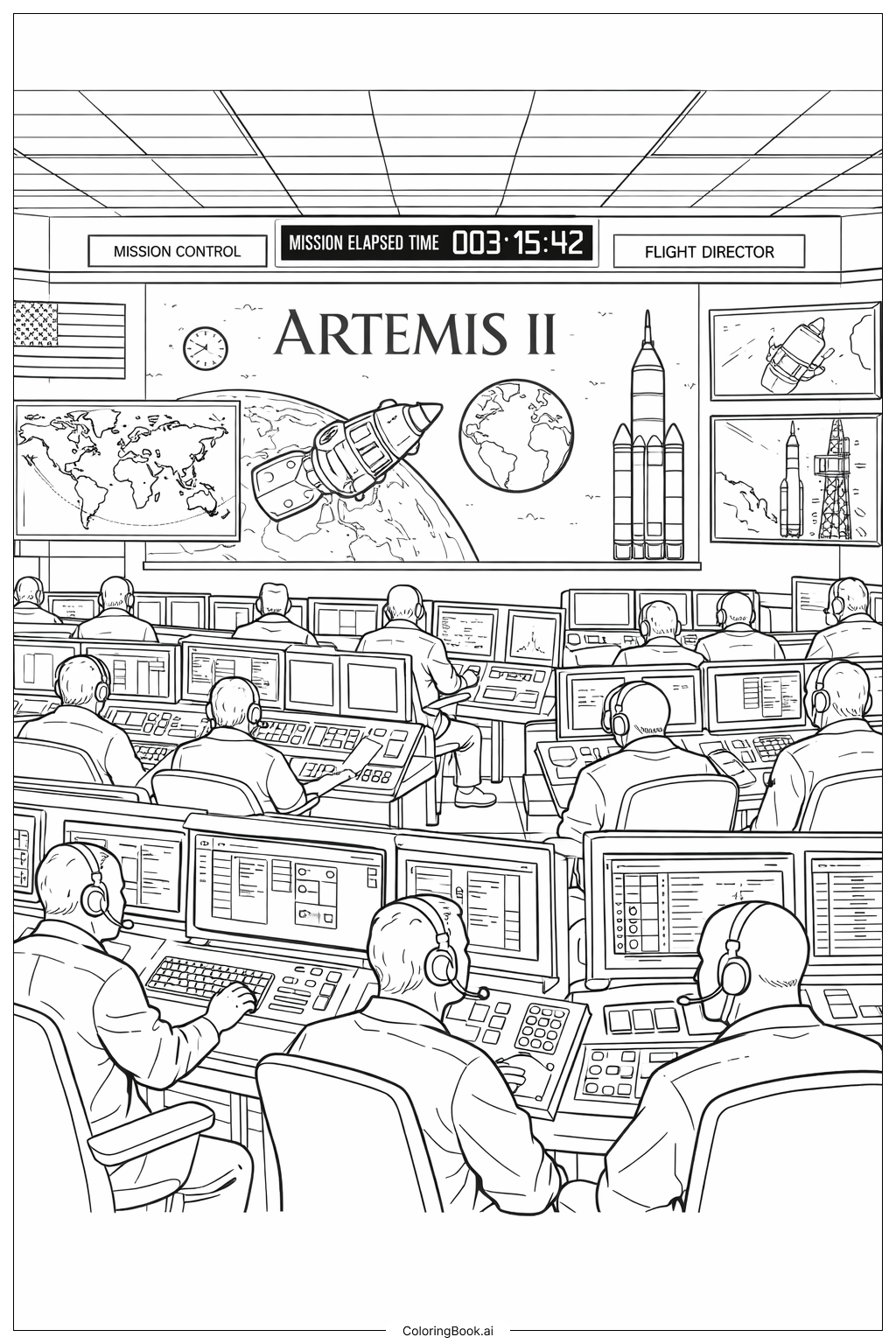
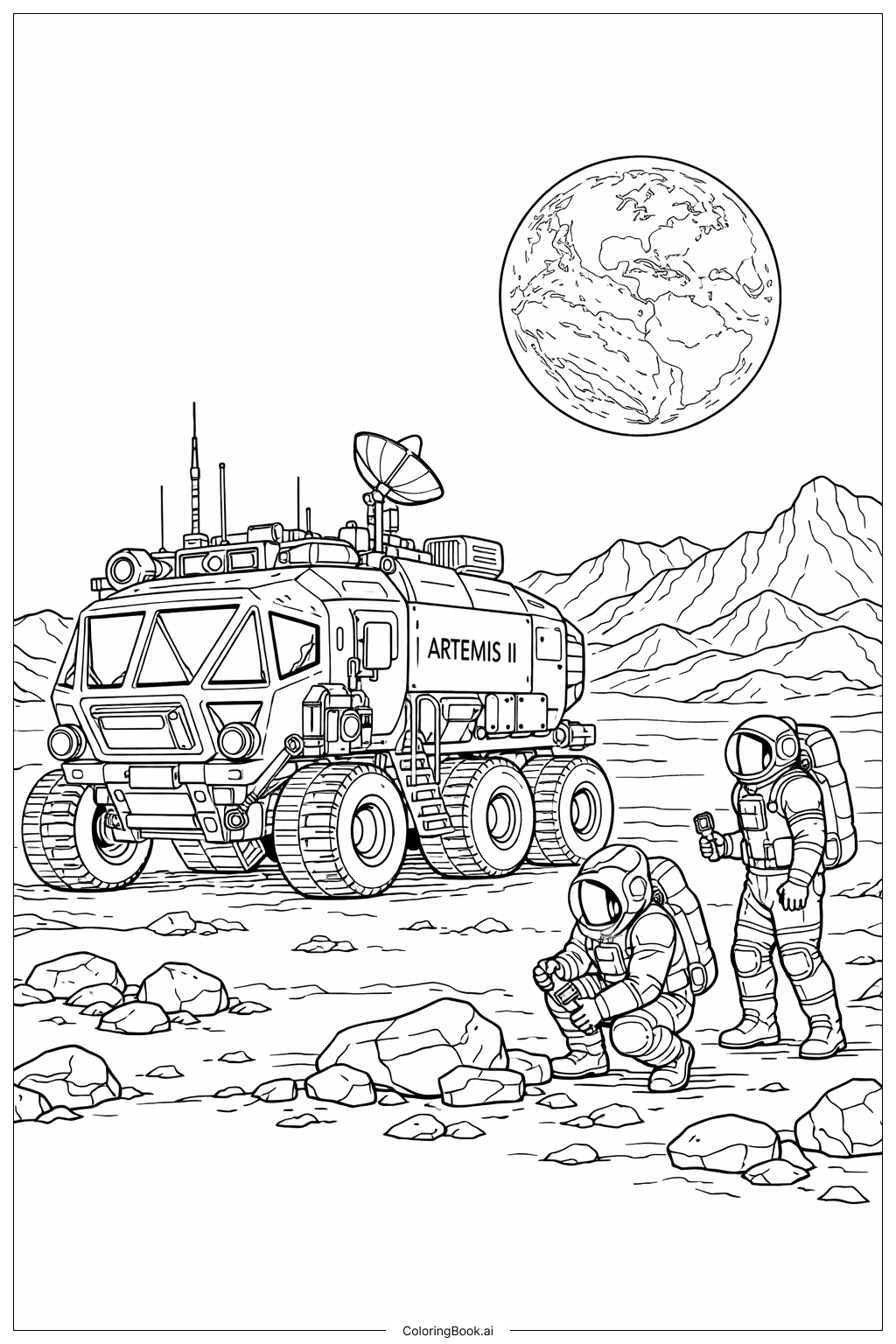
Use bright blue and green for Earth to highlight oceans and land. The Moon should be colored with grays and white to show its rocky surface. Add yellows and oranges to the Artemis II spacecraft to make it stand out. Color the planets with different shades: use orange and red for the small planet, and browns and yellow for the ringed planet. Stars can be colored yellow or white with a little sparkle to make the scene lively. Use dark colors like black or dark blue for the space background to create contrast.
Coloring challenges: Which parts are difficult to color and need attention for Artemis II Earth-Moon Transit Panorama coloring page?
1. Coloring Earth with accurate land and water areas can be tricky due to many shapes and details.
2. The ringed planet has many thin rings that need careful coloring without smudging.
3. Small stars and dots require precise coloring to keep them neat and clear.
4. The Artemis II spacecraft has many small parts like solar panels and sensors, which need attention to detail.
5. Creating a smooth space background without overpowering the main objects can be challenging to balance colors.
Benefits of coloring books: Advantages of drawing Artemis II Earth-Moon Transit Panorama coloring page
Coloring this space scene helps children learn about planets and space travel. It improves fine motor skills because they must color small details carefully. The picture encourages creativity by choosing different colors for planets and stars. It also teaches patience and focus as kids work through detailed sections. Lastly, it inspires curiosity about space and science, making learning fun and exciting.