Coloring tips: How to color Artemis II Earth And Moon Pair coloring page well?
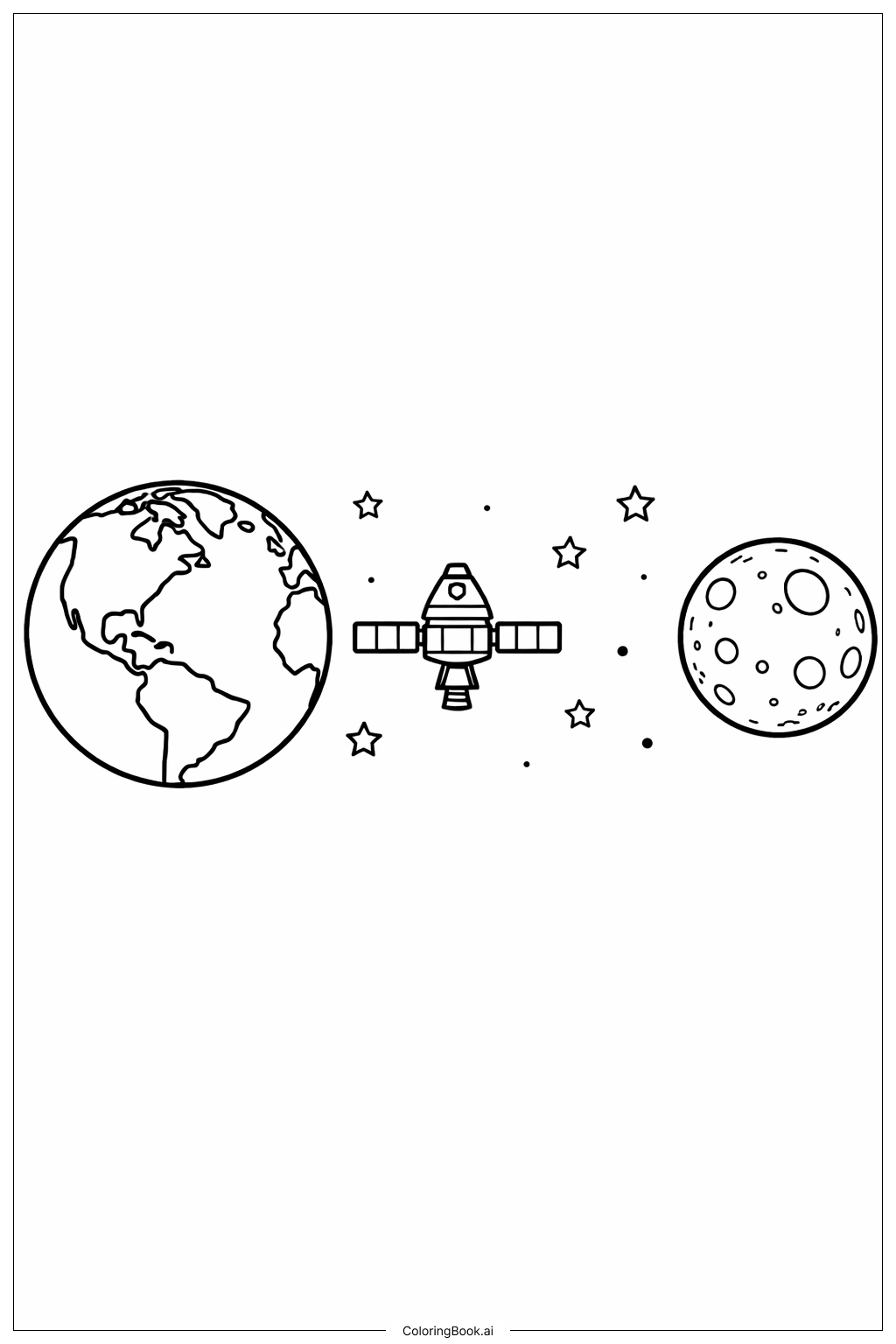
For coloring this image, try using bright blues and greens for Earth’s oceans and landmasses. White and light gray can be used for the clouds swirling above the planet. The Moon can be shaded with soft grays and hints of brown to show its rocky craters and shadows. The Artemis II spacecraft could be colored silver, white, or metallic shades to give it a shiny, futuristic feel. Feel free to add sparkling yellows or whites to the stars in the background. Using different pencil pressures or layering colors may add depth to the planets and spacecraft, making your picture vibrant and lively.
Coloring challenges: Which parts are difficult to color and need attention for Artemis II Earth And Moon Pair coloring page?
• Earth Texture: Earth’s swirling clouds and detailed continents require careful coloring to keep the shapes clear and neat, which can be challenging for younger children. • Moon Craters: The Moon’s cratered surface involves small, uneven patches that need precise coloring to show texture without smudging. • Spacecraft Detail: Artemis II spacecraft has sleek lines and small parts that require steady hand control to color inside the lines, which might be hard for beginners. • Color Layering: Making Earth look dynamic involves blending multiple colors for water, land, and clouds, which can be difficult without proper coloring techniques. • Background Space: Coloring the space around the Earth, Moon, and Artemis II with stars scattered can be tricky if you want to maintain contrast without covering the stars accidentally.
Benefits of coloring books: Advantages of drawing Artemis II Earth And Moon Pair coloring page
Coloring this image helps improve fine motor skills by requiring careful attention to small details like the Moon’s craters and the Artemis II spacecraft. It encourages creativity with choices in colors for space and planets, while also teaching about Earth and the Moon’s features. This activity can inspire interest in space exploration and science, especially about the Artemis II mission. Coloring complex subjects supports focus and patience as children work to stay within the lines and blend colors for a realistic effect. It’s also a fun way to learn about astronomy while expressing artistic talents.