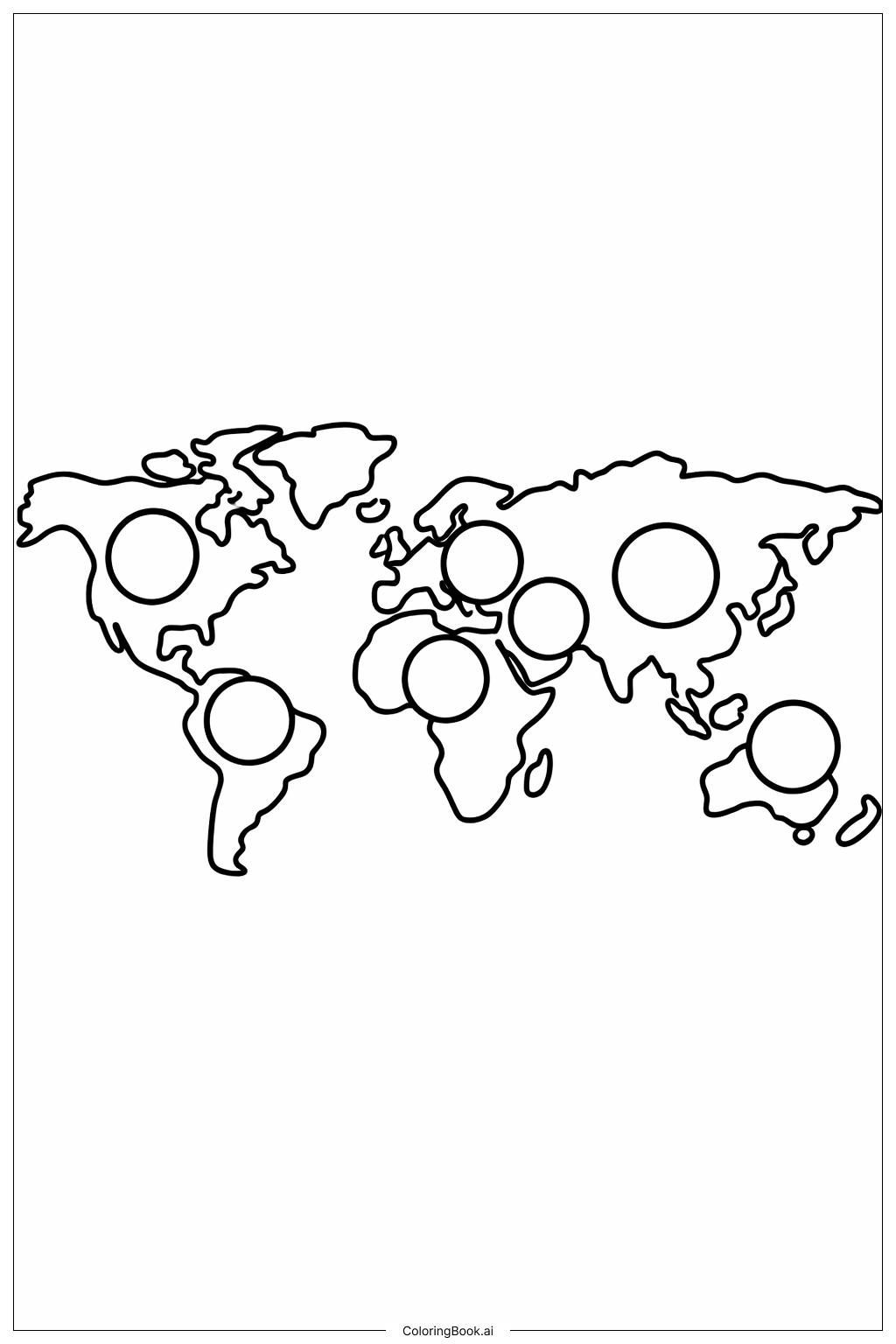
Coloring tips: How to color World Map with Big Dots coloring page well?
Start with the oceans and seas. Use shades of blue — light blue for shallow coastal areas and deeper blue for open ocean. This creates a sense of depth across the map.
For the continents, pick a different color for each one. For example, use green for North America, yellow for South America, orange for Europe, red for Africa, purple for Asia, pink for Australia, and light teal for Antarctica. This makes each continent easy to tell apart.
Color the big dots with a bold, bright color like red or gold so they really stand out against the land and water. You can also try using different colors for the dots to represent different types of locations.
For country borders, use a thin dark line or a slightly different shade to keep the details clear. Keep colors light inside the countries so borders stay visible.
Younger children can keep it simple with solid blocks of color. Older kids can try adding gradients or patterns to make the map look more creative and unique.
Coloring challenges: Which parts are difficult to color and need attention for World Map with Big Dots coloring page?
• Ocean Coverage: The oceans take up a large portion of the map. Keeping the blue tones consistent across such a wide area can be tricky. Using multiple shades of blue without making the colors look uneven requires patience and steady hand control, especially when working around the coastlines of continents and islands.
• Small Country Borders: Many regions of the world, especially in Europe and Southeast Asia, have many small countries packed close together. Coloring each country individually without going over the border lines into a neighboring country demands careful attention and precise coloring. Fine-tipped colored pencils or thin markers work best for these tight areas.
• Big Dot Placement: The large dots are placed on top of both land and ocean areas. Making the dots stand out clearly from whichever background they sit on can be a challenge. Choosing a single bold color that contrasts well with both land colors and water colors takes some planning before you begin.
• Continent Color Coordination: With seven continents, choosing colors that look good next to each other without clashing is important. Neighboring continents sharing a similar hue can make the map look confusing. Planning your color palette ahead of time helps you pick shades that are distinct and visually balanced across the whole page.
• Labels and Text Areas: If the map includes country names or ocean labels, coloring around small text without covering it up requires extra care. Light, translucent colors work better in these areas so the words remain readable after coloring.
Benefits of coloring books: Advantages of drawing World Map with Big Dots coloring page
Coloring this world map is a fun and rewarding activity for kids of all ages. It combines creativity with learning, making it a great educational tool.
As children color each continent and country, they naturally start to recognize the shapes and locations of different places around the world. This builds geography skills in a relaxed and enjoyable way.
The big dots give young colorists clear targets to focus on, helping them practice precision and careful color placement. This improves fine motor skills and hand-eye coordination.
Choosing a color palette for the whole map encourages planning and decision-making. Kids learn to think ahead about which colors work well together and how to organize a large project step by step.
The repetitive, calming motion of filling in large ocean areas and landmasses helps children relax and focus. It builds patience and concentration, which are skills that carry over into school and everyday life.
For older children, this map can spark curiosity about world cultures, history, and geography. It can inspire conversations about travel, nature, and the diversity of our planet.
Overall, this coloring page is both a creative outlet and a learning experience that encourages children to explore the world from their own desk.