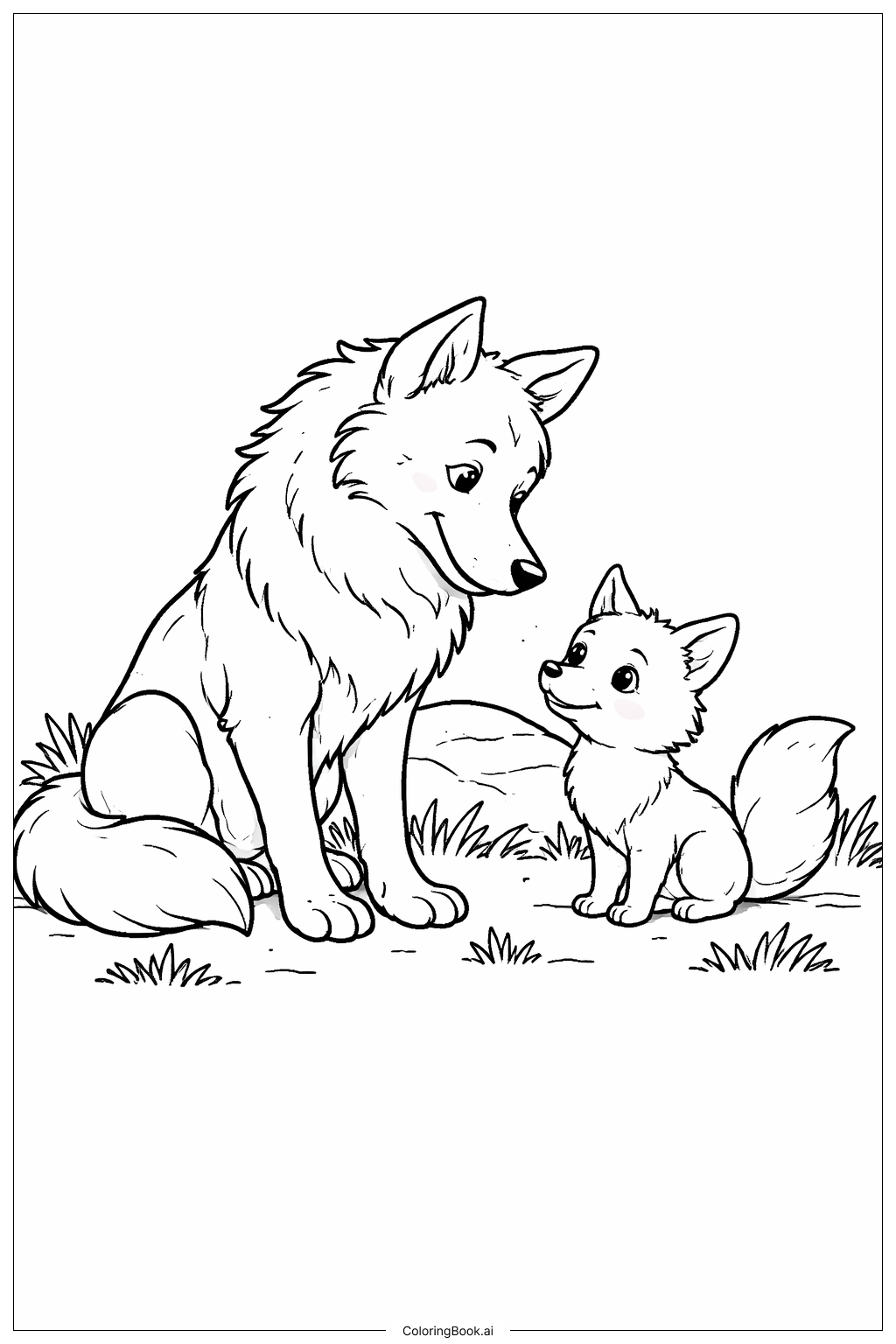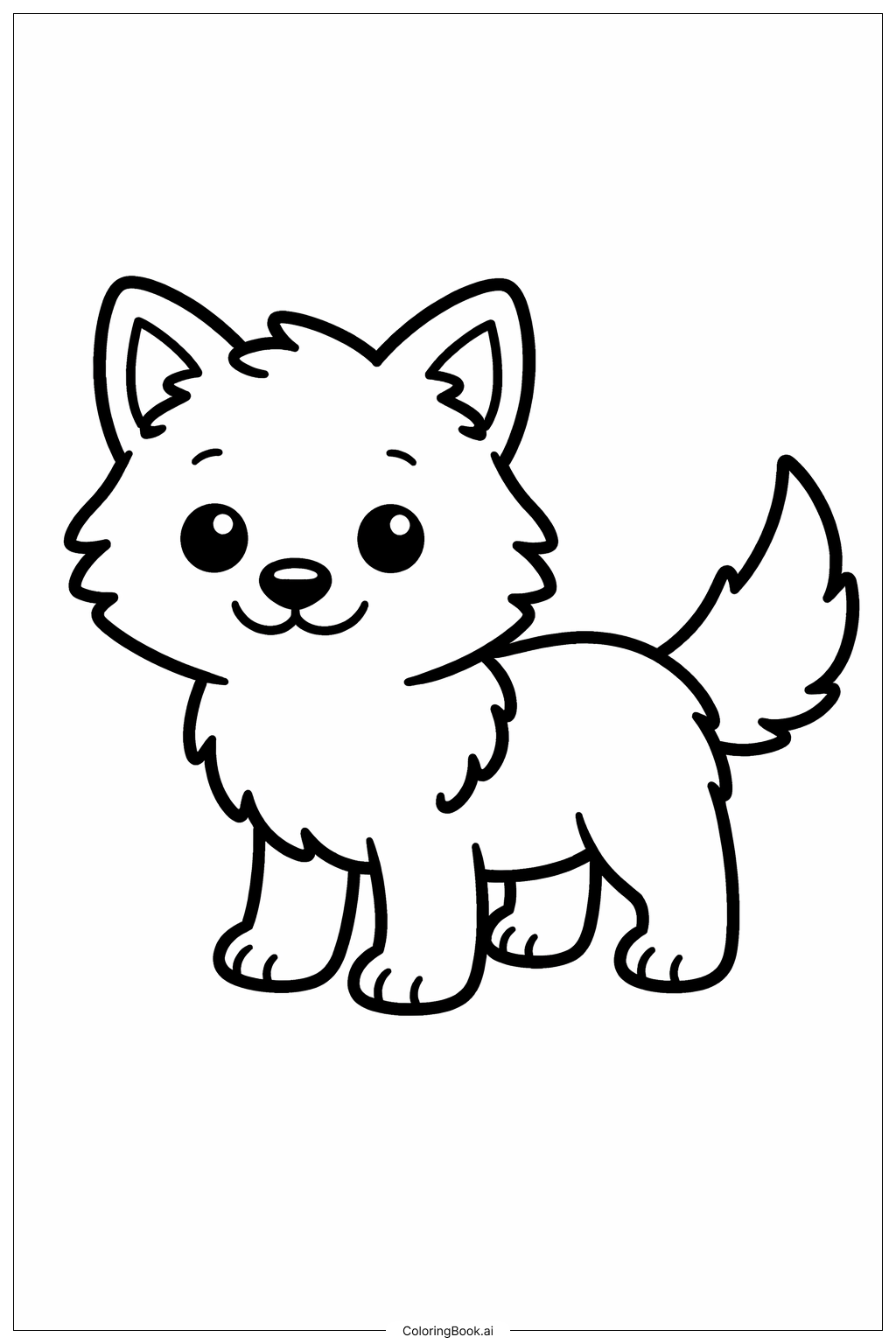
Coloring tips: How to color Wolves Cub Smiling coloring page well?
Start with the wolf cub's fur using warm shades of gray, light brown, or sandy tan to give it a natural and realistic look. Use a lighter cream or white for the belly, inner ears, and muzzle area to add contrast and depth. For the eyes, try bright amber, golden yellow, or light brown to make them sparkle with life. Add a soft pink to the nose and inner ears for a cute, lively touch. Use darker gray or brown for shading around the edges of the fur to create a fluffy, three-dimensional effect. If you want a fantasy twist, feel free to use blues, purples, or even pastel rainbow colors. The background can be colored with a forest setting using greens and browns, or a simple sky blue to keep the focus on the cheerful cub. Blend colors gently to keep the fur looking soft and natural.
Coloring challenges: Which parts are difficult to color and need attention for Wolves Cub Smiling coloring page?
• Fur Texture Details: The wolf cub's fur has many small, layered lines that represent individual strands. Coloring these tiny details neatly requires patience and a sharp-tipped pencil or fine marker. Rushing through this area can result in a messy look, so take your time stroke by stroke.
• Facial Expression Accuracy: The smiling face of the cub has delicate features like curved eyes, a small nose, and a wide grin. Keeping these features clean while adding color around them is tricky. Using a fine-tipped tool helps avoid coloring outside the expression lines and ruining the cheerful look.
• Smooth Shading on Rounded Body Parts: The cub's cheeks, paws, and belly are round and puffy. Creating smooth gradients on these curved surfaces to make them look three-dimensional can be challenging, especially for beginners. Layering light and dark shades gradually gives the best result.
• Color Transitions Between Fur Zones: The cub has different fur tones across its body, such as darker fur on the back and lighter fur on the face and belly. Blending these zones together smoothly without harsh lines takes practice and careful color selection.
• Small Inner Ear and Eye Details: The inner ear and eyes are very small areas that require precise coloring. Staying within these tiny boundaries while using the right contrasting colors to make them pop is one of the most demanding parts of this page. A thin brush or pencil tip works best here.
Benefits of coloring books: Advantages of drawing Wolves Cub Smiling coloring page
Coloring this smiling wolf cub page offers a wide range of wonderful benefits for children and young learners. First, it helps improve fine motor skills as kids carefully fill in the detailed fur, tiny facial features, and small body parts. The act of holding and guiding coloring tools builds hand strength and coordination that supports writing skills. Second, choosing colors for the cub encourages creativity and imaginative thinking. Kids can follow realistic colors or invent their own magical wolf with unique patterns. Third, focusing on staying within the lines and completing the full image builds patience and concentration, skills that are valuable in school and everyday life. Fourth, coloring a happy, smiling animal creates a positive emotional experience. It can help children feel calm, joyful, and proud of their finished work. Finally, learning about wolves through coloring sparks curiosity about nature and wildlife. Kids begin to appreciate animals and their characteristics in a fun, hands-on way. This page is a wonderful activity for both quiet solo time and creative group sessions.