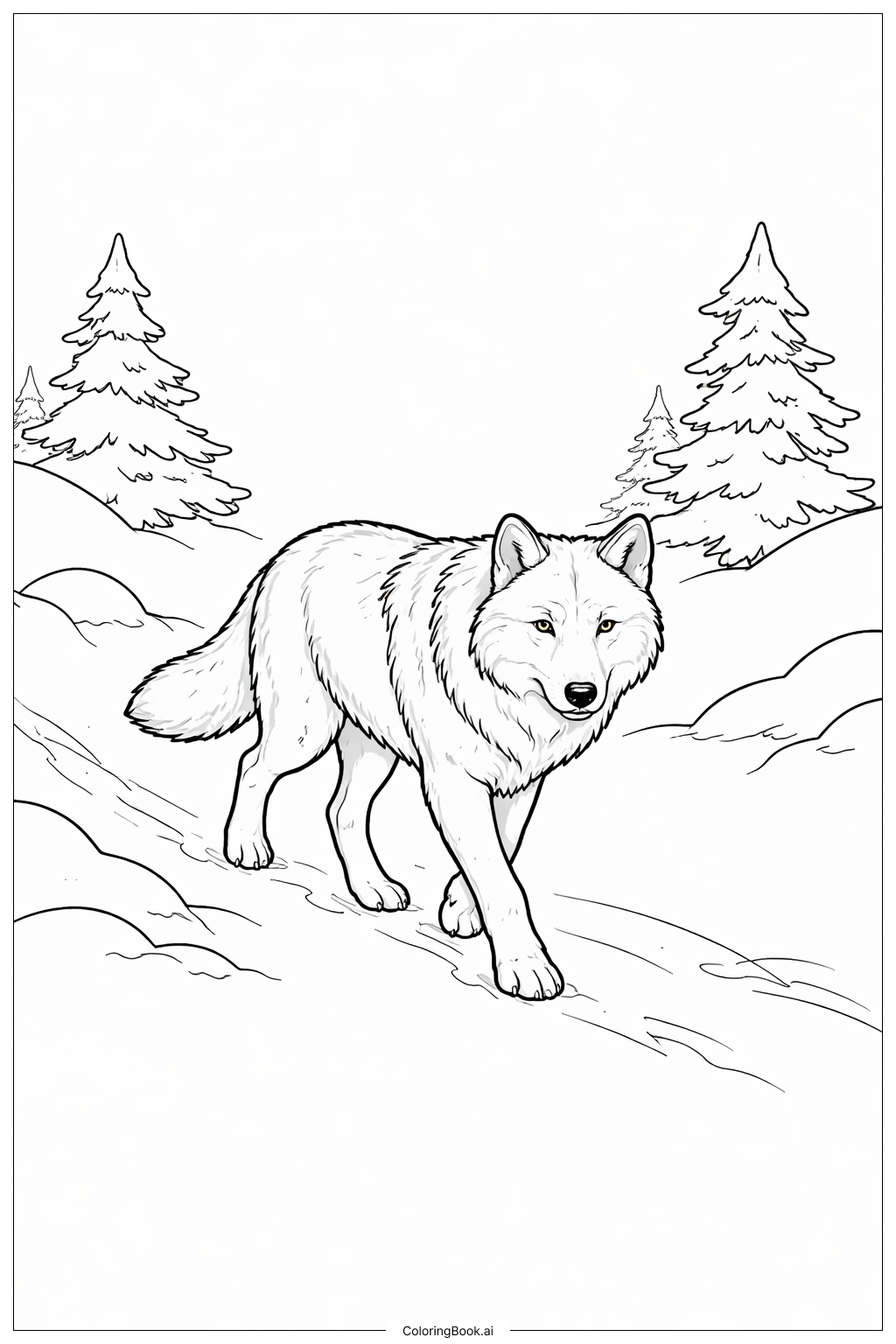
Coloring tips: How to color Wolves On Snow Path coloring page well?
Use gentle shades of white, gray, and light brown to color the wolf's fur, showing its natural look. You can add some light blue or pale purple to show shadows on the snow and make it feel cold. For the trees, use green with hints of white or light blue to show snow on the branches. Try blending colors softly to create a smooth and soft feeling for the snow and fur. Remember to color the path a slightly different shade of white or light gray to separate it from the snow on the hills. Take your time with small details like the wolf's eyes and nose to make them stand out.
Coloring challenges: Which parts are difficult to color and need attention for Wolves On Snow Path coloring page?
1. Coloring the wolf’s fur can be tricky because it has many small lines showing fluff and texture. You need to use light and dark shades carefully to make it look real.
2. The snowy background requires soft shading to create a smooth look. Coloring snow isn’t just white; you need to add shadows and highlights.
3. The pine trees have many small branches that need careful coloring to show the snow on them.
4. Keeping the wolf’s eyes and nose sharp and clear can be hard because they are small but very important for showing expression.
5. Making the path and hills different but still looking snowy requires attention to detail to avoid the colors blending too much.
Benefits of coloring books: Advantages of drawing Wolves On Snow Path coloring page
Coloring this picture helps practice shading and blending skills. It encourages you to use different shades of the same color to show light and shadow. Coloring the wolf teaches you about animal fur texture and details. Coloring snow scenes helps you understand how to show cold and soft surfaces with colors. Overall, it improves focus, patience, and creativity while making a beautiful winter scene come alive.