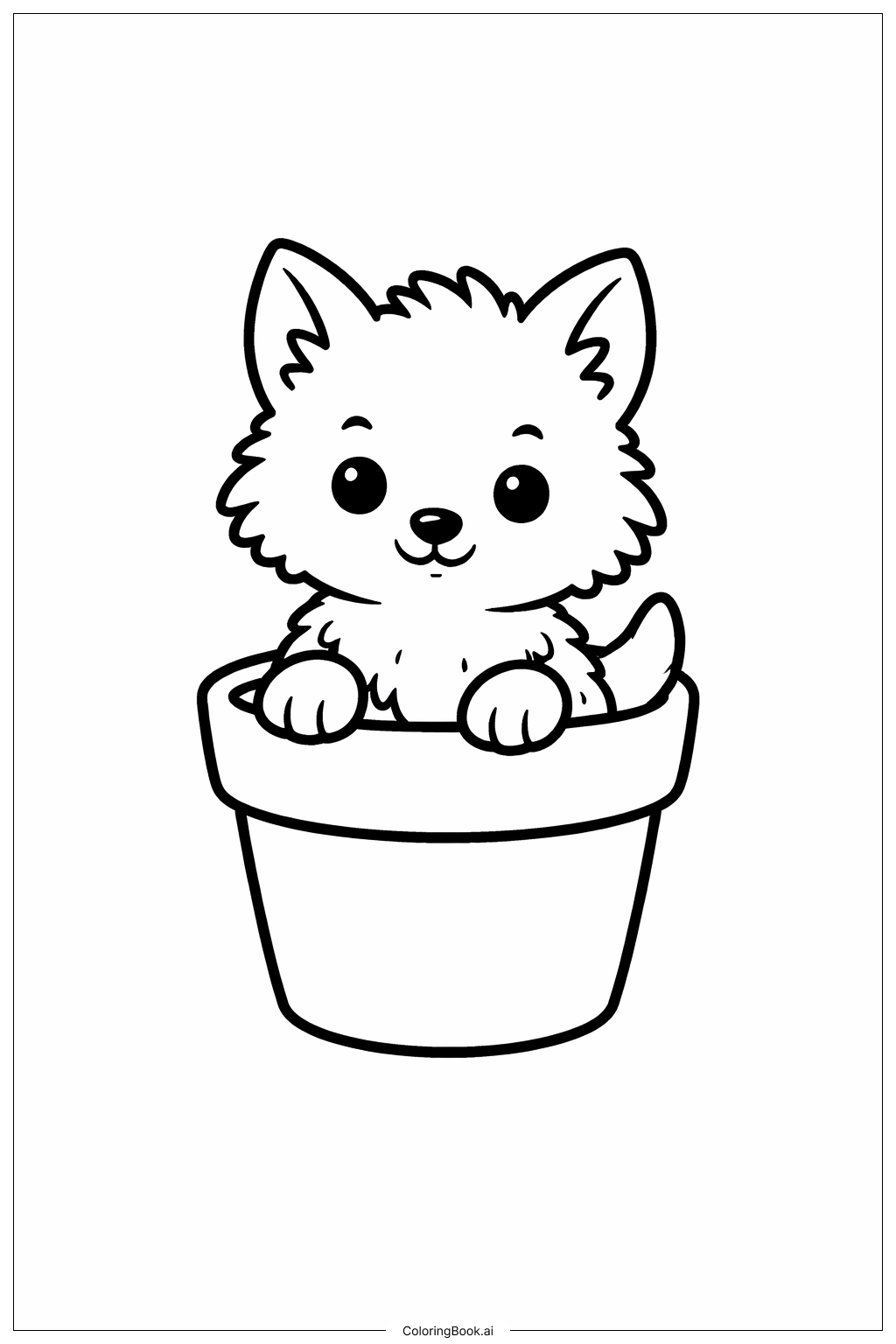
Coloring tips: How to color Wolves Cub In Flower Pot coloring page well?
You can use soft grays and browns to color the Wolves cub’s fur, blending light and dark shades to show its fluffy texture. The flower pot can be bright and colorful — try reds, yellows, or blues to make it stand out. Use greens for the leaves and stems, and pick different colors for the flowers, such as pink, purple, or orange. Coloring the cub’s eyes carefully will bring it to life — try shades of amber or green. Make sure to stay within the lines and try mixing light and dark colors to add depth and interest to the picture.
Coloring challenges: Which parts are difficult to color and need attention for Wolves Cub In Flower Pot coloring page?
• Fur Texture: Coloring the Wolves cub’s fur can be tricky because it has many small details. It requires careful strokes to show the soft and fluffy look without making the image messy.
• Flower Pot Patterns: The designs on the flower pot are small and delicate. Coloring inside these lines needs steady hand control and patience.
• Small Objects: The flowers and leaves around the pot are tiny, making it difficult to color them without overlapping or going outside the lines.
• Shading Effects: Adding shading to the Wolves cub and the flower pot can be challenging but important. It needs good understanding of light and shadow to make the drawing look three-dimensional.
• Eye Details: The Wolves cub’s eyes are small but very expressive. Coloring them neatly requires precision to avoid spoiling the cute expression.
Benefits of coloring books: Advantages of drawing Wolves Cub In Flower Pot coloring page
Coloring this Wolves Cub In Flower Pot page helps improve focus and patience as children carefully fill in the details. It encourages creativity through color choices for both the animal and the garden elements. Working on the texture of the fur and the small patterns on the pot enhances fine motor skills and hand control. The act of shading and blending colors teaches children about light, shadow, and depth. Additionally, coloring cute animals like this Wolves cub can be calming and enjoyable, promoting relaxation and positive feelings. Overall, it offers a fun and educational coloring experience for children of many ages.