Coloring tips: How to color Smiling Wolves Faces coloring page well?
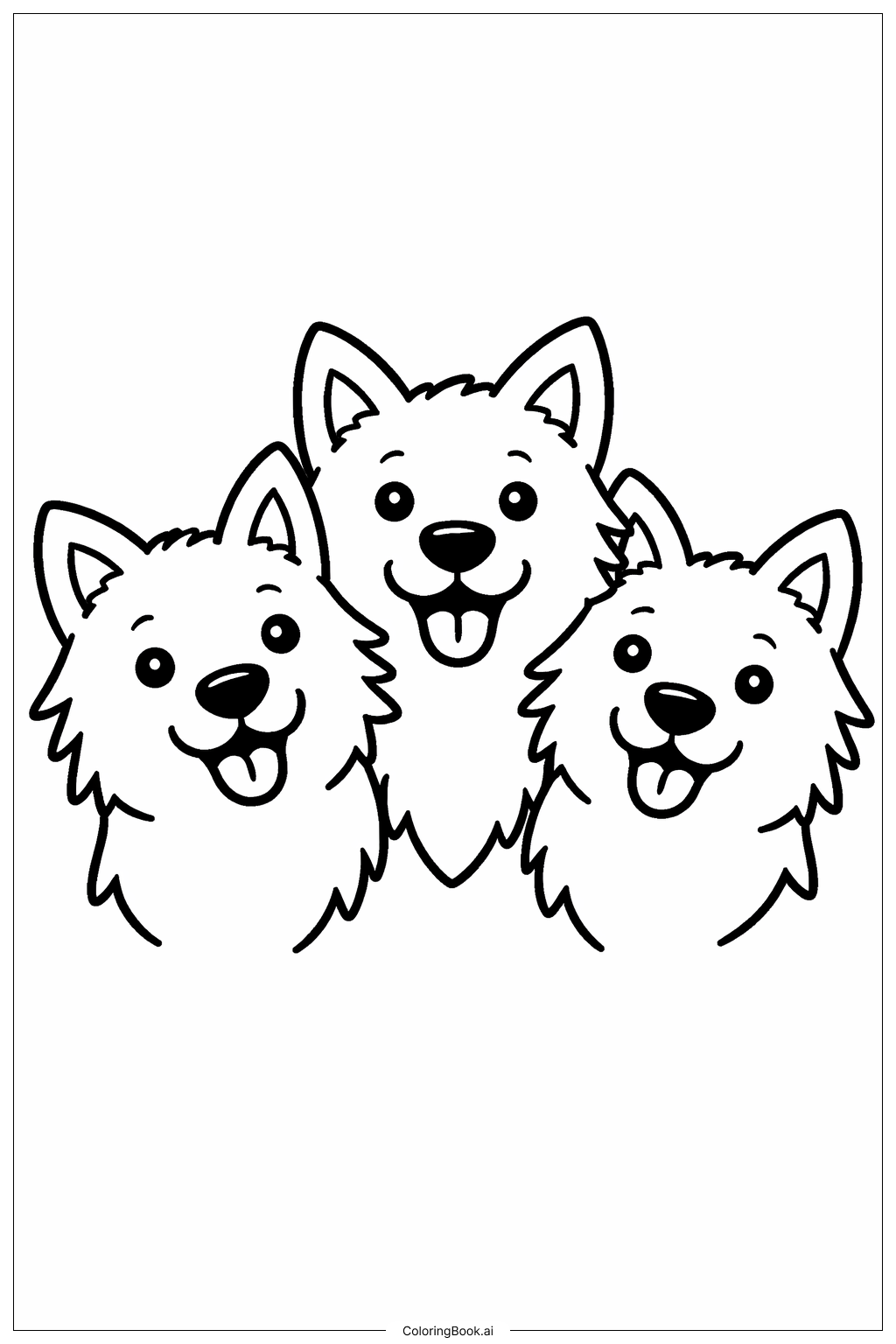
Use different shades of grey, brown, or white to color each wolf. You can add a little pink or red for their tongues to make them look lively. Try to use lighter colors for the fur around their faces and a bit darker colors for the shadows. You can also color the eyes with black and add a small white dot to make them appear shiny. Feel free to use your imagination and add colorful backgrounds like green grass or blue sky to make the picture more exciting.
Coloring challenges: Which parts are difficult to color and need attention for Smiling Wolves Faces coloring page?
1. Coloring the small details like the eyes and noses can be tricky because they are small and need careful coloring to stay inside the lines.
2. The tongues have a small area and may require steady hands to color neatly.
3. The fur parts have many sharp edges and lines, which can be difficult to color smoothly without going over the lines.
4. Distinguishing the different wolves with unique colors while keeping them natural-looking might be challenging.
5. Coloring the overlapping parts of the wolves without mixing colors requires patience and precise coloring skills.
Benefits of coloring books: Advantages of drawing Smiling Wolves Faces coloring page
Coloring these smiling wolf faces helps improve fine motor skills, as kids need to color within small spaces and around edges. It encourages creativity by letting children choose different colors for each wolf and the background. It also teaches children about animals and their friendly side, helping reduce fear and build interest in wildlife. Moreover, coloring can be relaxing and fun, helping kids focus and express their feelings through art.