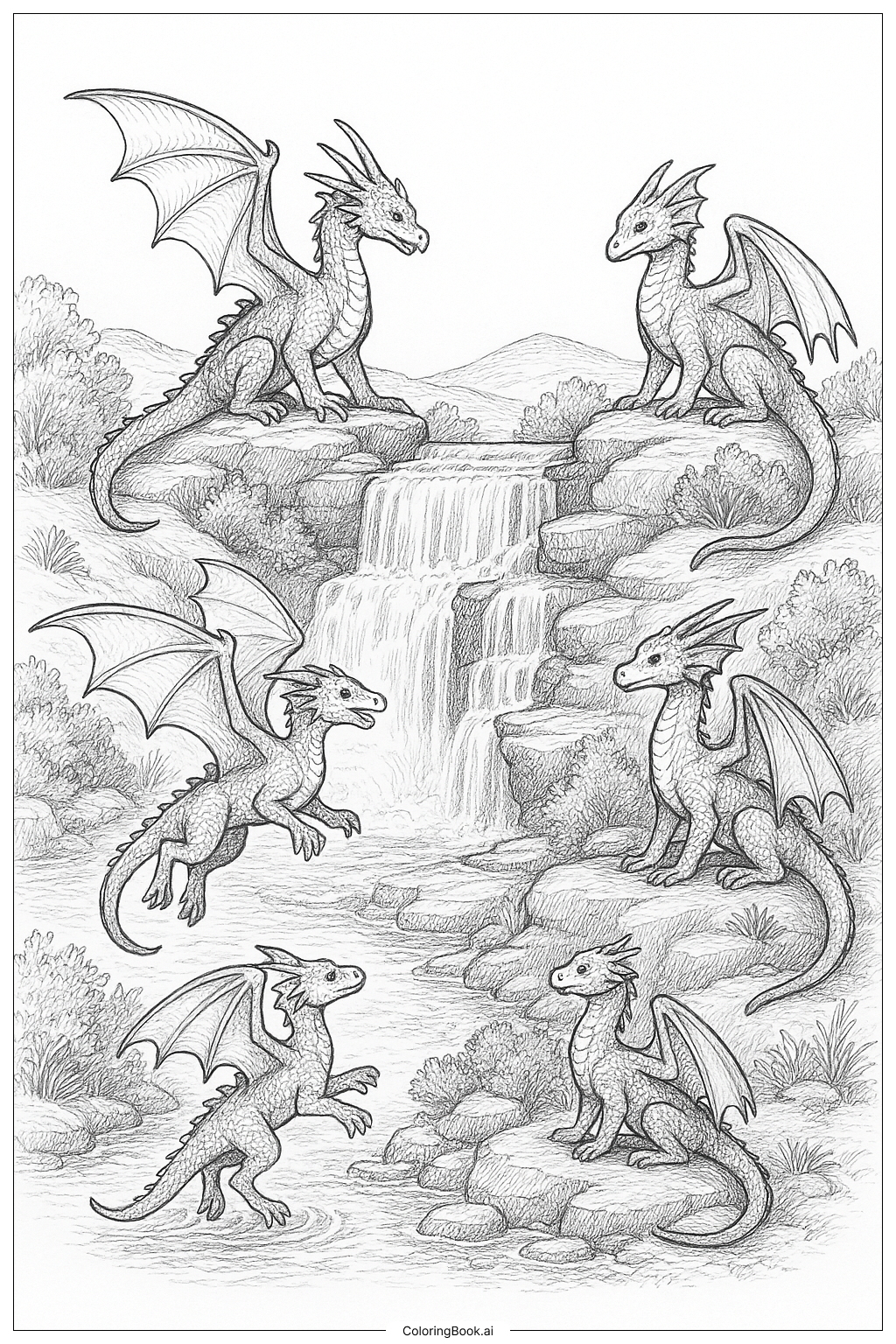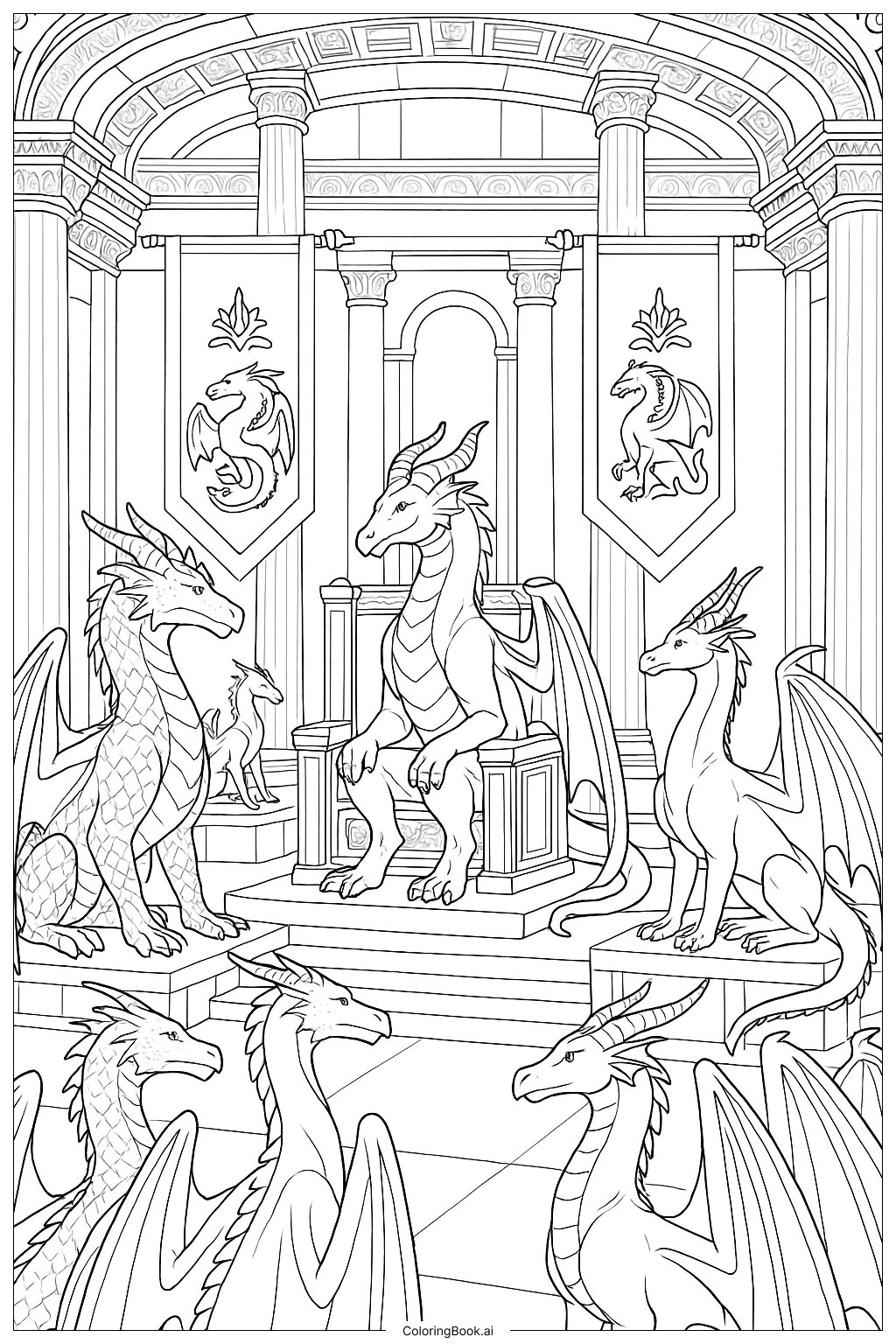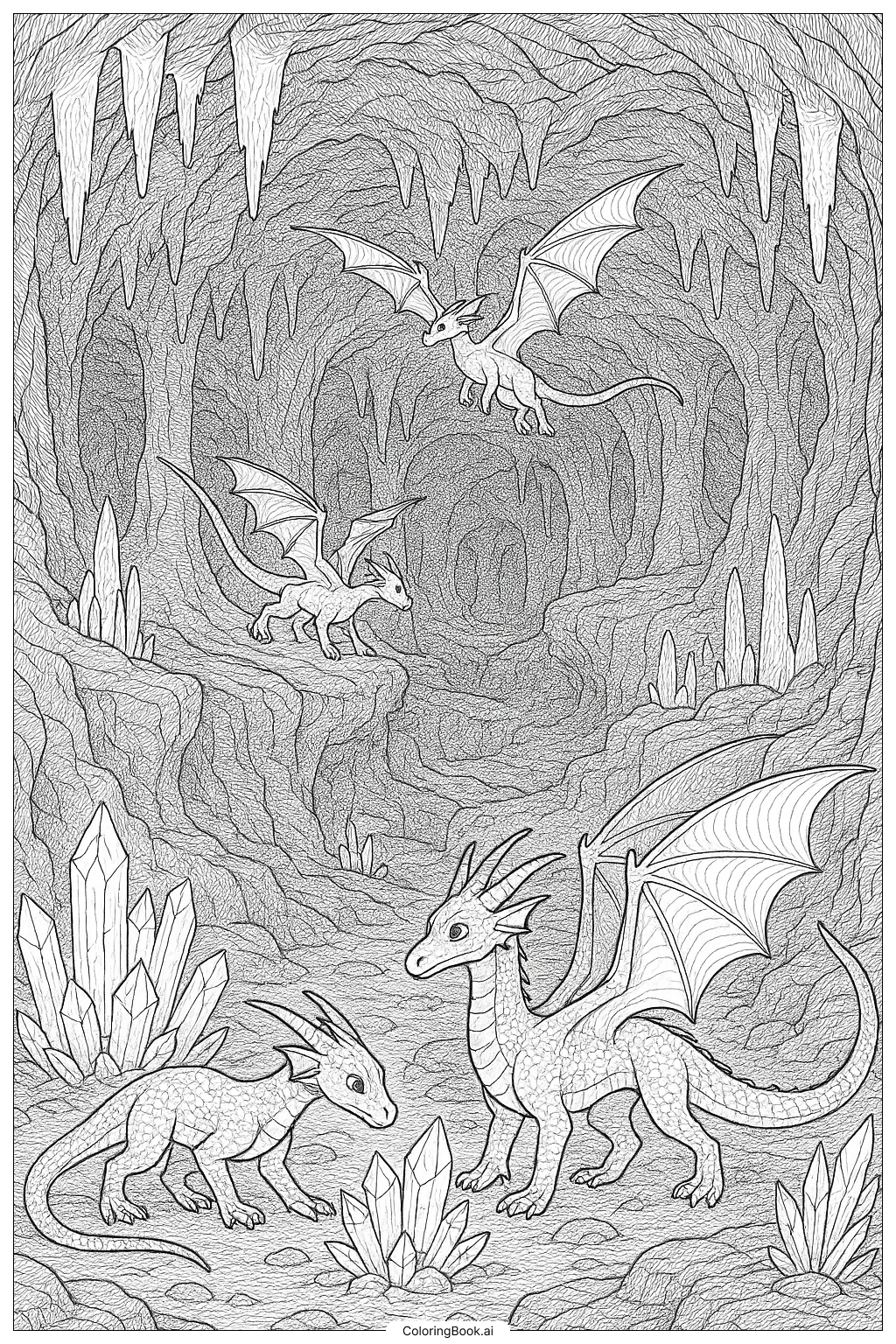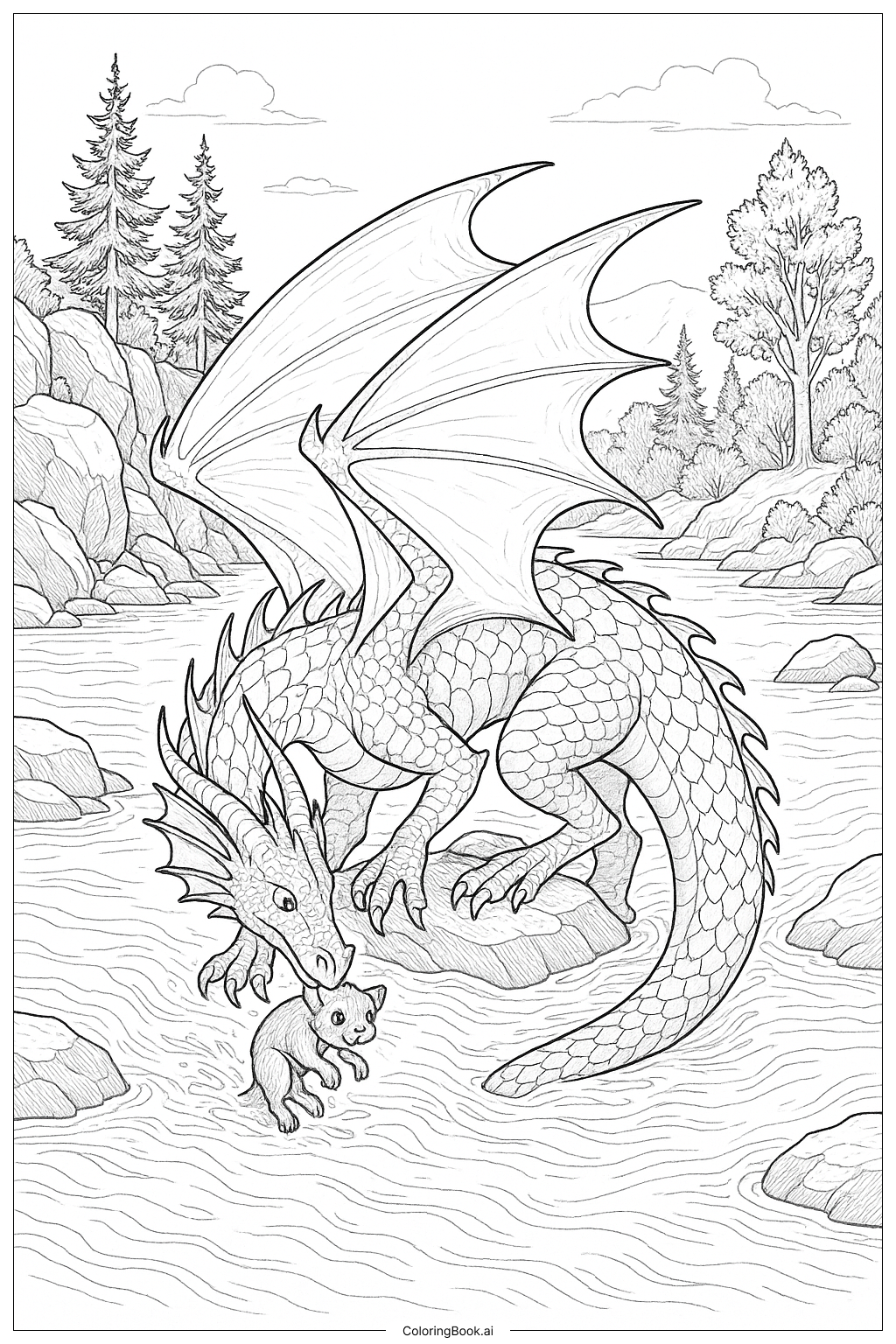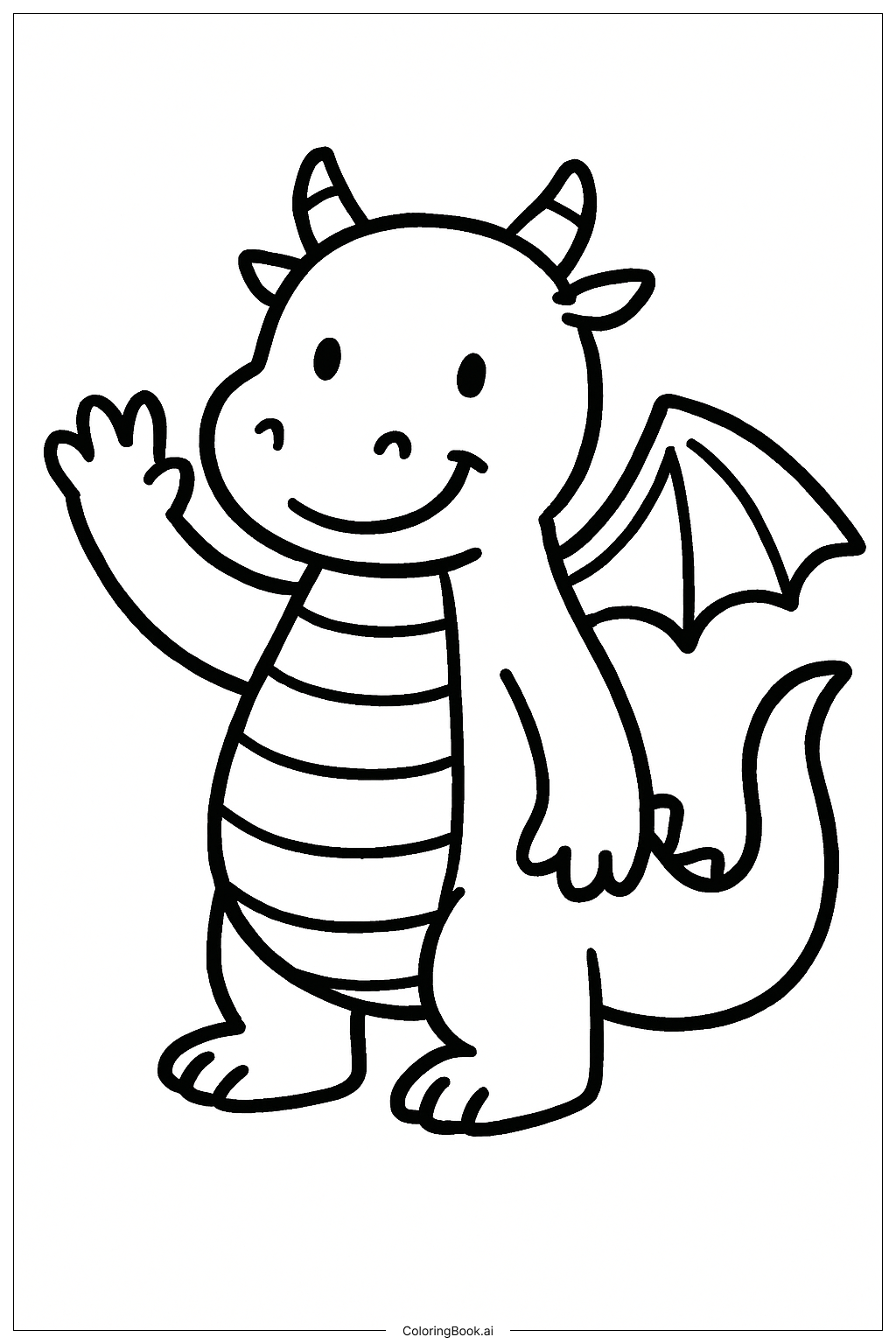
Coloring tips: How to color Wings Of Fire Dragon Waving Paw coloring page well?
Start with the dragon's body scales. Choose a bold base color like deep blue, forest green, or fiery orange to match a tribe from Wings Of Fire. Use a slightly darker shade of the same color for shading along the underside and between scales to add depth. For the wings, try a gradient effect — begin with a lighter tone near the body and shift to a richer, darker hue at the wing tips. The membrane panels between wing veins look great in a translucent style, so try blending two colors together softly. Use bright yellow or gold for the eyes to make them pop. Claws and horns can be done in cream, ivory, or light gray. Outline the ridge spines along the back in a contrasting color to make them stand out. If you want the dragon to feel warm and fiery, go with reds, oranges, and golds. For a cooler, ocean-tribe vibe, blues, teals, and silvers work beautifully. Have fun mixing colors to create your own unique dragon.
Coloring challenges: Which parts are difficult to color and need attention for Wings Of Fire Dragon Waving Paw coloring page?
• Scale Repetition and Consistency: The dragon's body is covered in dozens of individual scales, each outlined separately. Keeping a consistent color or shading pattern across all of them without breaking the rhythm can be tricky, especially for younger colorists. It helps to work in sections rather than trying to color all scales at once.
• Wing Membrane Gradients: The wings contain large open panels divided by thin veins. Achieving a smooth gradient or blended look inside those panels requires patience and the right tools. Colored pencils or watercolor pencils work best here, but blending without going over the vein lines takes a steady hand.
• Small Detail Areas: The face, claws, and ridge spines contain tight, narrow spaces where precision matters. Fine-tipped markers or sharpened colored pencils are recommended for these zones. Accidentally coloring outside the lines in these areas can affect the overall look of the dragon's expression and silhouette.
• Shading and Depth: Making the dragon look three-dimensional means adding shading under the chin, beneath the wings, and along the belly. This step requires an understanding of light direction. Younger kids may skip this and still get a vibrant result, but older colorists looking for a realistic effect should plan their light source before starting.
• Color Coordination Across the Whole Image: Because the dragon has so many distinct parts — body, wings, tail, spines, claws, and face — making sure all the colors feel unified takes planning. Choosing a two- or three-color palette before starting helps avoid a mismatched final result.
Benefits of coloring books: Advantages of drawing Wings Of Fire Dragon Waving Paw coloring page
Coloring this Wings Of Fire dragon offers a wide range of creative and developmental benefits for kids and fans alike. First, it builds fine motor skills. Carefully staying within the detailed scale lines and narrow wing sections strengthens hand control and pencil grip, which supports writing development in younger children. Second, it encourages creative thinking. Choosing a color scheme for the dragon — whether it matches a known tribe or is completely original — pushes kids to make decisions and express their imagination freely. Third, it supports focus and patience. A detailed image like this requires sustained attention, which helps children practice sitting with a task and working through it step by step. Fourth, it connects to literacy and storytelling. For fans of the Wings Of Fire book series, coloring a character deepens their connection to the story and characters, making reading more engaging and memorable. Finally, completing a full coloring page builds a sense of accomplishment and boosts confidence. Whether a child colors it quickly or takes their time, finishing the page gives them something to be proud of and share with others.