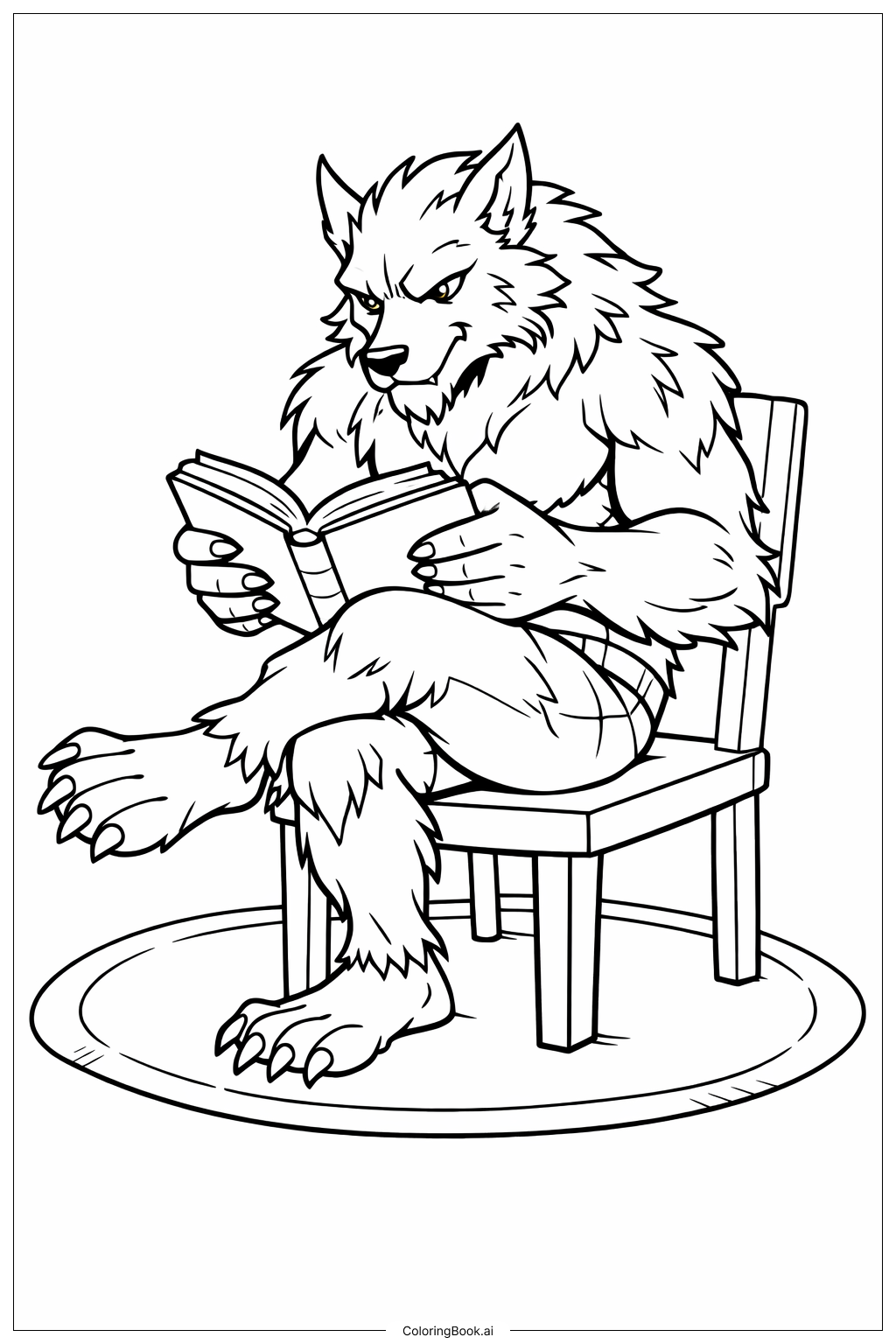
Coloring tips: How to color Werewolf Reading Book coloring page well?
Use shades of gray, brown, or black for the werewolf’s fur to make it look realistic. You can add darker colors near the edges of the fur and lighter colors in the middle to show the fur’s texture. For the eyes, pick a bright color like yellow or green to make them stand out. The chair and rug can be colored in neutral colors like brown or beige so the werewolf remains the main focus. Try blending colors gently around the claws and hands to make them look sharp and strong. Use soft colors for the book, like light blue or green, to keep attention on the werewolf.
Coloring challenges: Which parts are difficult to color and need attention for Werewolf Reading Book coloring page?
1. Fur Texture: The werewolf’s fur has many small spikes and different directions. Coloring these to look natural needs patience and careful strokes.
2. Claws and Hands: The claws are sharp and need a steady hand to color inside the lines clearly.
3. Facial Expression: The werewolf’s face has small details like eyes, nose, and mouth that show emotions. Coloring these areas neatly is important.
4. Chair and Rug: Coloring the straight edges of the chair and circular shape of the rug requires control to stay within lines.
5. Contrast: Making sure the werewolf stands out well from the chair and rug by choosing colors that contrast enough can be a challenge.
Benefits of coloring books: Advantages of drawing Werewolf Reading Book coloring page
Coloring this picture helps improve focus because of the detailed fur and facial features. It also encourages creativity in choosing colors for a mythical creature like a werewolf. The mix of nature (fur) and everyday objects (chair, book) makes it fun to explore different textures. Kids can learn to color neatly inside the lines and practice blending colors to show shadows and light. This helps develop hand-eye coordination and fine motor skills.