Coloring tips: How to color Werewolf In Garden coloring page well?
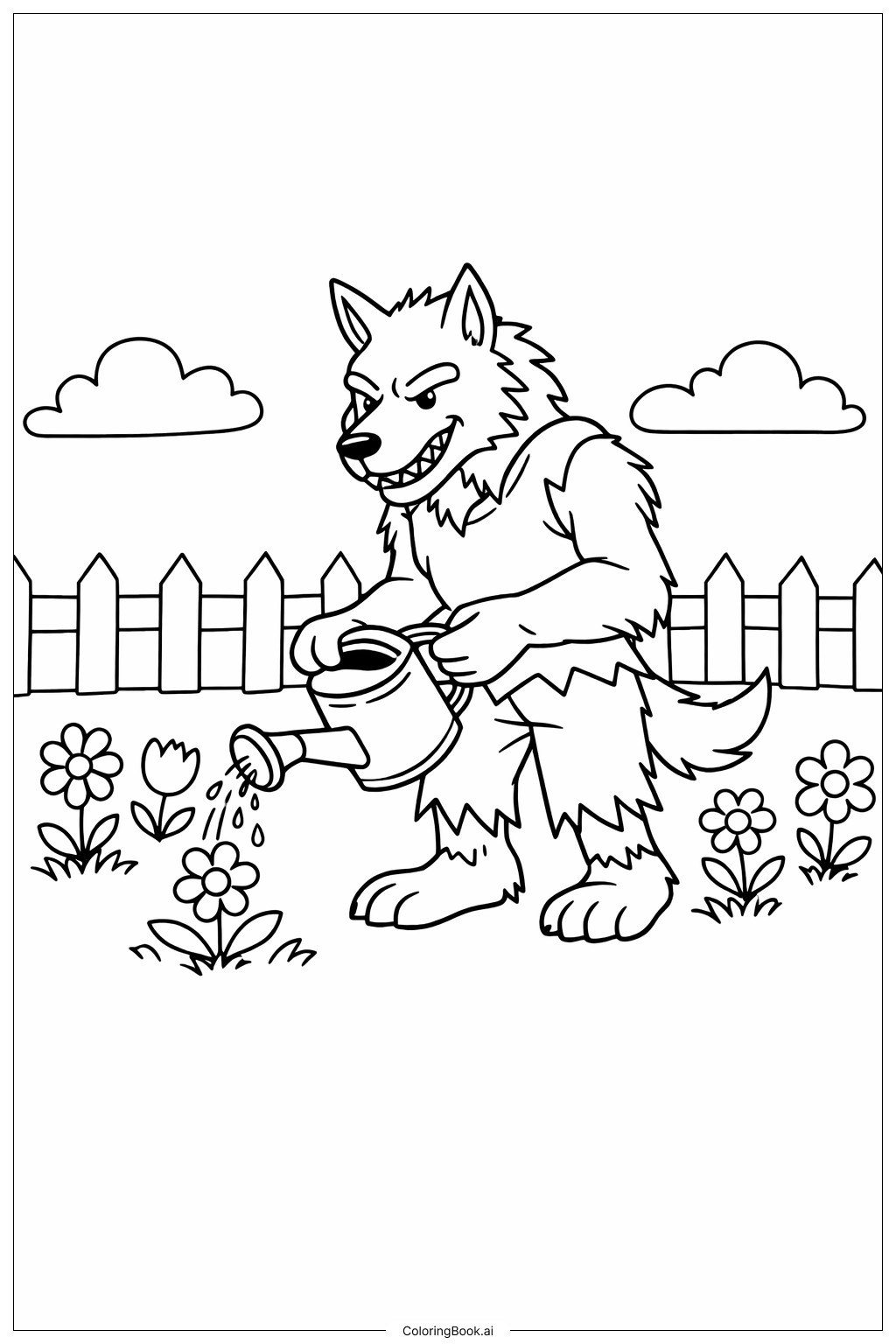
Use different shades of green for the grass and leaves to create a lively garden. Color the flowers in bright colors like red, yellow, and pink to make them stand out. For the werewolf, use gray, brown, or dark colors for the fur to show its wild nature. The watering can can be colored blue, green, or silver to look shiny. The fence can be brown or white, and the clouds can be light blue or left white for a soft look. Use color pencils or crayons for better control on small details like the flowers and the werewolf's face.
Coloring challenges: Which parts are difficult to color and need attention for Werewolf In Garden coloring page?
1. The werewolf's fur has many spiky shapes that need careful coloring to stay within the lines. 2. The flowers are small and have many petals, which can be tricky to color neatly. 3. The watering can has water droplets, which require attention to avoid coloring outside the drops. 4. The fence has many straight lines and pointed ends that need steady hand control. 5. Coloring the werewolf's face to show its expression clearly without mixing colors could be challenging.
Benefits of coloring books: Advantages of drawing Werewolf In Garden coloring page
Coloring this picture helps improve hand-eye coordination and concentration. It encourages creativity by choosing different colors for the garden and the werewolf. It teaches attention to detail because of the small parts like flowers and water droplets. Coloring the werewolf can make children feel brave and imaginative. Overall, this activity is fun and relaxing, allowing kids to express themselves through art.