Coloring tips: How to color Swing Under Big Tree coloring page well?
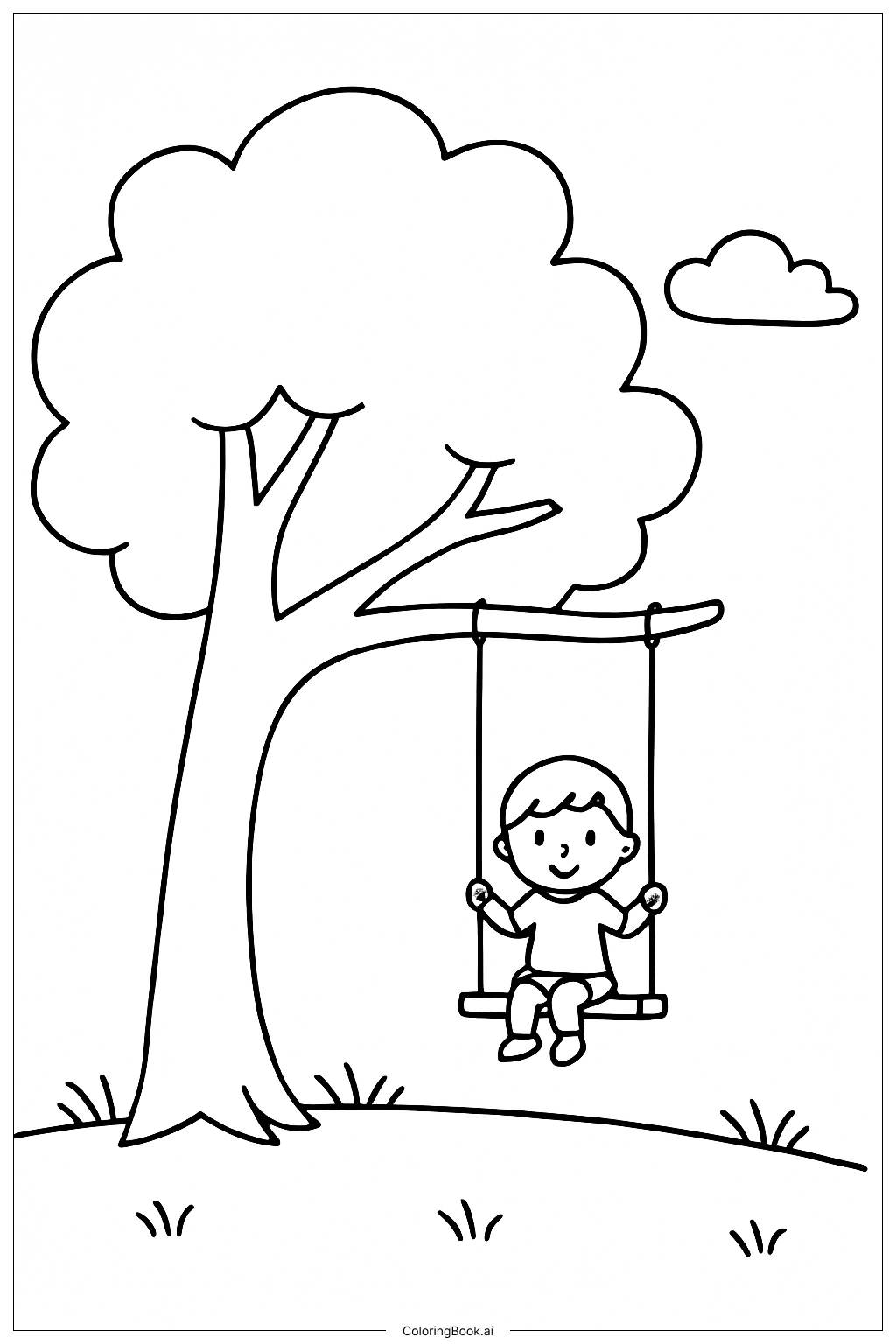
Start with the tree trunk and roots. Use shades of brown — mix light tan for the smooth areas and darker brown for the deep bark grooves. This gives the trunk a realistic, textured look.
For the leaves, use different shades of green. Try bright green for sunlit areas and darker green for shaded spots. This adds depth to the canopy.
Color the rope swing with warm beige or tan. The wooden seat can be a light honey brown.
Use soft green for the grass below. Add light yellow or white for small flowers in the foreground to keep things cheerful.
For the background, a pale blue or soft yellow works well to suggest open sky peeking through the leaves.
Younger kids can use bold, solid colors for a fun and vibrant result. Older kids and adults can try blending and shading techniques for a more realistic feel. Either way, this scene is full of room to be creative and expressive.
Coloring challenges: Which parts are difficult to color and need attention for Swing Under Big Tree coloring page?
• Tree Bark Texture: The trunk of the big tree is covered in deep grooves, ridges, and uneven lines. Coloring this realistically requires using multiple shades of brown and carefully following the direction of each line. Beginners may find it tricky to avoid making the trunk look flat. Using a light base color first and then adding darker tones on top helps create the rough, natural look of real bark.
• Leaf Layers and Depth: The tree canopy is made up of many overlapping leaf clusters. Showing depth means using lighter greens at the top where sunlight hits and deeper, cooler greens in the shadowed areas underneath. Getting this gradient right takes patience. Rushing through the leaves with one flat color will lose the lush, full feeling of the scene.
• Rope and Swing Details: The rope has a twisted or braided texture, and the wooden seat has its own grain lines. These small details are easy to overlook but make the swing look real. Using thin strokes and a steady hand is important here, especially for younger colorists.
• Ground Cover Variation: The grass, soil, and small flowers at the base of the tree all sit close together. Keeping each element visually separate without the colors bleeding into each other requires care. Using different tones for the grass versus the earth helps each part stand out clearly.
• Background Balance: The open sky and light filtering through the leaves can be difficult to handle. Going too dark in the background can overwhelm the tree. Keeping background colors soft and light ensures the tree and swing remain the clear focus of the image.
Benefits of coloring books: Advantages of drawing Swing Under Big Tree coloring page
Coloring this swing and tree scene offers many wonderful benefits for kids and adults alike.
For children, it builds fine motor skills as they carefully color the bark lines, rope texture, and small leaf details. Following the shapes of the image trains hand-eye coordination and pencil control, which supports writing and drawing development.
This scene also sparks imagination. Kids can picture themselves sitting on that swing, choosing colors that match their favorite outdoor memories or creating a totally new fantasy world. That kind of creative thinking supports confidence and self-expression.
For older kids and adults, the detailed textures of the bark and leaf canopy offer a satisfying coloring challenge. Focusing on blending greens or shading the trunk is a great way to practice artistic techniques like layering and gradient coloring.
Coloring is also wonderfully calming. Spending quiet time on a peaceful nature scene like this one helps reduce stress and anxiety. It encourages mindfulness by bringing full attention to the present moment.
Finally, this image connects colorists to nature. Even indoors, working through the shapes of roots, leaves, and a gentle swing can bring a sense of peace, warmth, and the simple joy of being outside on a beautiful day.