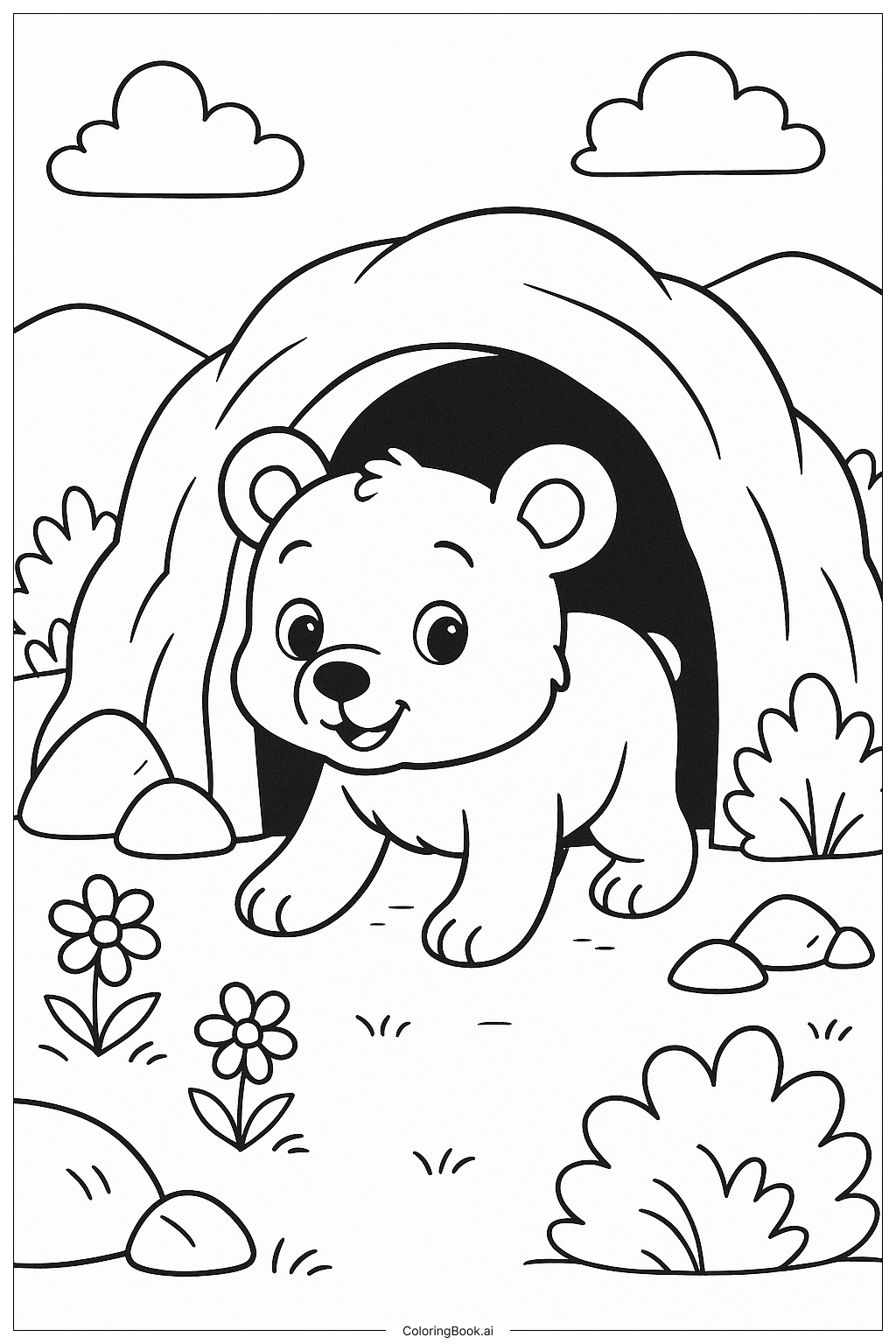
Coloring tips: How to color A Bear Cub Leaving its Spring Den coloring page well?
To color this picture, use soft earthy tones for the bear cub’s fur, such as light browns, tans, and creamy shades. The den can be shaded with darker browns and grays to show depth and shadow. For the plants and grass around the den, try fresh spring greens ranging from bright lime to deeper forest green. Add touches of pastel colors like pale pink, light yellow, or gentle lavender for flowers to highlight the season. The sky can be a light blue to suggest clear spring weather. Use gradual shading to show the light coming into the den and onto the cub’s fur. Have fun experimenting with blending and layering colors to bring the outdoor scene to life.
Coloring challenges: Which parts are difficult to color and need attention for A Bear Cub Leaving its Spring Den coloring page?
• Texture Details: The bear cub’s fur requires careful strokes to show fluffiness and softness. Avoid coloring in large solid patches; instead, use short, light strokes to create a natural look. • Light and Shadow Effects: The den’s opening has varied lighting where shadow meets sunlight. It can be challenging to color the darker areas without making them look flat. Blending colors gently helps show the curved shapes inside. • Small Plants and Flowers: Coloring tiny leaves, grass blades, and small flowers requires attention to detail as this part of the image has many fine lines. Using sharp coloring tools or fine-tipped pencils may help. • Background Complexity: The forest around the den includes overlapping elements like trees, grass, and rocks. Differentiating these layers through color contrasts is important to keep the picture clear and balanced. • Expressive Eyes and Face: The cub’s facial features, especially the eyes, need subtle shading to keep the cute and lively expression. Too much heavy coloring here might lose this delicate effect.
Benefits of coloring books: Advantages of drawing A Bear Cub Leaving its Spring Den coloring page
Coloring this image helps develop fine motor skills as children practice careful strokes on small details like the bear’s fur and surrounding plants. It improves hand-eye coordination and patience by focusing on light and shadow contrasts. The scene also encourages creativity in using different colors to represent natural elements of spring, fostering an appreciation for nature. Additionally, coloring a story-driven image like this one promotes imagination and storytelling skills, as children can think about the bear’s adventure outside its den. Overall, it is a calming and educational activity that blends art with a gentle lesson about wildlife and the changing seasons.