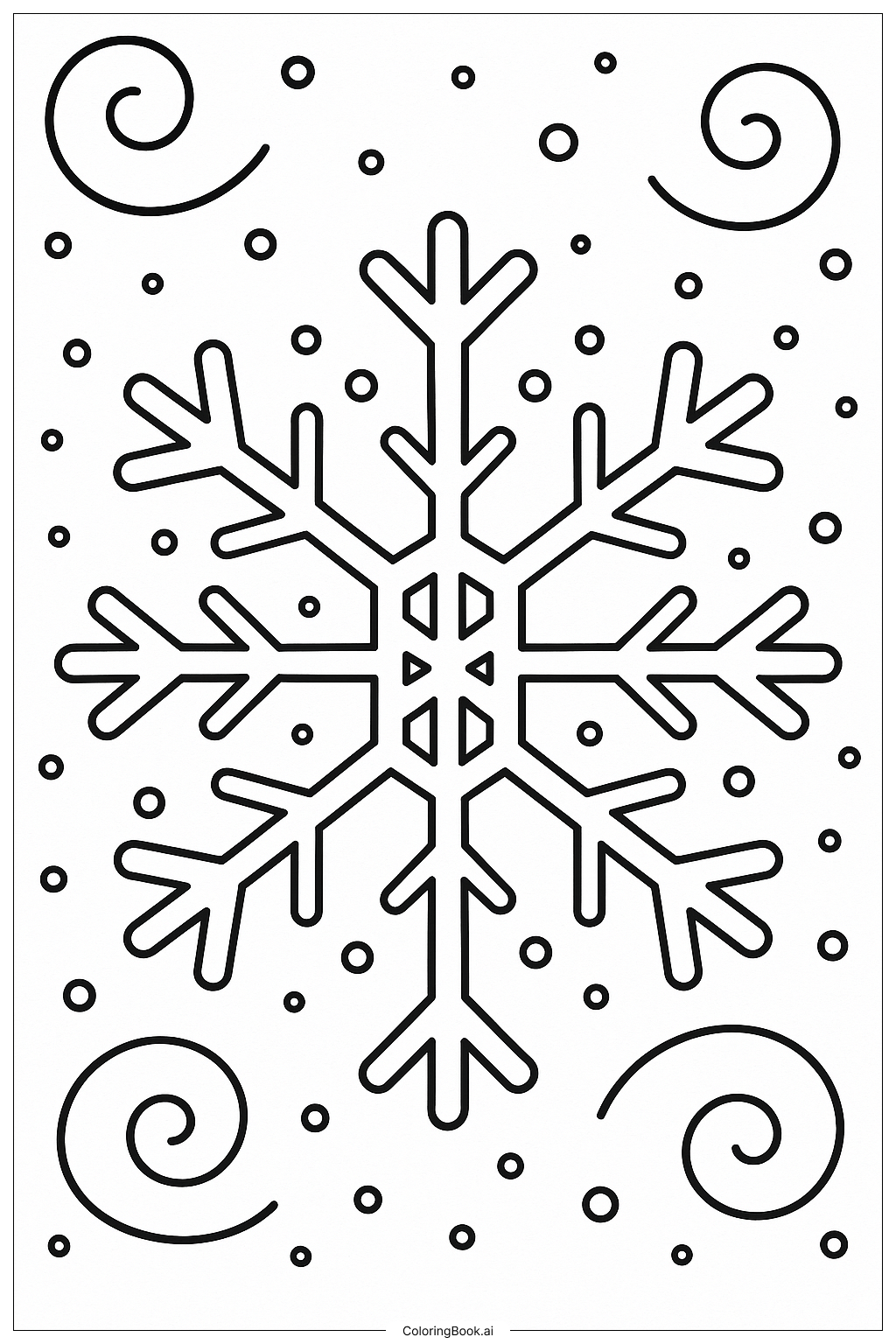
Coloring tips: How to color Geometric Snowflake Pattern coloring page well?
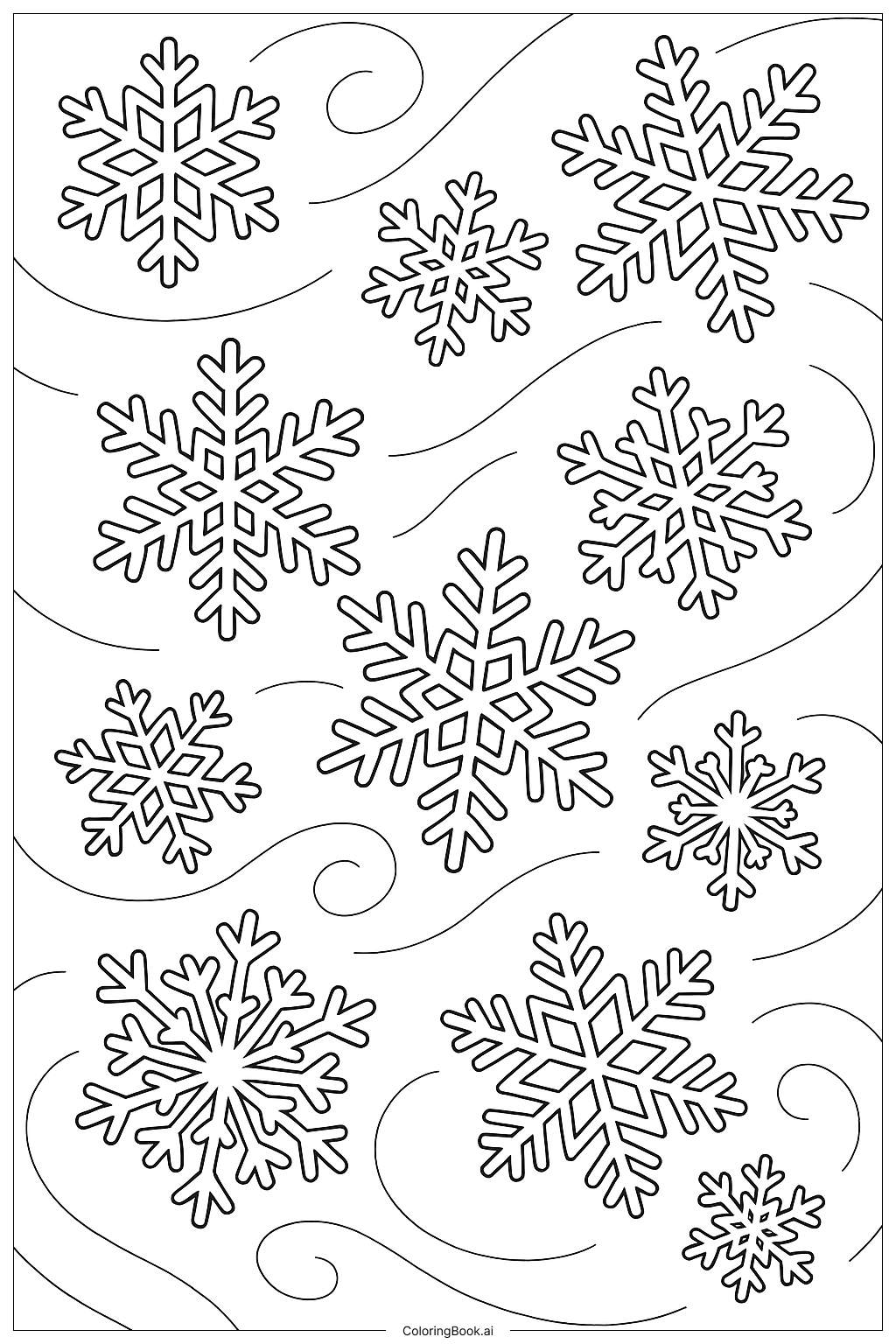
Start from the center and work your way out. Color the innermost hexagon first, then move along each arm section by section. This helps keep your work neat and avoids smudging.
Choose a cool color palette for a wintry feel. Blues, purples, icy whites, and silvers work beautifully together. You can also try a bold, rainbow look by giving each arm a different color.
Use lighter shades near the tips of the arms and darker shades toward the center to create a glowing effect. Colored pencils are great for blending soft gradients. Gel pens or metallic markers can add a sparkly, frosty touch to the edges and small details.
For younger colorists, picking just two or three colors and repeating them in a pattern across the snowflake is a fun and easy approach. Older kids and adults can challenge themselves to make each geometric section unique while keeping the overall design balanced and harmonious.
Coloring challenges: Which parts are difficult to color and need attention for Geometric Snowflake Pattern coloring page?
• Intricate Small Sections: The snowflake contains many tiny geometric shapes, especially near the center and along the inner arms. These small areas can be difficult to fill neatly without accidentally coloring over the lines. A sharp pencil tip or a fine-tipped marker is strongly recommended for these tight spaces to maintain clean, precise edges.
• Maintaining Symmetry: Because the design is perfectly symmetrical across six arms, keeping your color choices consistent from one arm to the next requires careful attention. If you plan a repeating color pattern, it helps to lightly number or label sections before you begin so you do not lose track of which colors go where.
• Blending and Gradients: Achieving smooth color transitions across the geometric sections is challenging, especially where shapes are small or irregular. Blending two colors requires patience and a light hand. Building up color slowly in thin layers gives a much smoother result than pressing hard from the start.
• Avoiding Smudging: Working from the outside inward, or from one side to the other, can cause you to drag your hand over already-colored areas. Planning your coloring order carefully — typically starting at the center and moving outward — helps protect finished sections from smearing.
• Choosing a Cohesive Color Scheme: With so many individual shapes, it can be easy to end up with a color scheme that feels scattered or too busy. Deciding on a limited palette of three to five colors before you begin, and sketching out a rough plan, will help you achieve a design that looks intentional and visually balanced.
Benefits of coloring books: Advantages of drawing Geometric Snowflake Pattern coloring page
Coloring a geometric snowflake pattern offers a wonderful mix of creative and developmental benefits for both kids and adults.
For children, filling in the repeating shapes helps build fine motor skills and hand-eye coordination. Following the symmetrical pattern encourages logical thinking and helps kids recognize mathematical concepts like symmetry and geometry in a playful, pressure-free way.
For older kids and adults, the focused nature of this design makes it an excellent mindfulness activity. Concentrating on small sections one at a time helps quiet a busy mind and reduce everyday stress. Many people find repetitive coloring tasks as relaxing as meditation.
Planning a color scheme for the snowflake also exercises creativity and decision-making. Experimenting with cool palettes, warm contrasts, or gradient effects gives colorists a chance to explore color theory in a hands-on way.
Completing a detailed image like this also builds patience and a sense of accomplishment. Seeing the finished snowflake come to life is genuinely rewarding, especially after working through the more challenging inner sections. It is a satisfying project for anyone who enjoys combining art with a bit of structured problem-solving.