Coloring tips: How to color Sea Shells With Shell Patterns coloring page well?
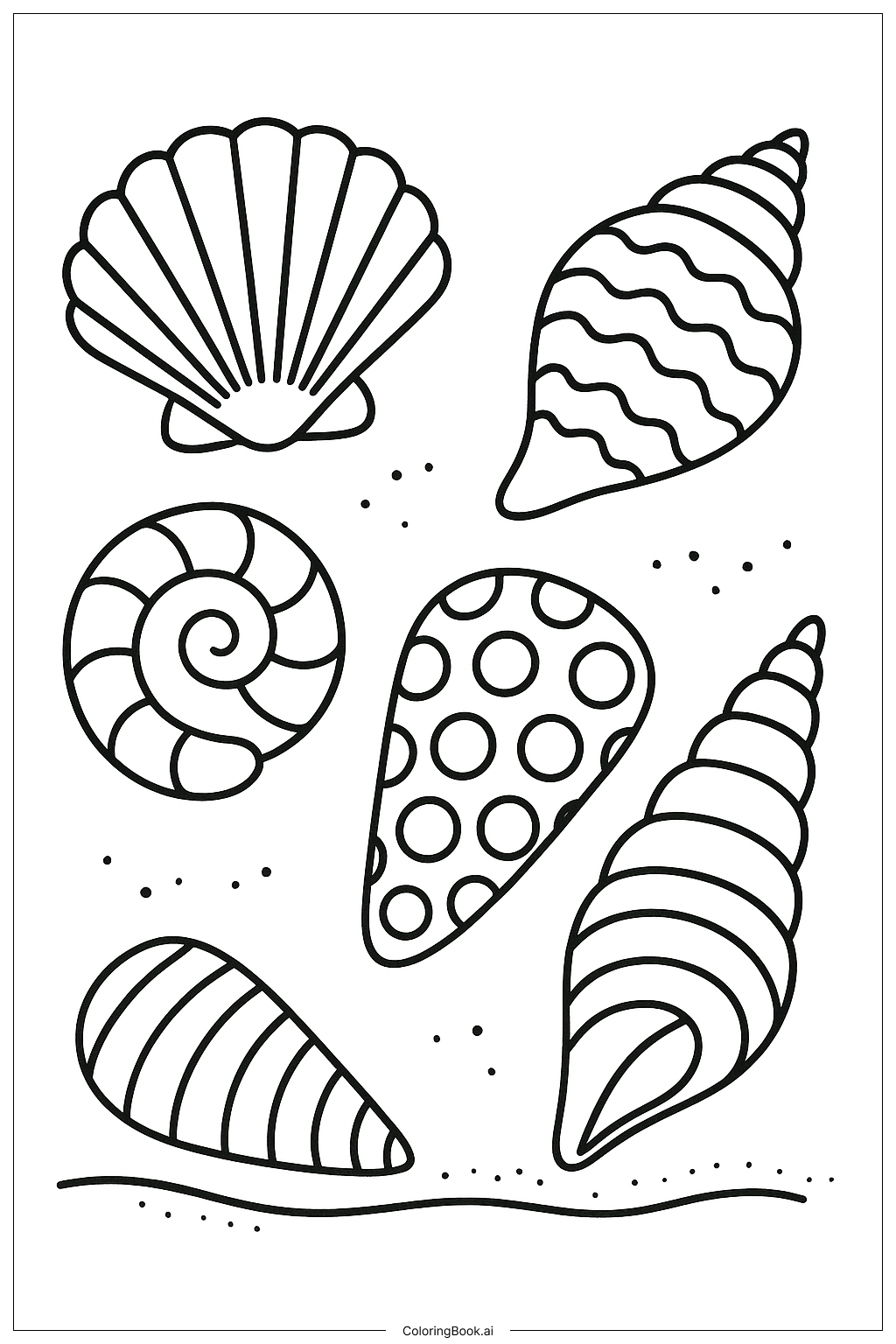
Start by choosing a realistic color palette inspired by actual sea shells: soft peaches, coral pinks, sandy beiges, cream whites, and ocean blues. For the larger conch shells, try blending warm tones like peach into cream, creating gentle gradients that follow the shell's natural curves. Use cooler blues and aqua tones for smaller shells to create contrast. The intricate patterns offer wonderful opportunities for detail work—consider using colored pencils for the tiny dots and lines, filling them with metallic gold or copper for a special touch. Scallop shells look beautiful with gradient stripes in alternating warm and cool tones. Don't be afraid to add imaginative colors like lavender, mint green, or soft yellow to make your page uniquely yours. Leave some areas lighter to suggest the shell's natural sheen and depth.
Coloring challenges: Which parts are difficult to color and need attention for Sea Shells With Shell Patterns coloring page?
• Intricate Pattern Details: Each shell contains numerous small patterns including dots, lines, crosshatching, and geometric shapes that require steady hand control and precision. These tiny areas can be challenging for younger colorists and demand patience to fill without crossing boundaries. Using fine-tipped coloring tools like thin markers or sharp colored pencils will help achieve clean results in these detailed sections.
• Overlapping Shell Boundaries: The composition features shells that overlap and layer on top of one another, creating complex boundary lines that can be confusing to distinguish. Colorists need to carefully identify where one shell ends and another begins to avoid color bleeding between adjacent shells. Taking time to trace these boundaries lightly before coloring can help maintain clear separation.
• Curved and Spiral Forms: Many shells feature natural spiral and curved patterns that require smooth, flowing color application to look natural. Maintaining consistent pressure and direction while coloring along these curves can be difficult, especially for those still developing fine motor control. The spiral patterns in nautilus shells particularly challenge colorists to follow the diminishing scale as the spiral tightens toward the center.
• Pattern Density Variation: Different shells contain varying levels of pattern complexity, from densely packed geometric designs to open spaces with minimal decoration. Balancing color intensity and choosing appropriate techniques for each density level requires planning and thoughtful color selection to create visual harmony across the entire page.
Benefits of coloring books: Advantages of drawing Sea Shells With Shell Patterns coloring page
Coloring this sea shell collection offers tremendous benefits for developing fine motor skills and hand-eye coordination through its detailed patterns and small spaces. The intricate designs require focused attention, helping children and adults practice concentration and mindfulness while engaging in a calming creative activity. The variety of pattern types—from dots to lines to curves—allows colorists to experiment with different coloring techniques and tool pressures, building confidence in their artistic abilities. Learning about natural shell patterns can spark curiosity about marine life and ocean ecosystems, connecting art with science education. The overlapping composition teaches spatial awareness and planning skills as colorists decide which shells to color first and how colors will interact. This page is particularly valuable for developing patience and attention to detail, qualities that transfer to academic and everyday tasks. The repetitive nature of filling patterns can be meditative and stress-relieving for older children and adults.