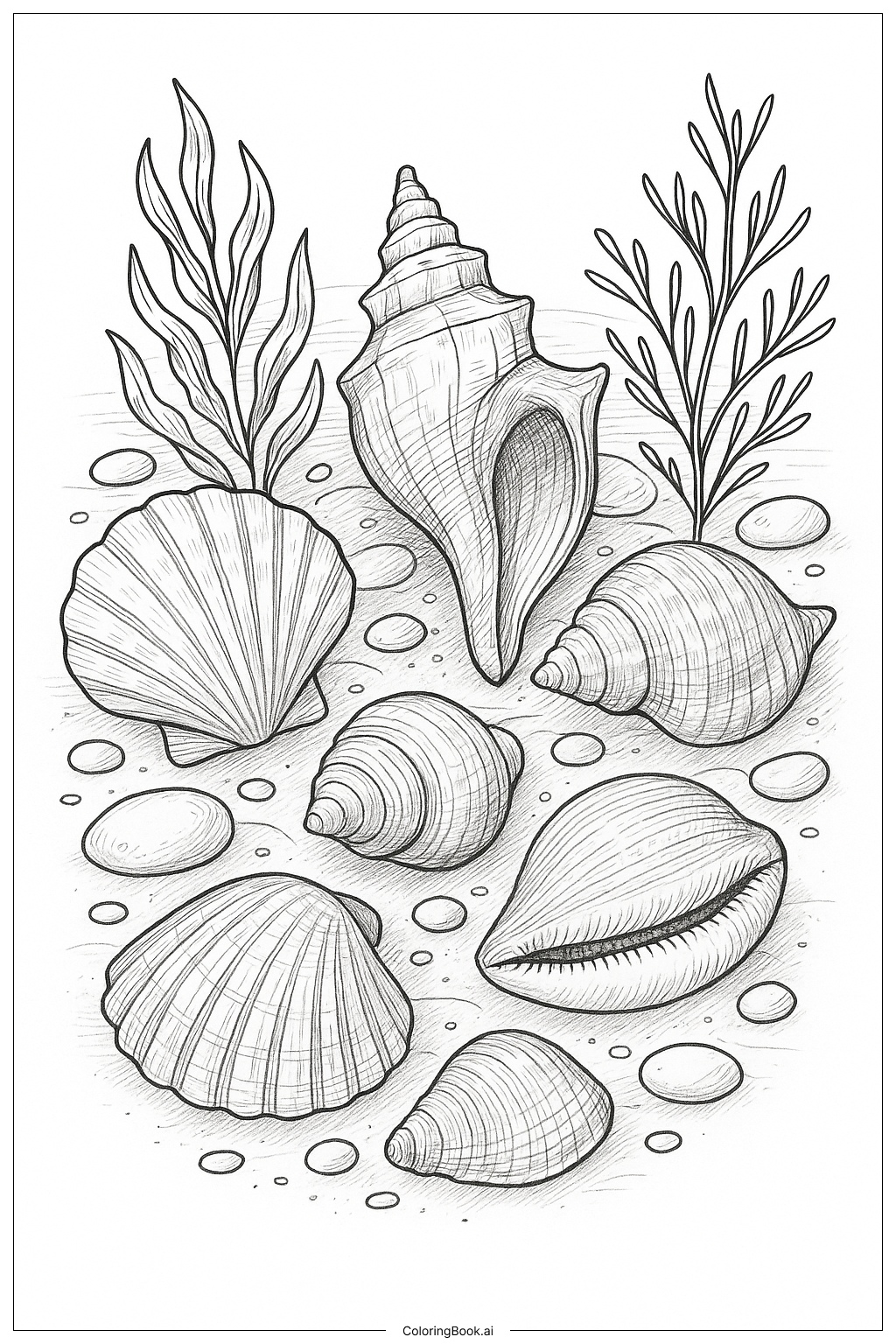
Coloring tips: How to color Sea Shells With Fine Linework coloring page well?
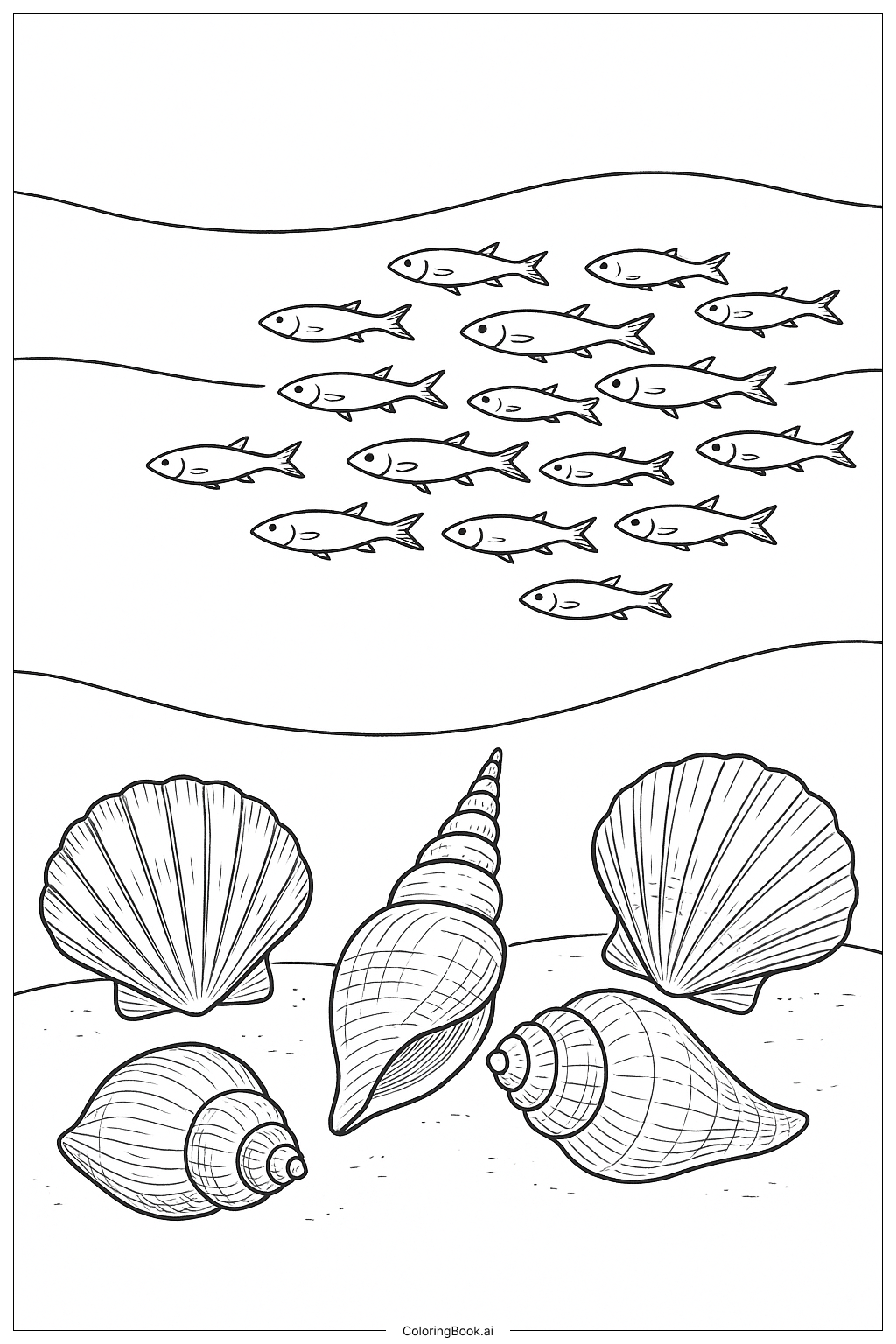
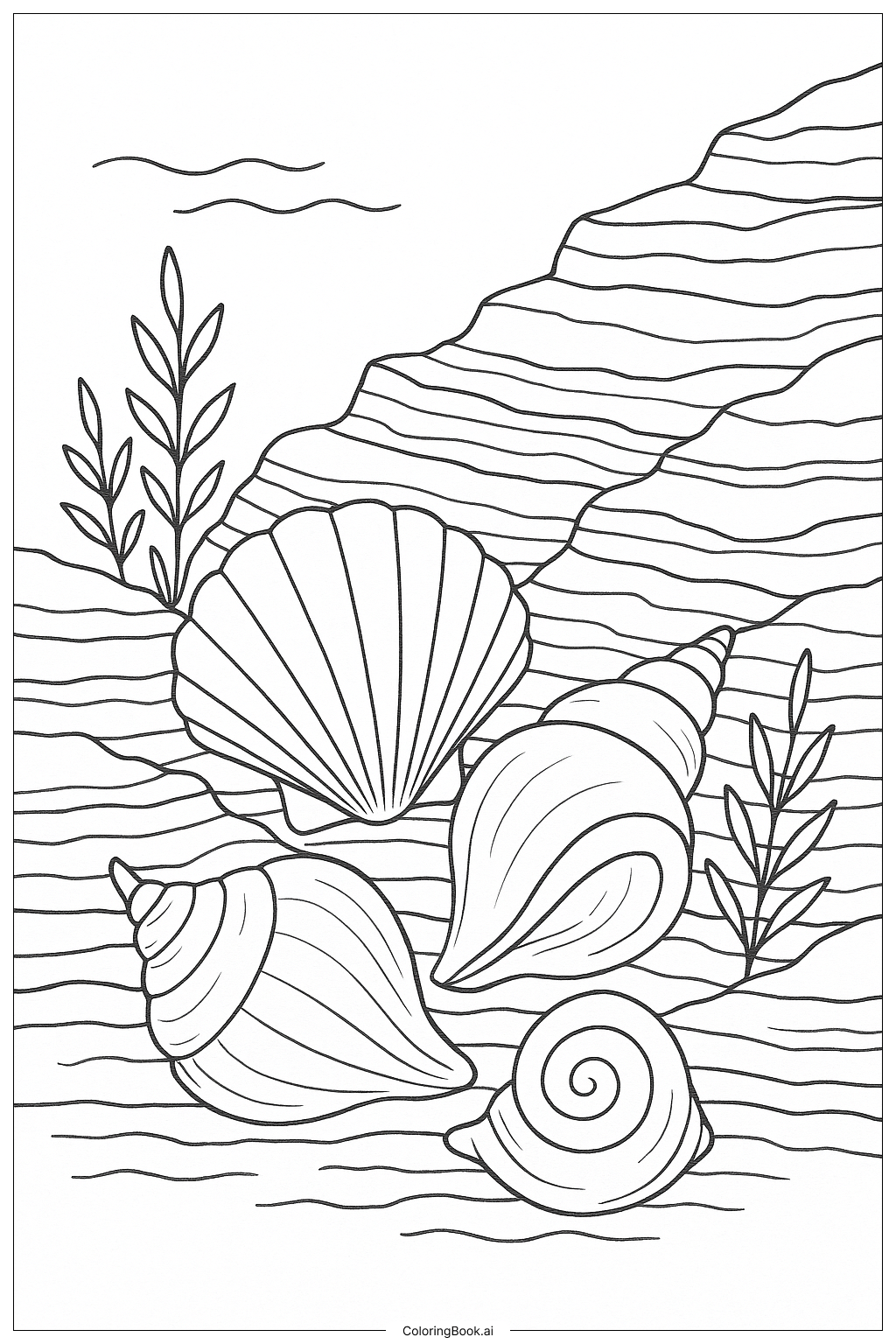
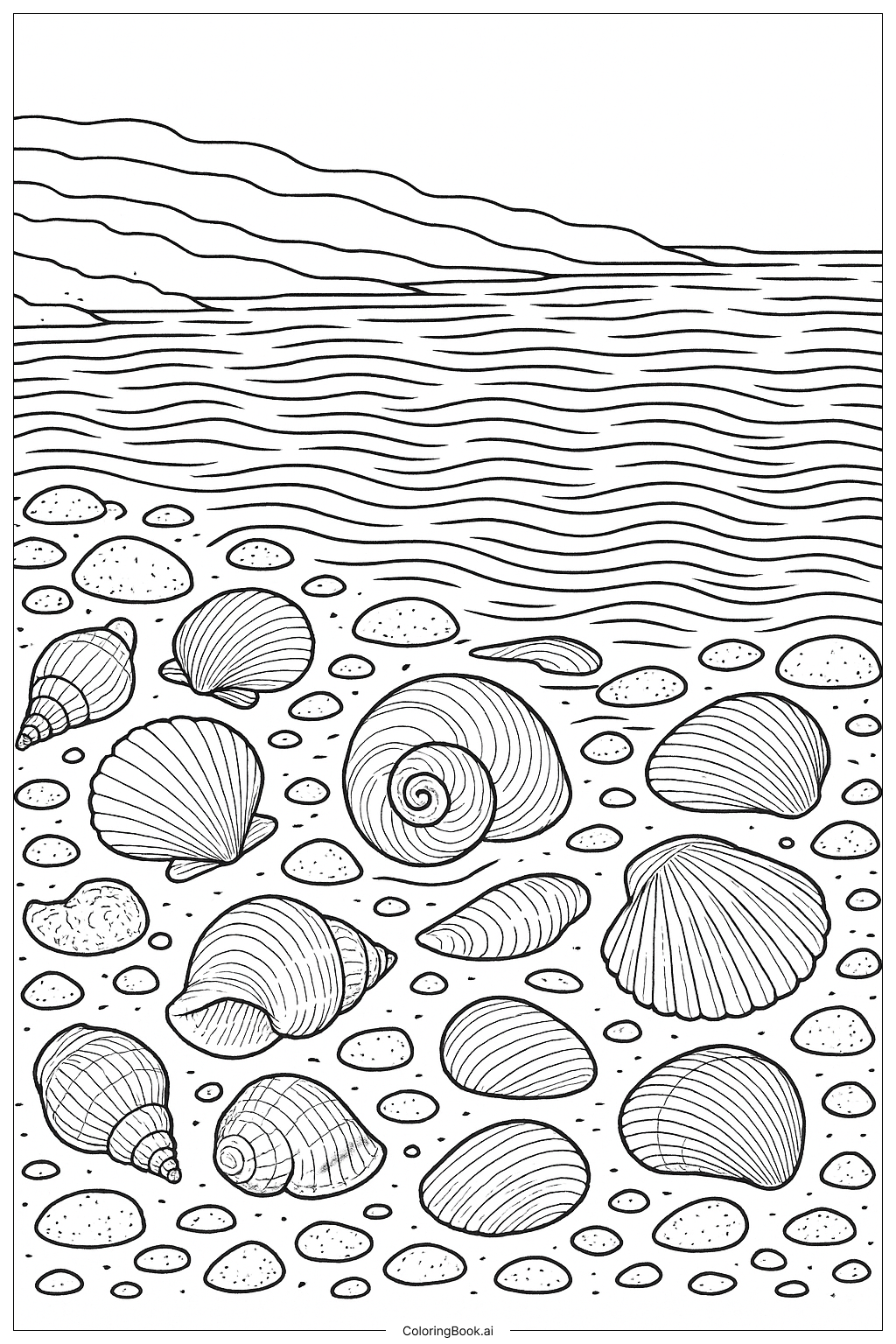
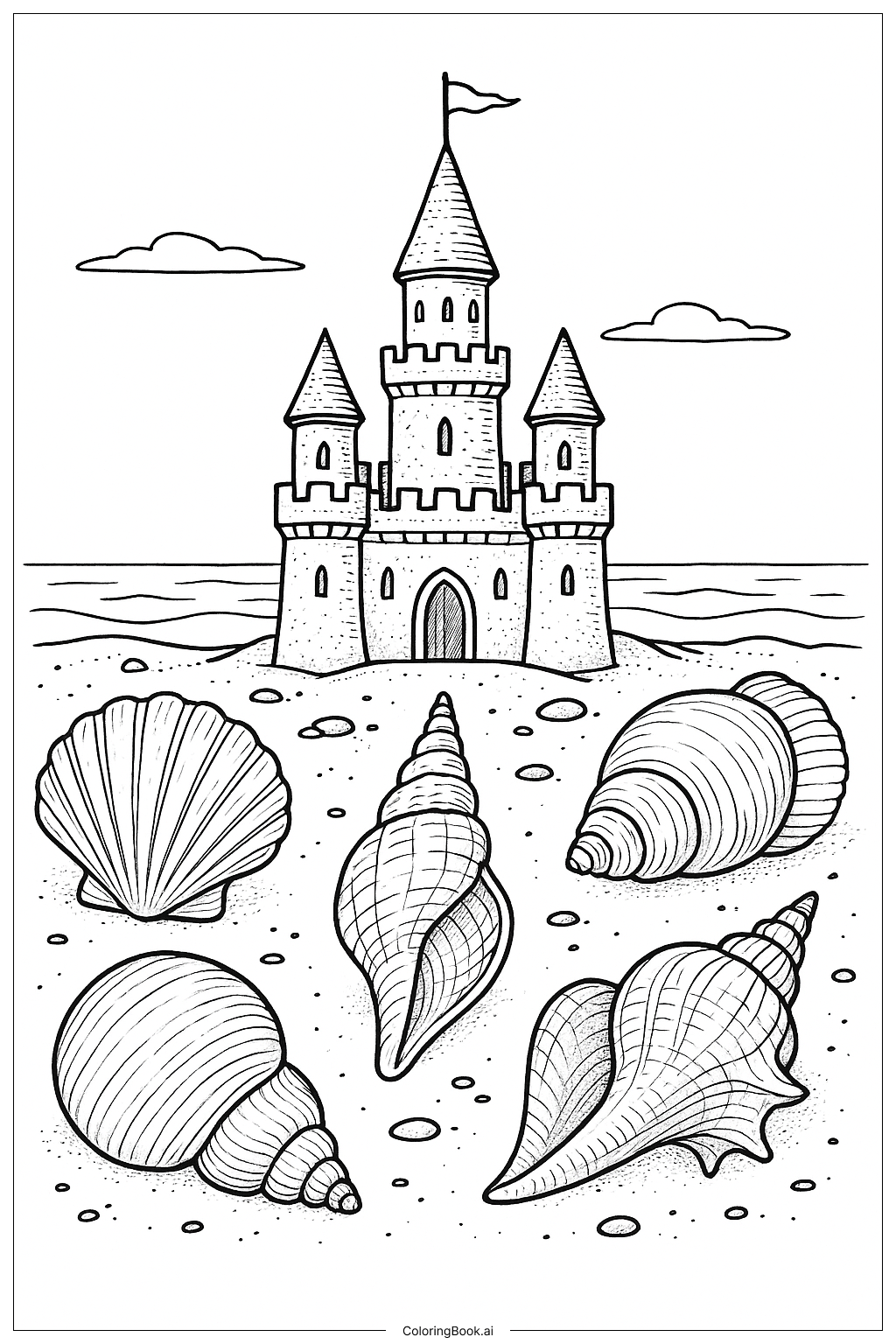
Try using soft colors to make the shells look natural. You can use shades of brown, cream, pink, and orange for the shells. For the seaweed, green tones like olive or sea green will work well. Use light colors for the sand, such as light yellow or beige. You can add darker shades on the edges of the shells and seaweed to show shadows. Mixing lighter and darker colors helps show the curves and lines. Use thin coloring strokes to follow the fine details and lines on the shells.
Coloring challenges: Which parts are difficult to color and need attention for Sea Shells With Fine Linework coloring page?
1. The picture has many fine lines to show texture, which means you need to color carefully without covering these details.
2. There are small pebbles and spaces around the shells that need neat coloring to avoid colors mixing.
3. The shells come in different shapes and sizes, so choosing the right color and shading for each to make them look 3D can be tricky.
4. The seaweed has thin leaves that need gentle and steady coloring to keep them clear and neat.
5. Showing the shadows and curves on shells requires careful blending of colors and attention to light source to look realistic.
Benefits of coloring books: Advantages of drawing Sea Shells With Fine Linework coloring page
Coloring this page helps improve focus and fine motor skills because of its detailed lines and small areas. It encourages creativity when picking colors and shading to make shells look real. The scene also teaches kids about nature and sea life, making coloring both fun and educational. Coloring the shells and seaweed can calm the mind and relax the body, helping to reduce stress. Overall, this page is a great way to practice patience and artistic skills while enjoying a lovely ocean theme.