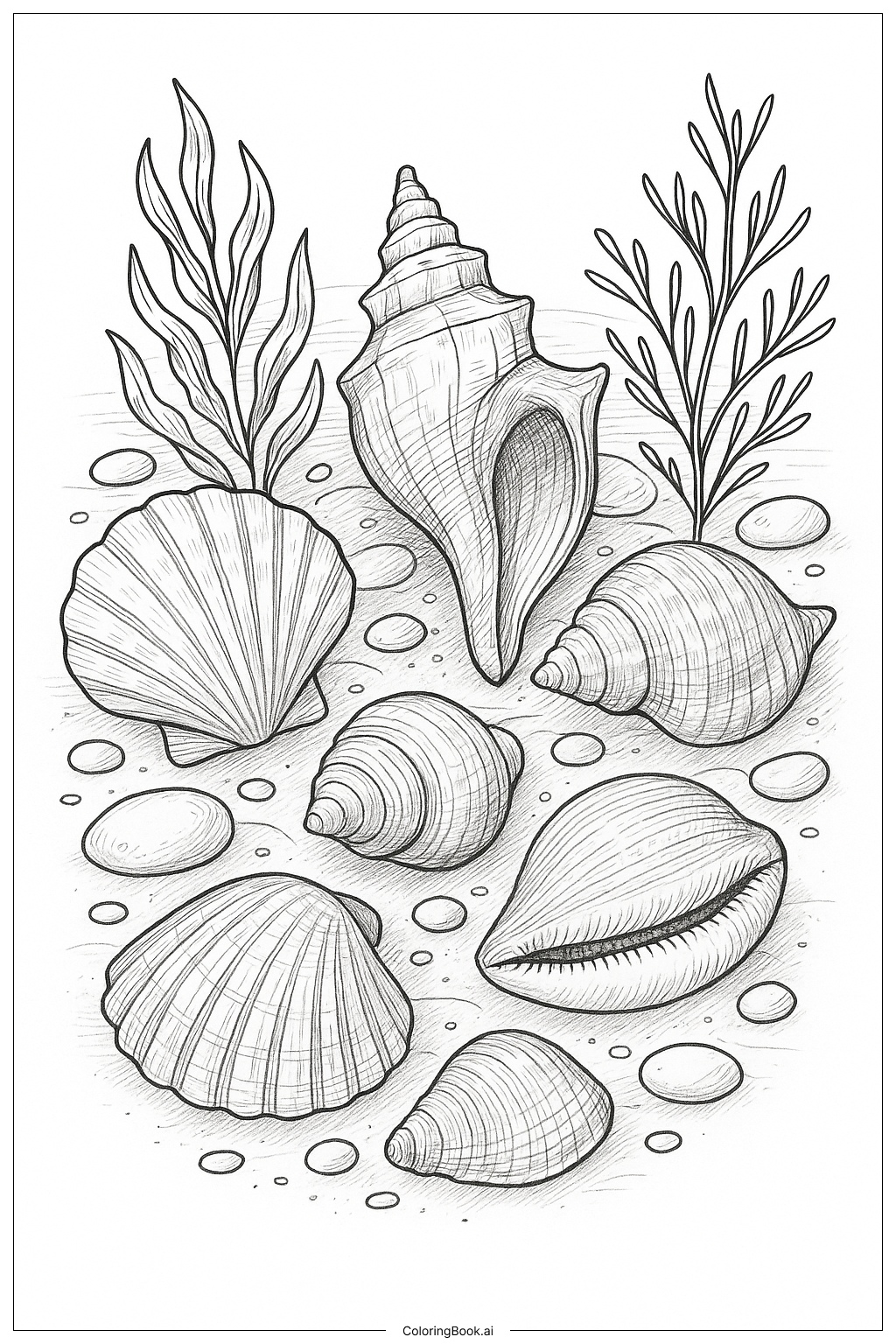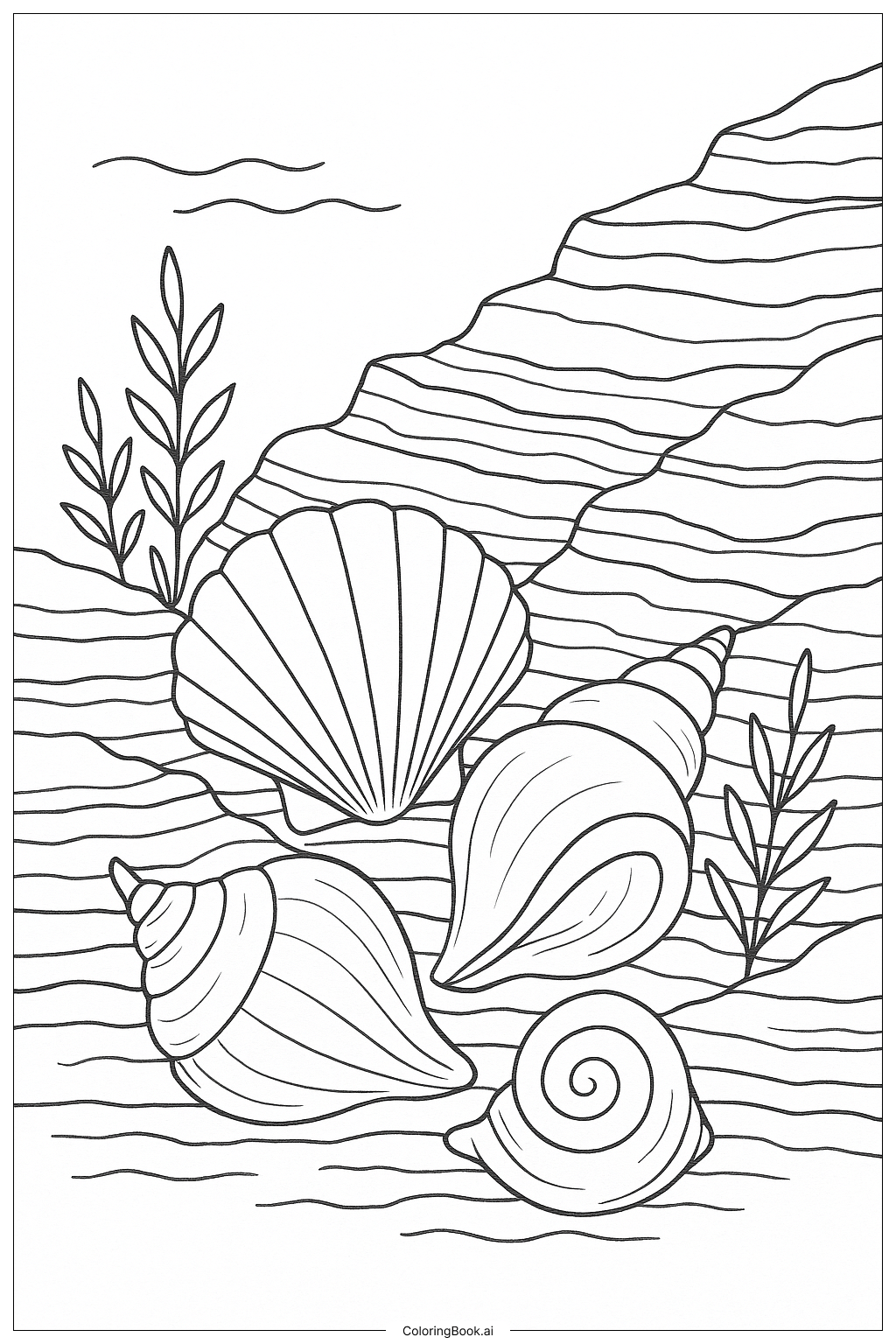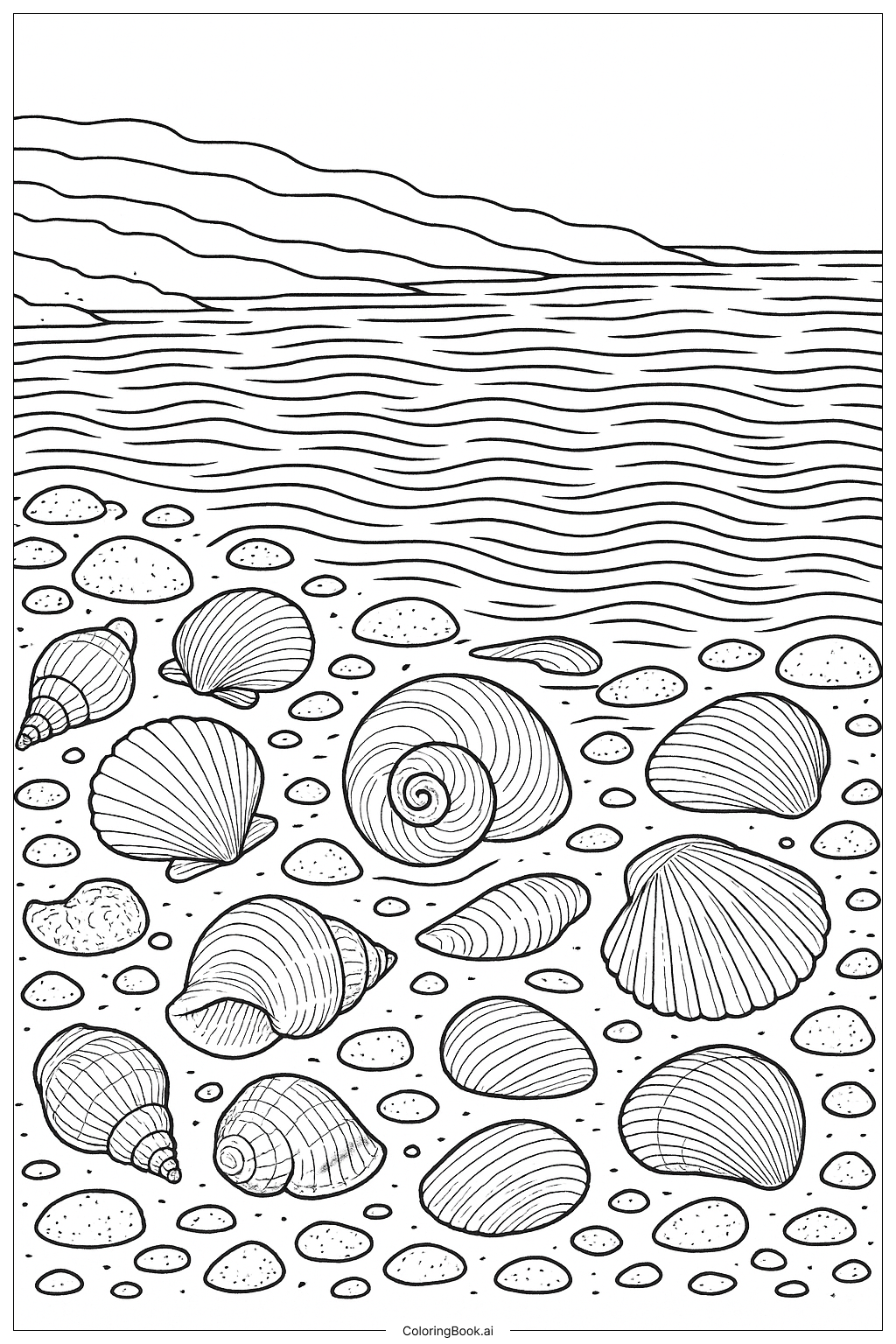
Coloring tips: How to color Sea Shells With Seaweed Border coloring page well?
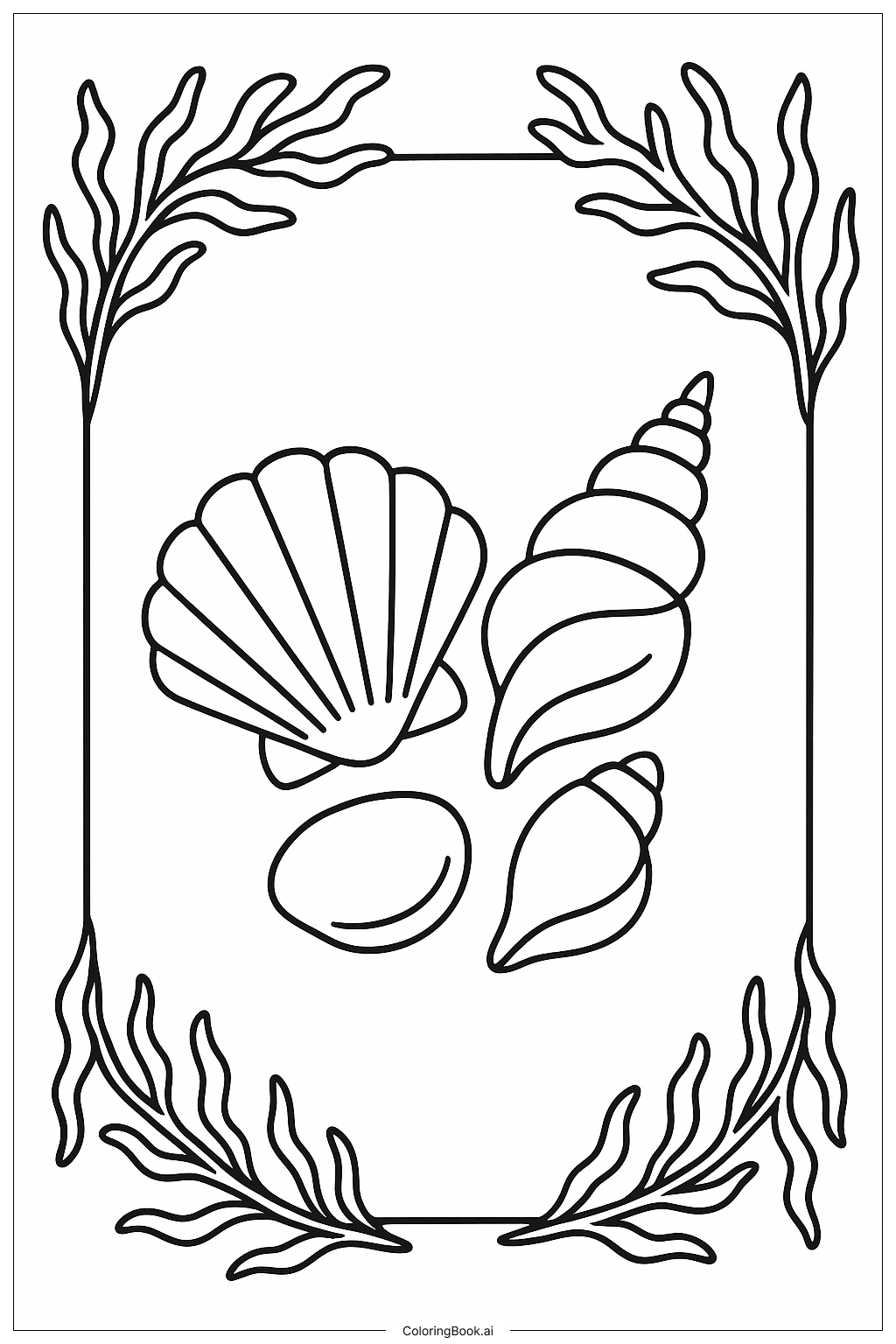
Use a mix of bright and soft colors for the sea shells to make each one stand out. Try yellows, pinks, and oranges for the shells, as they often come in warm colors. For the seaweed border, green shades work best, but feel free to add some blues or browns to make it look more natural. Use colored pencils or crayons with light strokes to fill in the bigger areas, and markers or fine tips for the smaller details. Don’t forget to color slowly and stay inside the lines to make the picture neat and tidy.
Coloring challenges: Which parts are difficult to color and need attention for Sea Shells With Seaweed Border coloring page?
1. The seaweed border has many thin, wavy lines that require careful coloring to avoid spilling outside the lines.
2. The sea shells have different shapes with some small curves and spaces that can be tricky to color accurately.
3. Balancing colors between the shells and the seaweed can be hard because using very bright colors on both might make the image look too busy.
4. Coloring smooth gradient effects or shadows on shells might be difficult for younger children.
5. The frame lines connecting the seaweed need steady hand control to keep the edges clean and straight.
Benefits of coloring books: Advantages of drawing Sea Shells With Seaweed Border coloring page
Coloring this page helps improve fine motor skills because of the detailed areas like seaweed and shell lines. It also encourages creativity as kids can choose different colors and imagine their own beach scene. Working on staying inside the lines teaches hand-eye coordination and focus. The sea theme introduces children to nature and the ocean world, promoting learning through art. Overall, this page makes coloring fun and educational.