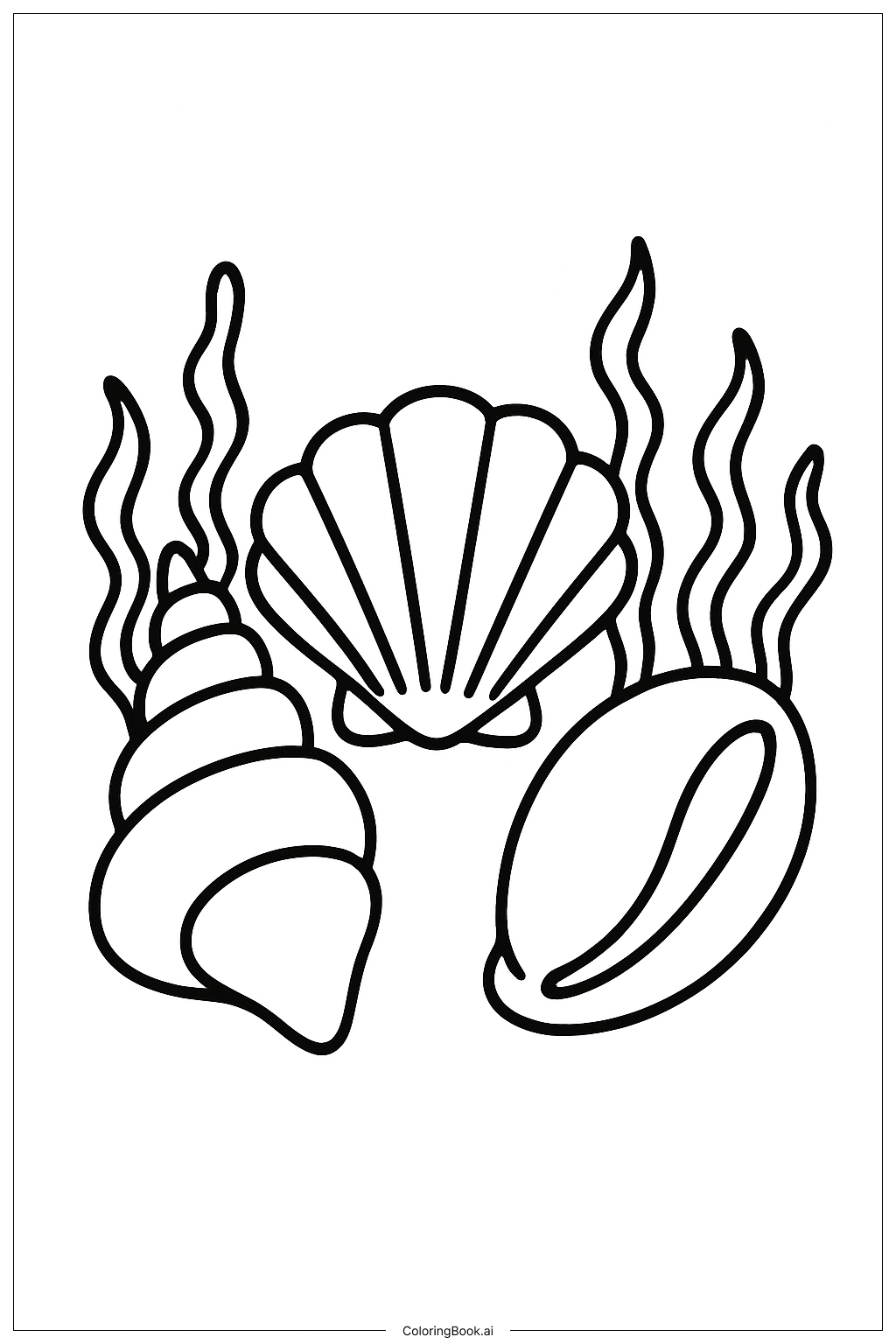
Coloring tips: How to color Sea Shells With Seaweed coloring page well?
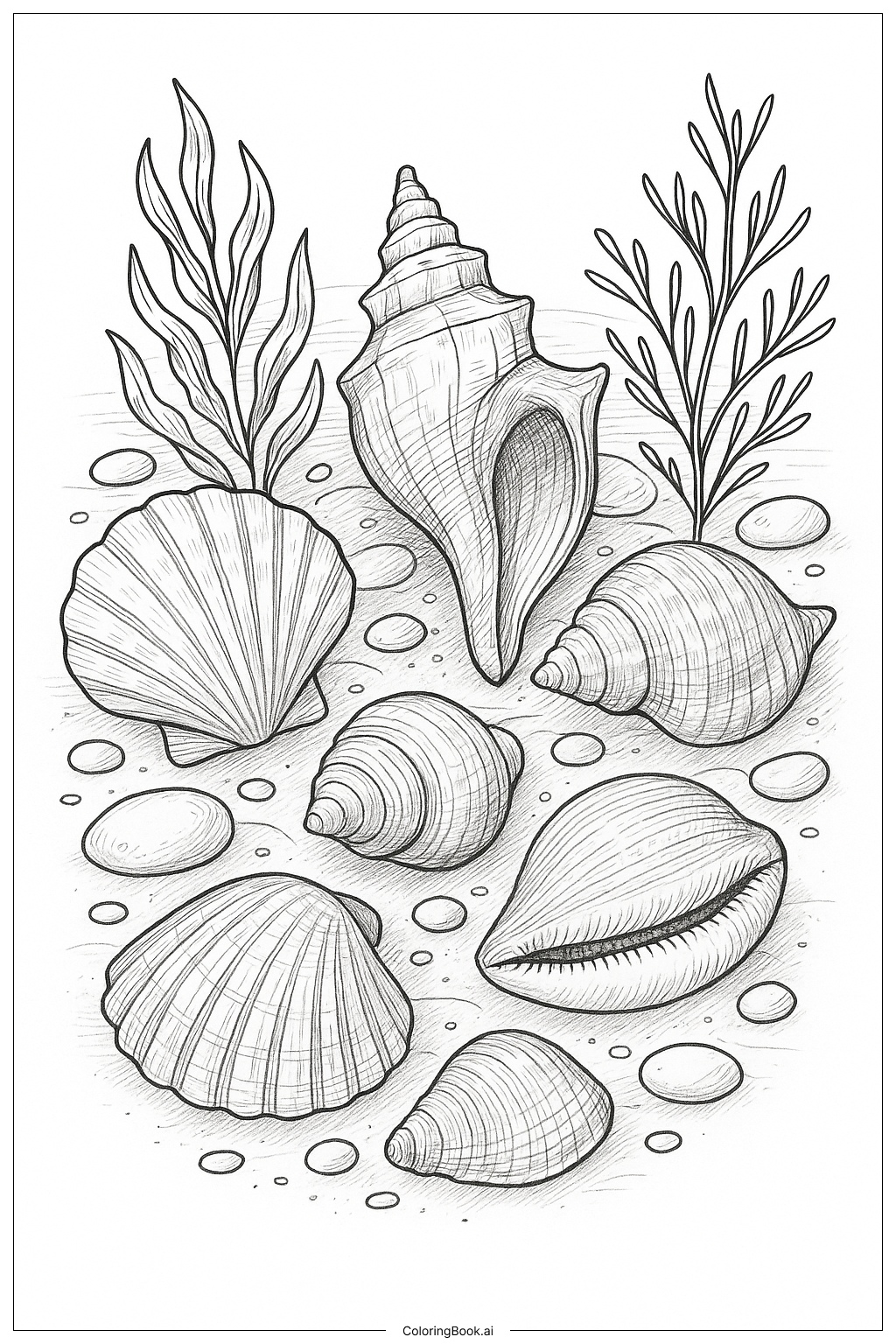
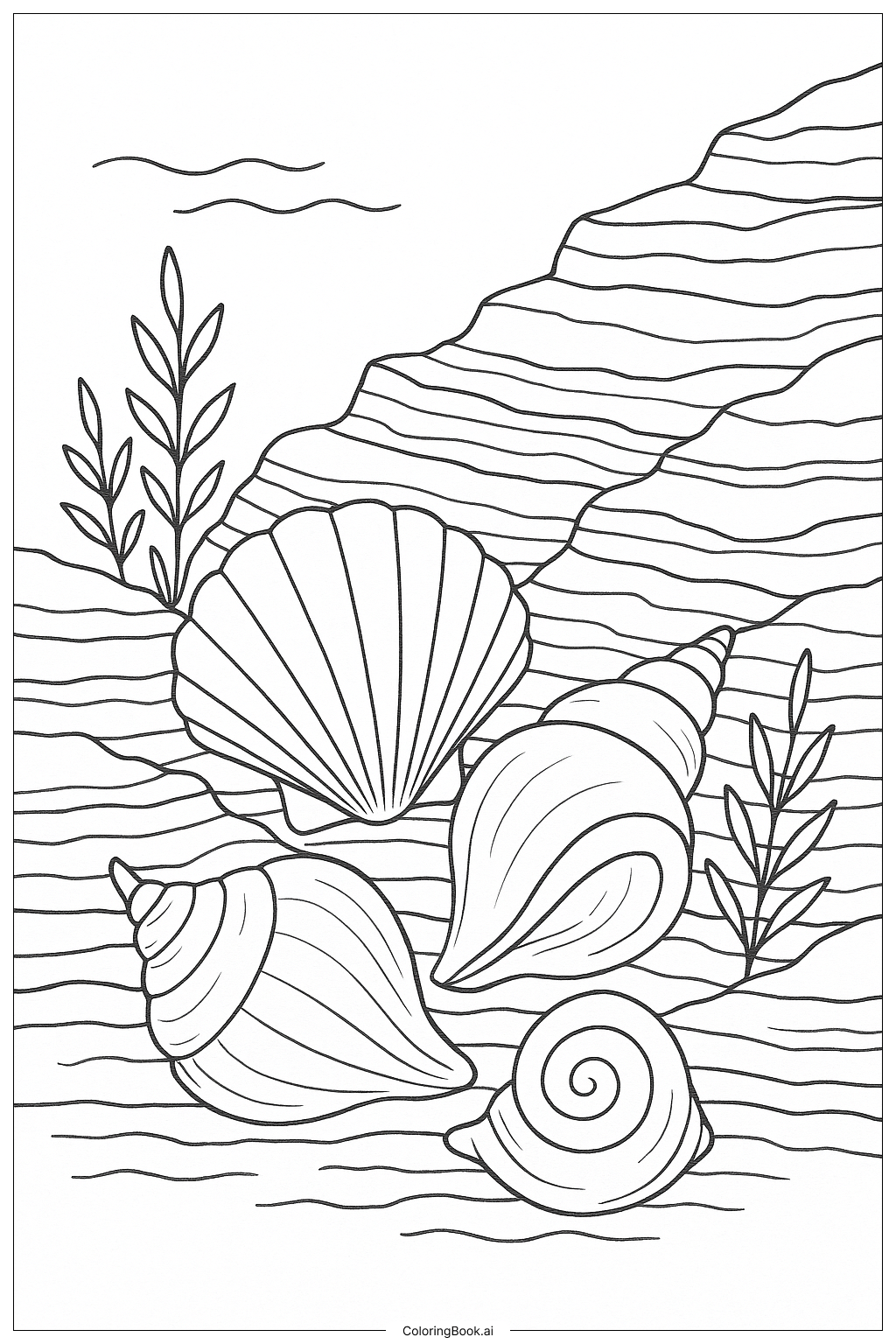
Start with the seaweed since it covers a lot of the background. Shades of green work well — try mixing light green and dark green to give the leaves depth. For the shells, use warm sandy tones like cream, tan, and peach as your base. Then add hints of pink, lavender, or orange to make each shell unique and colorful. Use a darker shade along the edges and ridges of each shell to show texture and dimension. The tiny starfish can be colored yellow or coral orange. For the background, a soft blue or aqua wash suggests a calm underwater setting. Younger colorists can keep it simple with one or two colors per shell, while older kids and teens can try blending and shading for a more realistic look. There are no strict rules — have fun and let your imagination guide your color choices.
Coloring challenges: Which parts are difficult to color and need attention for Sea Shells With Seaweed coloring page?
• Shell Texture Details: Each shell is drawn with fine ridges, spiral lines, and surface patterns. Staying inside these small details without smudging or overlapping takes a steady hand. Younger colorists may find it helpful to use thin markers or sharpened colored pencils for these areas.\n\n• Differentiating Shell Shapes: The page contains several different shell types placed close together. Choosing distinct colors for each shell so they stand out from one another requires some planning. It helps to pick your full color palette before you begin rather than coloring one shell at a time.\n\n• Seaweed Overlaps: The seaweed weaves in front of and behind the shells in several places. Coloring these overlapping sections neatly without letting colors bleed into each other can be tricky, especially where the seaweed meets a lightly colored shell edge.\n\n• Achieving Depth and Shading: The image looks most impressive when light and shadow are used to give the shells a three-dimensional appearance. Adding a darker tone along one side and a lighter highlight on the other side creates this effect. This technique takes practice and can be challenging for beginners.\n\n• Small Background Elements: The tiny bubbles and starfish scattered throughout the composition are small and closely spaced. Coloring these without accidentally filling in the surrounding space requires patience and careful control of your coloring tool.
Benefits of coloring books: Advantages of drawing Sea Shells With Seaweed coloring page
Coloring this Sea Shells With Seaweed page offers a wonderful range of benefits for kids of all ages. The detailed shell textures and overlapping seaweed encourage fine motor skill development as children practice controlling their coloring tools with precision. Choosing colors for each unique shell sparks creativity and allows kids to express their personal style freely.\n\nThe ocean theme is naturally calming. The flowing seaweed and rounded shell shapes create a peaceful, rhythmic scene that helps reduce stress and encourages focused, mindful attention. Sitting quietly with this page can feel like a short, relaxing escape.\n\nFor younger children, identifying and naming the different shell shapes builds early science and nature vocabulary. Older kids can use this page to practice blending and shading techniques, developing real artistic skills they can carry into other creative projects.\n\nCompleting the page also builds patience and a sense of accomplishment. Finishing a detailed image teaches children that careful, steady effort leads to a satisfying result. Overall, this is a fun, educational, and therapeutic activity suitable for a wide range of ages.