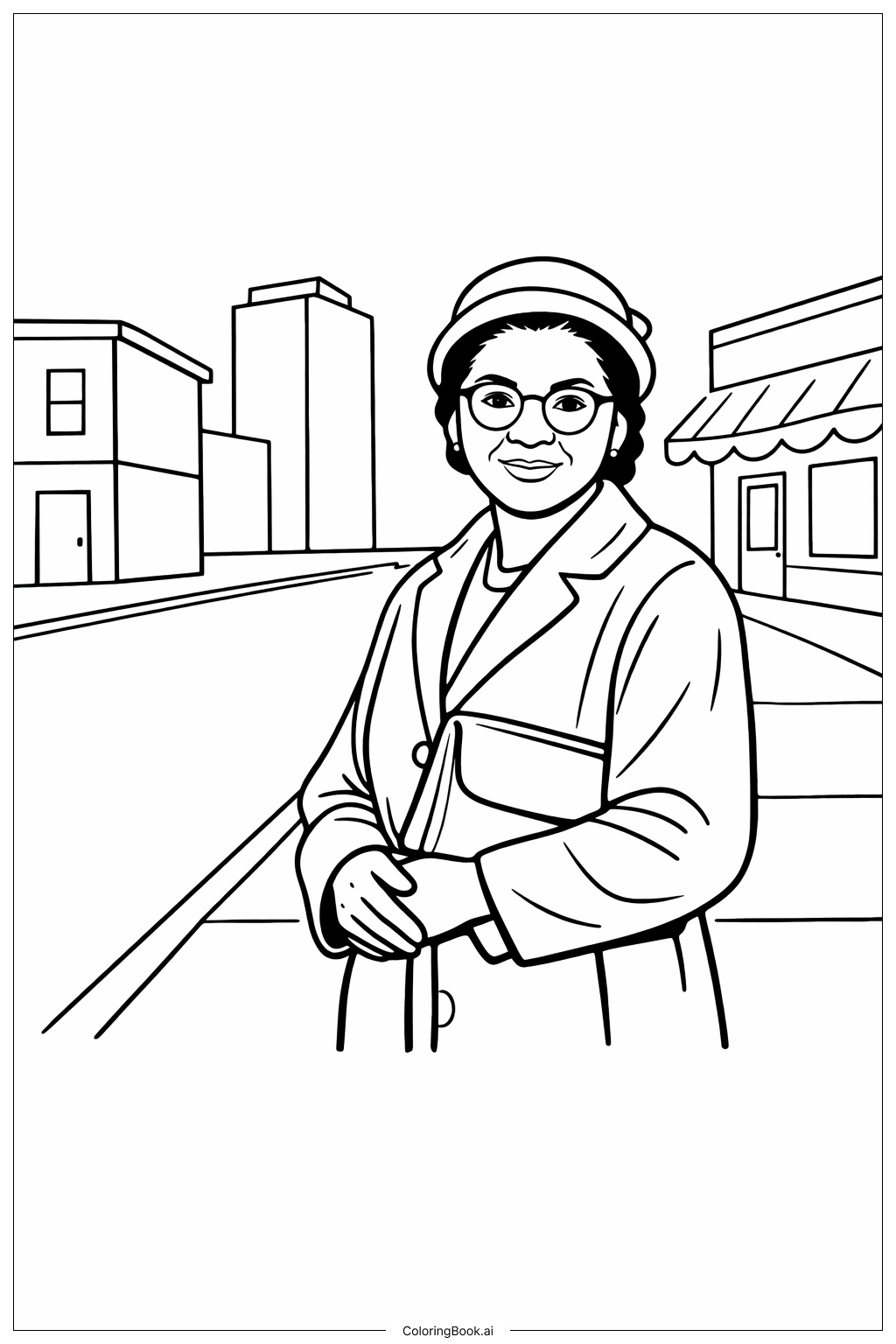
Coloring tips: How to color Rosa Parks In City Street coloring page well?
Start with Rosa Parks herself. Use warm brown tones for her skin. Color her coat in a deep navy blue or rich burgundy to show her dignified style. Her handbag can be dark brown or black. Use soft cream or white for any blouse details. For the city street, try gray tones for the sidewalk and road. Color the buildings with tan, brick red, or pale yellow. The bus in the background looks great in yellow or green. Add blue to the sky peeking between buildings. Use warm amber or soft gold for the lampposts. Keep storefront windows light blue or pale gray. Let older kids experiment with shading to give the buildings depth. Younger children can focus on bold, simple colors for the main shapes. There are no wrong color choices here — have fun bringing this important scene to life.
Coloring challenges: Which parts are difficult to color and need attention for Rosa Parks In City Street coloring page?
• Rosa Parks's Clothing Details: Her coat, collar, buttons, and handbag are close together in a small area. It can be tricky to color each part without mixing colors. Use a fine-tipped marker or sharpened pencil to stay within the lines and keep each detail looking neat and separate.
• Facial Features and Skin Tone: Rosa Parks's face includes subtle features like her eyes, nose, and lips. Coloring skin tones realistically takes care and blending. Children may find it challenging to choose the right brown shades and apply them smoothly without pressing too hard or going outside the face outline.
• Busy Background Architecture: The city street behind Rosa Parks includes buildings, windows, storefronts, and a sidewalk. These overlapping elements create many small sections that are close together. Keeping different surfaces — like brick walls, glass windows, and concrete pavements — visually distinct requires patience and careful color selection.
• The Bus in the Background: The bus is an important symbol in the image but sits behind other elements. It is smaller and partially overlapped, making it harder to color neatly. Picking a color that stands out from the surrounding buildings without clashing takes a bit of planning.
• Depth and Perspective: The street stretches into the background, creating a sense of depth. Showing this with color — for example, making background buildings slightly lighter than foreground ones — is a more advanced technique that older or more experienced colorists may want to try but younger kids might find challenging.
Benefits of coloring books: Advantages of drawing Rosa Parks In City Street coloring page
Coloring this image of Rosa Parks on a city street offers wonderful benefits for children and Adults alike. It is a meaningful way to connect art with history. As kids color the scene, they naturally become curious about who Rosa Parks was and why she matters. This opens the door to conversations about courage, equality, and standing up for what is right.
For younger children, filling in the buildings, clothing, and street details helps build fine motor skills and hand-eye coordination. Staying within lines and choosing colors trains focus and patience.
For older children and Adults, the detailed cityscape and layered background offer a real creative challenge. Practicing shading, color mixing, and perspective adds artistic skill while keeping the mind engaged.
Coloring also has a calming effect. It reduces stress and encourages mindfulness, helping colorists of all ages slow down and be present in the moment.
Most importantly, this page celebrates a real person who changed history. Bringing her image to life with color is a small but personal act of honoring her legacy. It makes history feel real, human, and worth remembering. Rosa Parks In City Street is more than a coloring page — it is a story told in color.