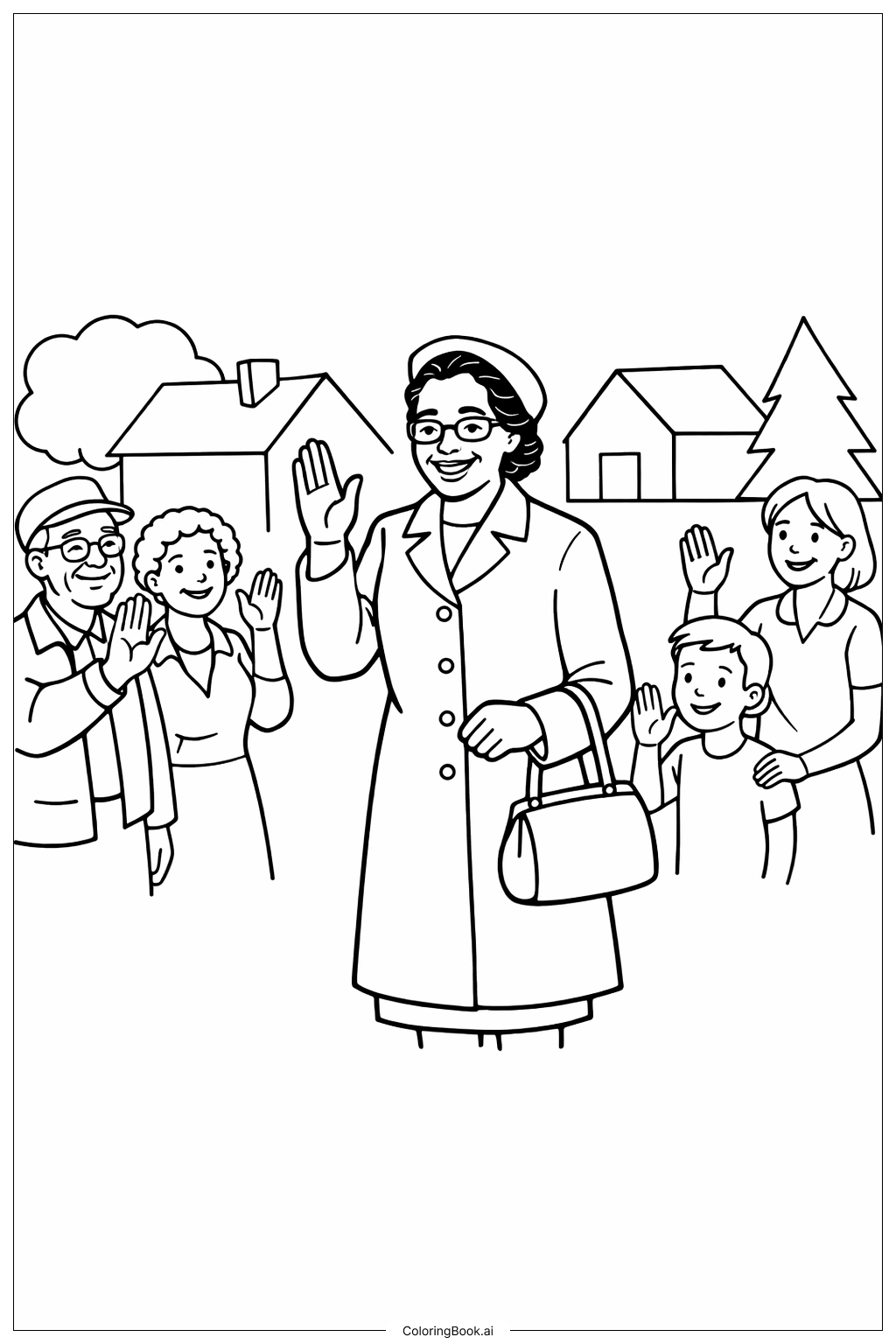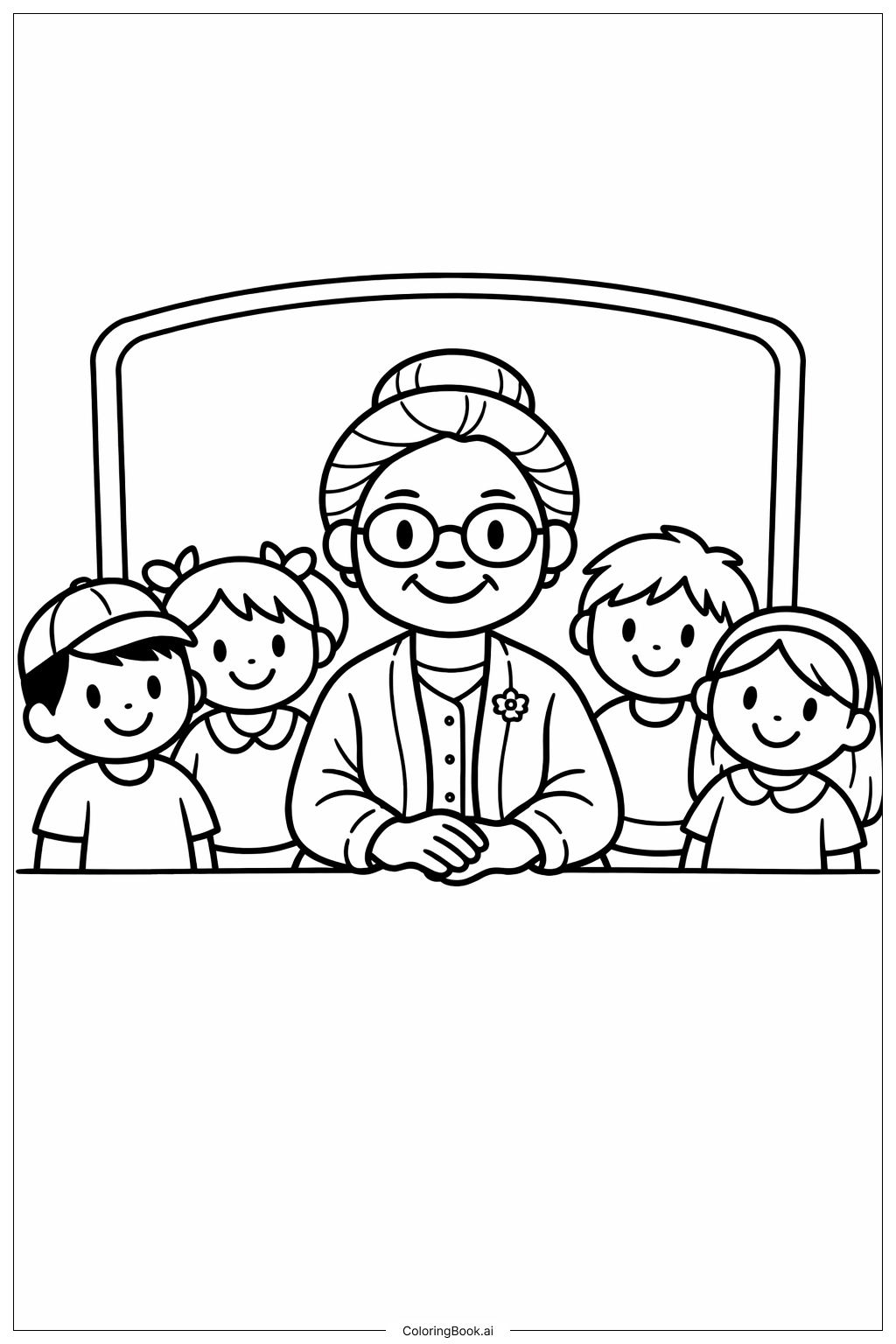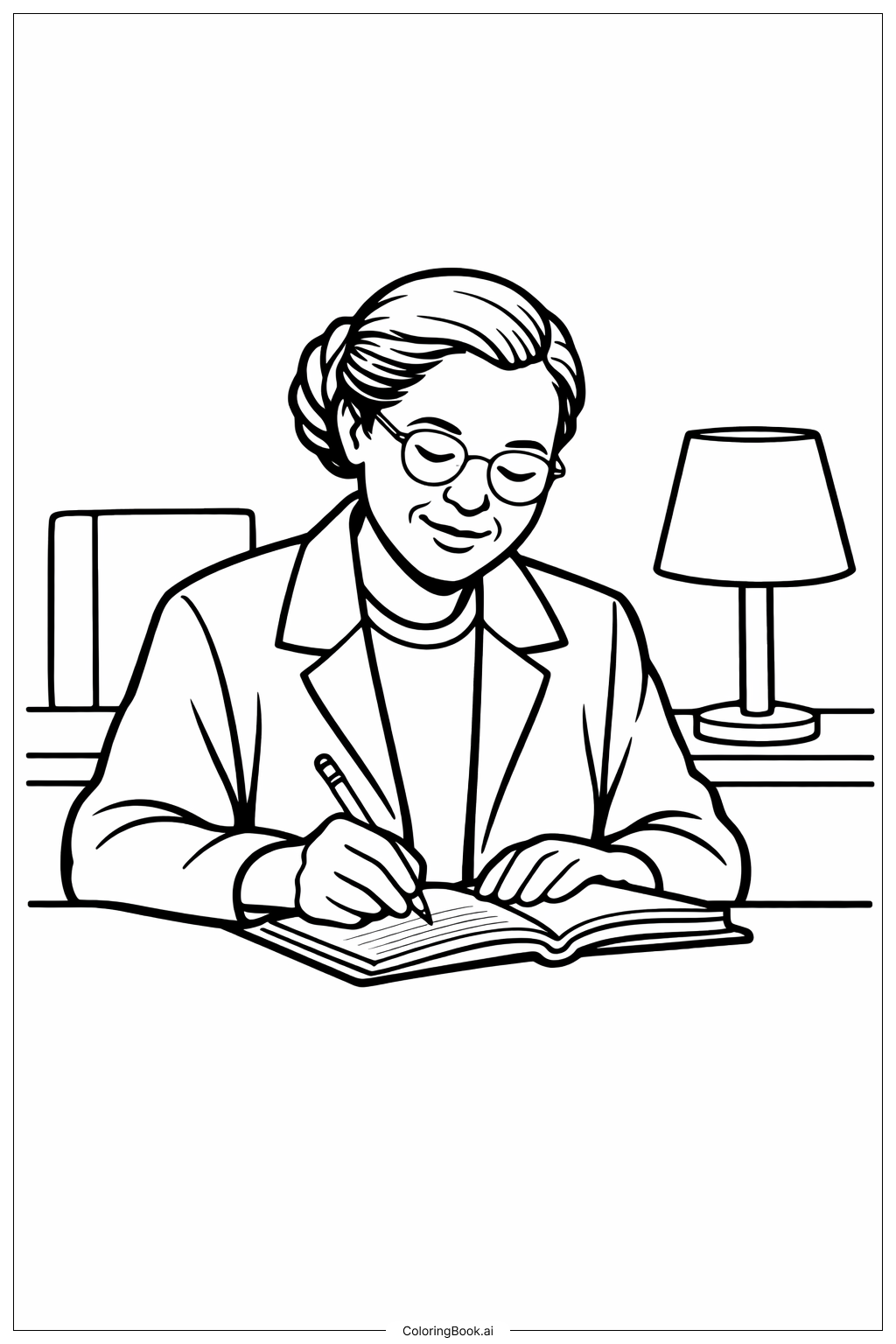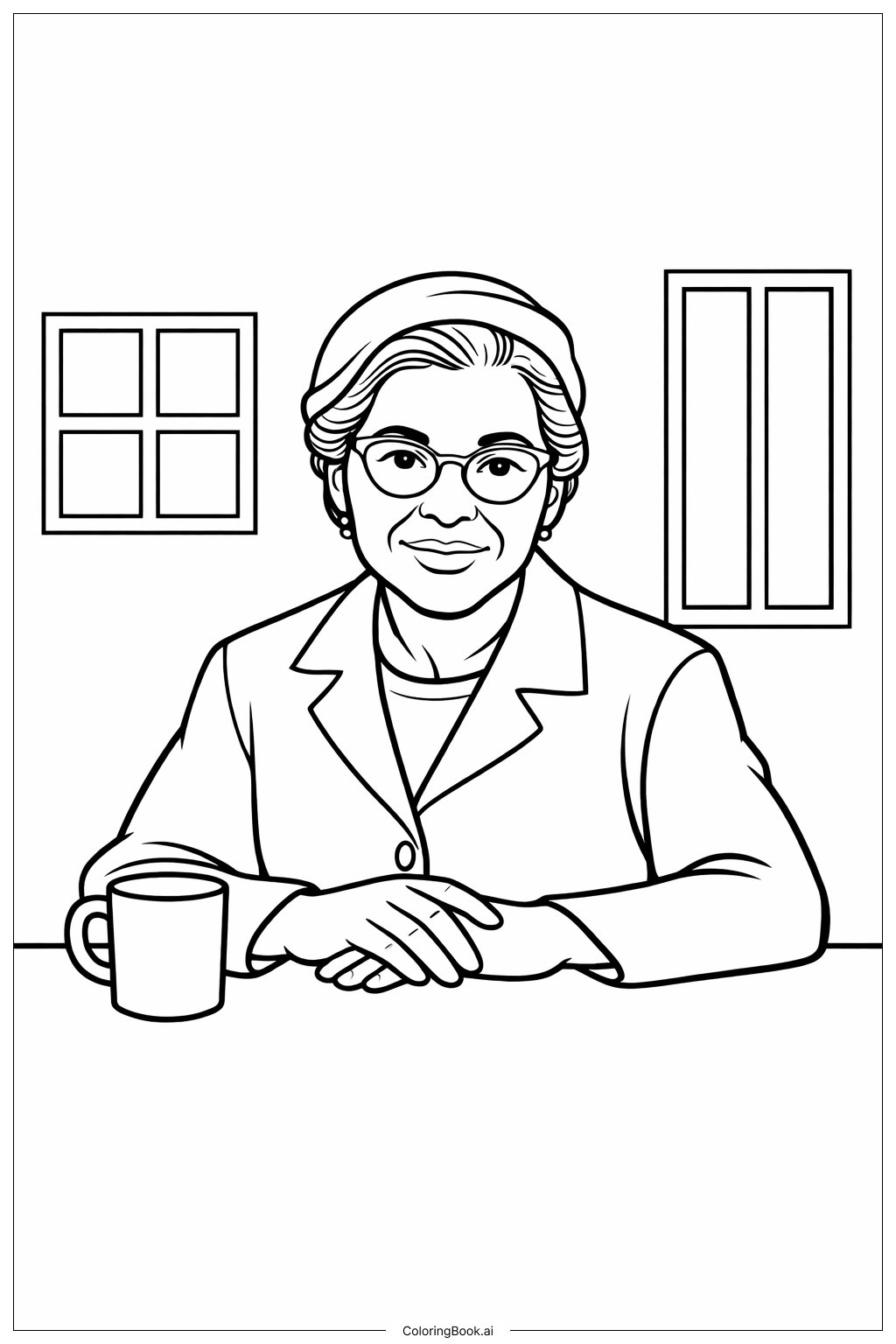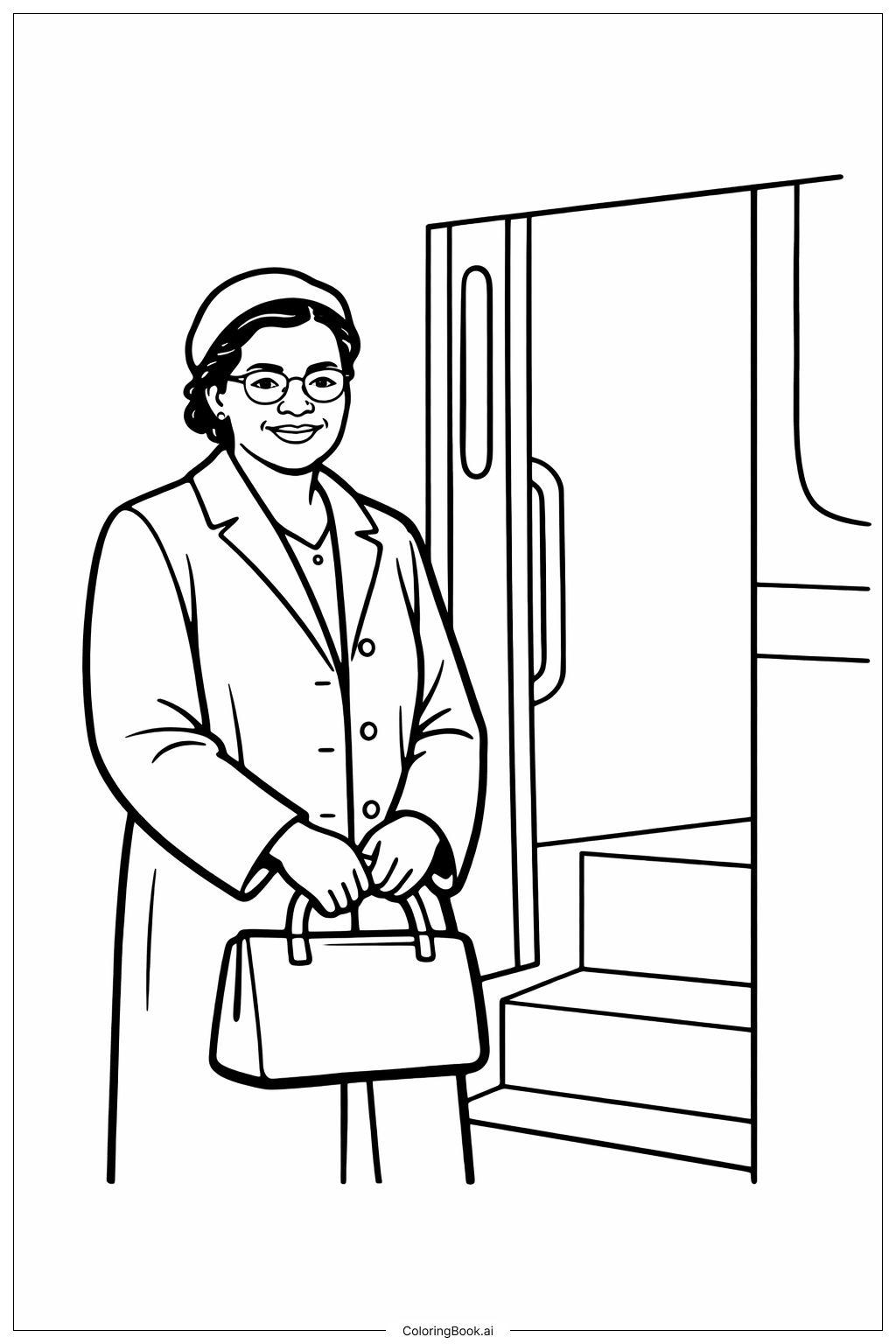
Coloring tips: How to color Rosa Parks Standing By Bus Door coloring page well?
Start with Rosa Parks herself. Use warm, deep brown tones for her skin and rich dark shades for her coat — navy blue or deep charcoal work beautifully. Color her hat a classic black or dark brown to keep a 1950s feel. Add a soft white or cream blouse peeking out at the collar. For the bus, go with the iconic yellow-green or silver-gray that fits the era. Use dark gray or black for the bus door frame, steps, and window trim. Keep the background simple — a light blue sky or pale city street helps Rosa stand out as the clear focal point. Use steady, careful strokes to stay within the lines on her clothing details. Children can use bold, confident colors, while older colorists might enjoy adding subtle shading to give Rosa's coat and the bus a realistic, dimensional look.
Coloring challenges: Which parts are difficult to color and need attention for Rosa Parks Standing By Bus Door coloring page?
• Rosa's Facial Features: Rosa Parks' face carries deep emotion and historical significance, making it one of the most delicate areas to color. Her expression requires careful blending of skin tones to look natural and respectful. Using two or three close shades of brown and applying gentle, light strokes will help bring her face to life without losing detail around her eyes and mouth.
• Clothing Folds and Layers: Rosa's coat has folds and creases that create shadows and depth. Coloring these areas requires attention to where light would naturally fall. Younger colorists may find it helpful to choose one base color and then add a slightly darker shade along the fold lines to create a realistic effect.
• Bus Mechanical Details: The bus door frame, steps, and surrounding metal surfaces have many small sections that sit close together. Staying within these tight lines takes patience and a sharp-tipped colored pencil or fine marker. Rushing through this area can cause colors to bleed together and lose the structured look of the bus.
• Background Depth and Balance: Placing the right background color is tricky. Too bright a background can pull attention away from Rosa, while too dark can make the whole image feel heavy. A soft, muted color like pale blue or light gray keeps the focus where it belongs — on Rosa Parks herself.
• Historical Tone and Color Accuracy: Since this image represents a real historical moment from the 1950s, colorists may want to stay true to the era's color palette. Muted, earthy tones feel more authentic than bright neons and help honor the gravity and dignity of the scene.
Benefits of coloring books: Advantages of drawing Rosa Parks Standing By Bus Door coloring page
Coloring this image of Rosa Parks is a wonderful way for children and Adults alike to connect with an important piece of history. As colorists carefully fill in each section, they naturally slow down and think about who Rosa Parks was and why she mattered. This builds curiosity and encourages kids to ask questions and learn more about civil rights and equality.
For younger colorists, this page builds fine motor skills, hand-eye coordination, and focus. Staying within detailed lines like the bus door frame or the folds of Rosa's coat takes patience and control — skills that are valuable in school and everyday life.
For older students and Adults, the image offers a moment of reflection. Coloring can be meditative, reducing stress and encouraging mindfulness. Choosing colors thoughtfully for a historical figure adds an extra layer of creative responsibility and respect.
This page also makes a meaningful classroom activity. Teachers can use it to open conversations about courage, standing up for what is right, and the history of the civil rights movement in America. Girls especially may find inspiration in Rosa Parks as a role model — a woman who changed the world not with words or weapons, but with quiet, unshakeable determination. Coloring her image is a small but meaningful way to honor her legacy.