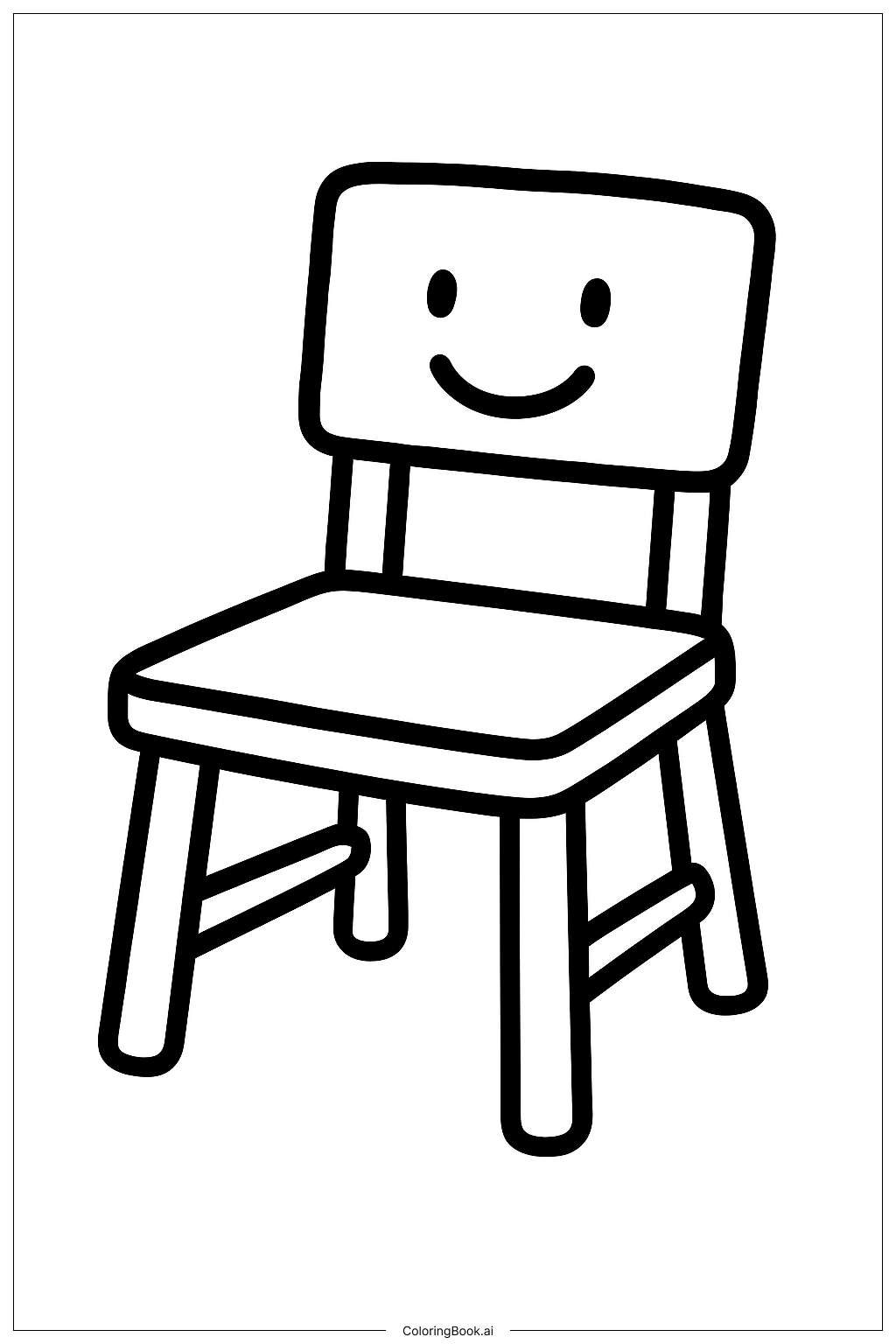
Coloring tips: How to color Prototype Friendly Chair coloring page well?
Try using soft and warm colors like light browns, creams, or pastel shades to make the chair look cozy and inviting. You can color the seat in a lighter tone to show softness and use a slightly darker shade for the legs to create contrast. For the backrest, choose friendly colors such as pale blue, green, or yellow to give it a cheerful and positive feeling. Feel free to add patterns like dots or stripes on the seat or backrest to make it fun and unique. Remember to stay inside the lines and use shading with pencils or crayons to add depth and make the chair look three-dimensional.
Coloring challenges: Which parts are difficult to color and need attention for Prototype Friendly Chair coloring page?
• Rounded shapes: Coloring the smooth, curved backrest and seat evenly may be challenging, especially for younger children who are still developing fine motor skills. It requires gentle, controlled strokes.
• Small areas: The legs and edges of the chair are narrow and might need careful attention to avoid coloring outside the lines.
• Creating depth: Adding shading on the chair to make it look three-dimensional can be difficult without guidance on light sources and shadows.
• Consistent coloring: Filling larger areas like the seat with solid colors evenly to avoid patches or streaks needs patience and practice.
• Pattern design: If adding patterns or texture, it can be tricky to keep designs balanced and neat, demanding focus and creativity.
Benefits of coloring books: Advantages of drawing Prototype Friendly Chair coloring page
Coloring this Prototype Friendly Chair helps children develop their hand-eye coordination and fine motor skills through careful coloring of curves and small details. It encourages creativity as they choose colors and invent patterns to make the chair their own. It also introduces ideas about design and comfort by focusing on making the chair look friendly and inviting. Additionally, the activity improves concentration and patience, giving a sense of accomplishment when completing the picture. This image is great for boosting confidence and artistic expression in children aged 4 to 16.