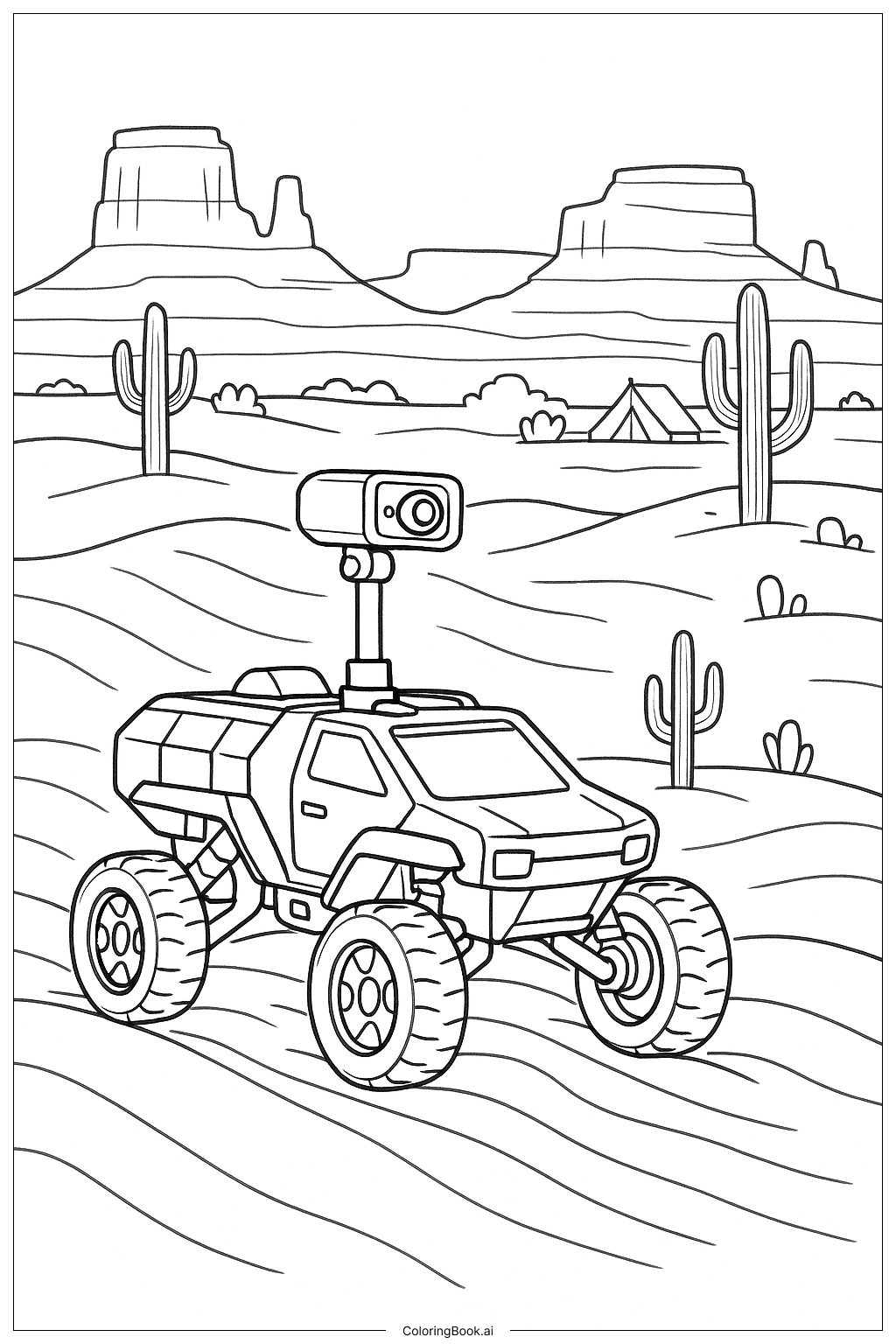
Coloring tips: How to color Prototype Desert Rover Expedition coloring page well?
Use warm colors like yellow, orange, and brown for the desert sand and dunes. The cacti can be colored in different shades of green to show variety. For the rover, try using metallic colors such as silver, gray, or dark blue for a futuristic look. The wheels can be black or dark gray with some lighter lines to show the tire details. The rock formations in the background can be in earthy reds and browns to make them stand out. Use light blue or pale yellow for the sky to keep the desert feeling warm and bright.
Coloring challenges: Which parts are difficult to color and need attention for Prototype Desert Rover Expedition coloring page?
1. The rover has many small parts like wheels, sensors, and panels that need careful coloring to stay inside the lines.
2. The wavy sand dunes require smooth shading to show their curves without making the picture too messy.
3. The cacti have thin arms and details that can be tricky for younger children to color correctly.
4. The background rock formations have layered lines that need patience to color evenly.
5. Keeping the colors balanced between the rover and the natural desert can be hard to make the scene realistic yet exciting.
Benefits of coloring books: Advantages of drawing Prototype Desert Rover Expedition coloring page
Coloring this page helps children develop their fine motor skills by staying within small lines and complex shapes. It encourages creativity as they choose colors for natural elements like sand, plants, and rocks, as well as technology like the rover. This mix of natural and man-made objects introduces them to exploration and science. Working on the desert scene also improves focus and attention to detail while making coloring fun and educational. Overall, it inspires curiosity about nature and technology in a fun way.