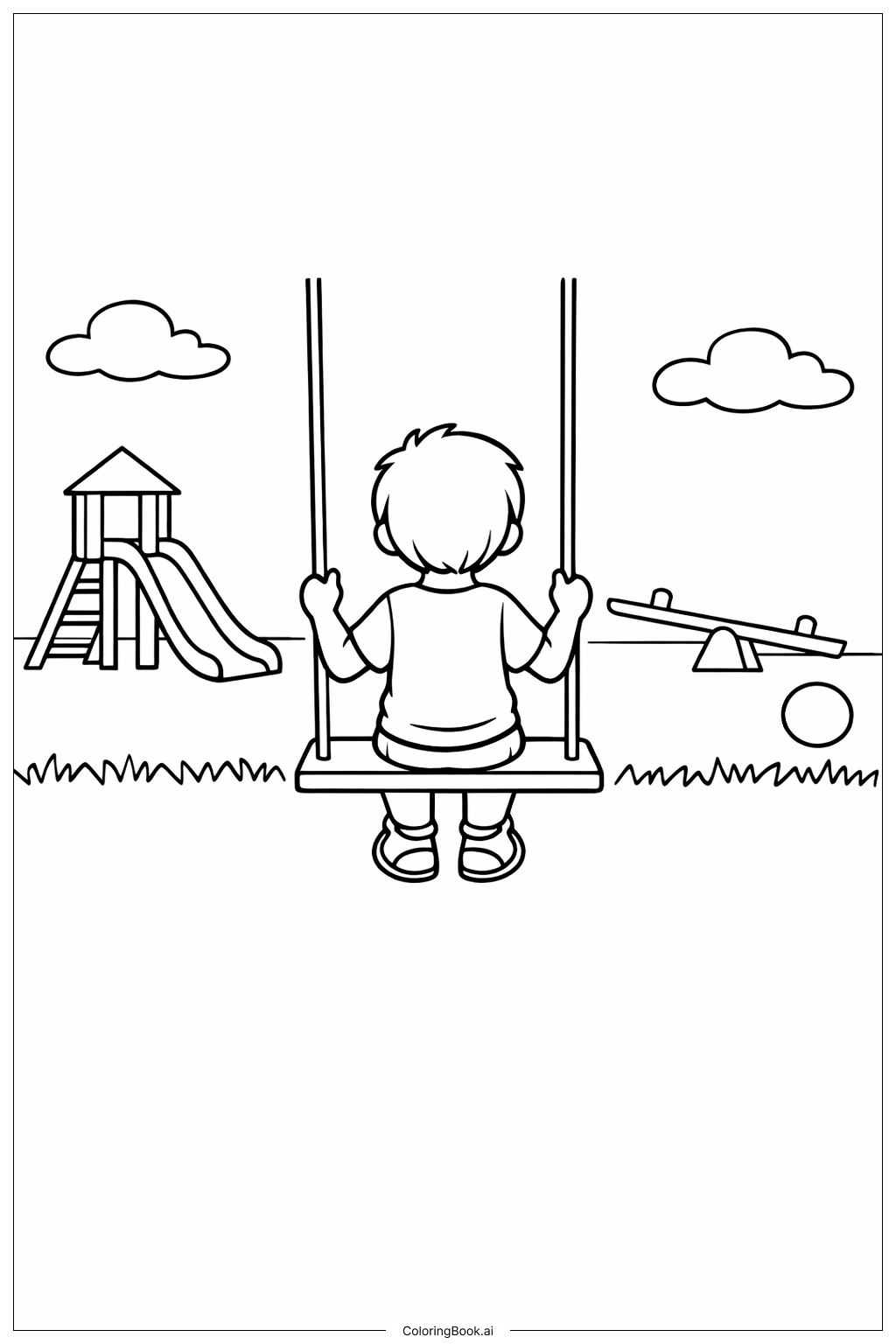
Coloring tips: How to color Person On Swing coloring page well?
Start with the person's skin using a warm peach or brown tone depending on your preference. Color the hair in golden yellow, chestnut brown, or any fun shade you like. Use bright, cheerful colors for the clothing — try a red shirt with blue pants or a purple dress to make the figure pop. The swing ropes or chains can be colored in gray or tan to look realistic. For the swing seat, use dark brown or dark gray. Fill the sky background with a soft light blue, and add fluffy white clouds for a breezy outdoor feel. If there are trees or grass, use various shades of green to create a lush, lively park setting. Don't be afraid to mix light and dark shades of the same color to add depth and dimension to the image. Have fun and make it your own!
Coloring challenges: Which parts are difficult to color and need attention for Person On Swing coloring page?
• Clothing Folds and Wrinkles: The person's clothes will have natural creases and folds caused by movement and the sitting position. Coloring these areas carefully with slightly darker shades of the base color will give the fabric a realistic, three-dimensional look. Young colorists may find it tricky to stay within the fold lines while adding shading.
• Hair in Motion: Because the figure is swinging, the hair is likely shown flowing or lifting in the wind. Capturing this sense of movement through color requires blending or layering multiple tones — lighter highlights at the tips and darker roots can make the hair look dynamic rather than flat.
• Rope or Chain Details: The swing's ropes or chains contain small, repeating links or twisted fibers that require careful, patient coloring. Using alternating light and dark tones along each link or twist will bring out the texture, but this level of detail can be challenging for younger children.
• Facial Expression: The face is small but expressive, featuring eyes, a smile, and possibly rosy cheeks. Precision is needed here to color each feature neatly without bleeding into neighboring areas. A fine-tipped colored pencil or thin marker works best for this part.
• Background Depth: Balancing the background colors so they complement rather than overpower the main figure takes skill. Keeping background elements like the sky, clouds, or trees in softer, lighter tones will help the person on the swing remain the clear focal point of the image.
Benefits of coloring books: Advantages of drawing Person On Swing coloring page
Coloring this Person On Swing page offers a wide range of wonderful benefits for children and beginners alike. The joyful, active scene immediately sparks imagination and encourages creative thinking as colorists choose their own palette to bring the image to life.
Working on the different elements — the figure, the swing, and the background — helps develop fine motor skills and hand-eye coordination. Carefully filling in small details like the face and rope links trains steady hand control, which is great practice for writing and drawing.
The image also introduces basic concepts of shading and depth. Experimenting with lighter and darker tones on clothing folds or the rope teaches colorists how color can create the illusion of three dimensions on a flat page.
Because the scene is tied to a universally loved activity — swinging at the playground — it naturally creates a sense of nostalgia and emotional connection. This emotional engagement makes the coloring session feel meaningful and enjoyable rather than just a simple task.
Finally, focusing on a coloring page like this is a fantastic way to relax and de-stress. The repetitive, gentle motions of coloring help calm the mind, improve concentration, and build patience. It is a screen-free activity that encourages mindfulness in a fun, approachable way for all ages.