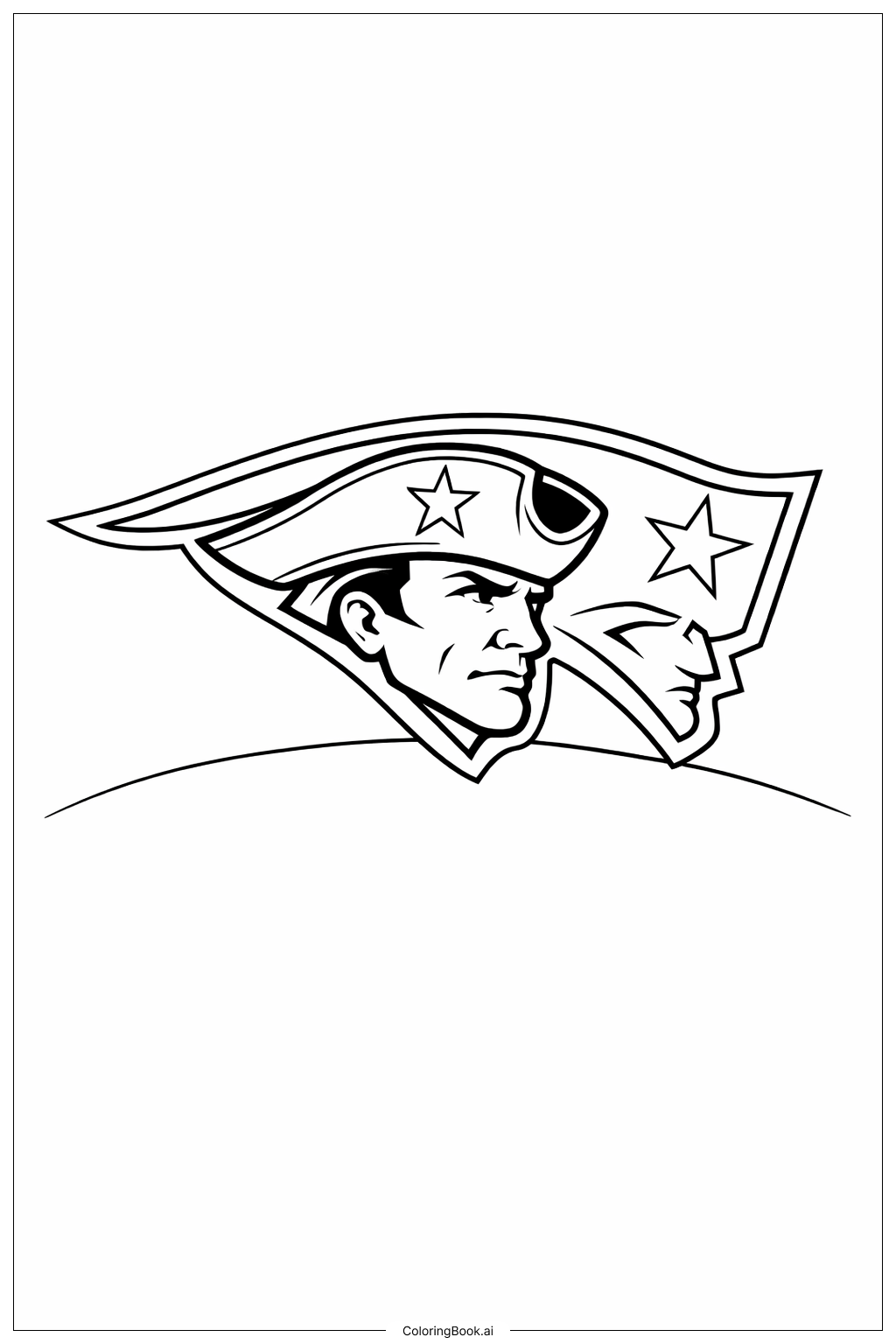
Coloring tips: How to color Patriots Logo Patriot Head With Hat coloring page well?
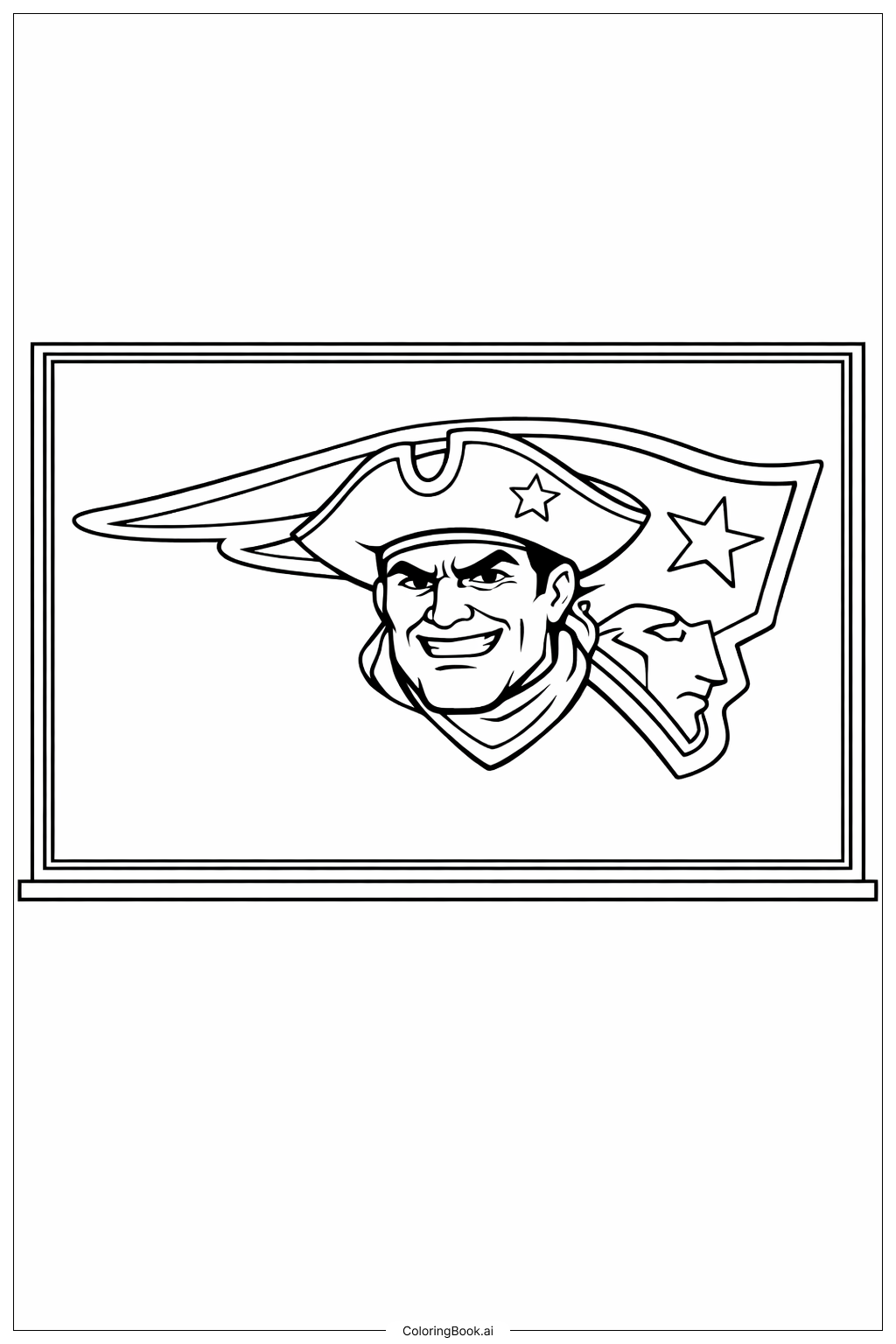
Use classic colors of the patriots when coloring this image. The hat can be colored dark blue with a white star to make it stand out. The face can be given natural skin tones with light shading for depth, like peach or tan. The collar and coat area can be vibrant red or navy blue to reflect the traditional patriot uniform colors. For extra fun, you can add shadows or highlights to the hat edges and facial features using darker or lighter tones of the same colors. Feel free to use colored pencils, crayons, or markers to bring the patriot’s strong look to life.
Coloring challenges: Which parts are difficult to color and need attention for Patriots Logo Patriot Head With Hat coloring page?
• Hat Details: The tricorne hat has sharp edges and a star emblem that require careful coloring within defined lines to avoid color bleeding. • Facial Features: The face includes small but important details like eyes and mouth that need precise coloring to keep the strong expression clear. • Color Transitions: Blending shadows and highlights smoothly on curved surfaces such as the face and hat might be challenging for younger children. • Bold Outlines: The thick outlines create distinct zones but can be tricky to stay inside without coloring tools well suited for fine detail. • Uniform Area: The collar and coat sections have tight spaces where fine control is needed to avoid mixing colors unintentionally.
Benefits of coloring books: Advantages of drawing Patriots Logo Patriot Head With Hat coloring page
Coloring this image helps develop fine motor skills as children practice staying within the clear lines of the hat and face. It encourages focus and attention to detail, especially when working on the small features like the star and facial expressions. This patriotic image also offers a creative opportunity to learn about and appreciate historical uniforms and symbolism. Coloring the bold shapes boosts confidence in using color contrasts, while shading practice enhances understanding of light and shadow. Overall, it’s a fun way for kids to build artistic skills and connect with history or sports team pride.