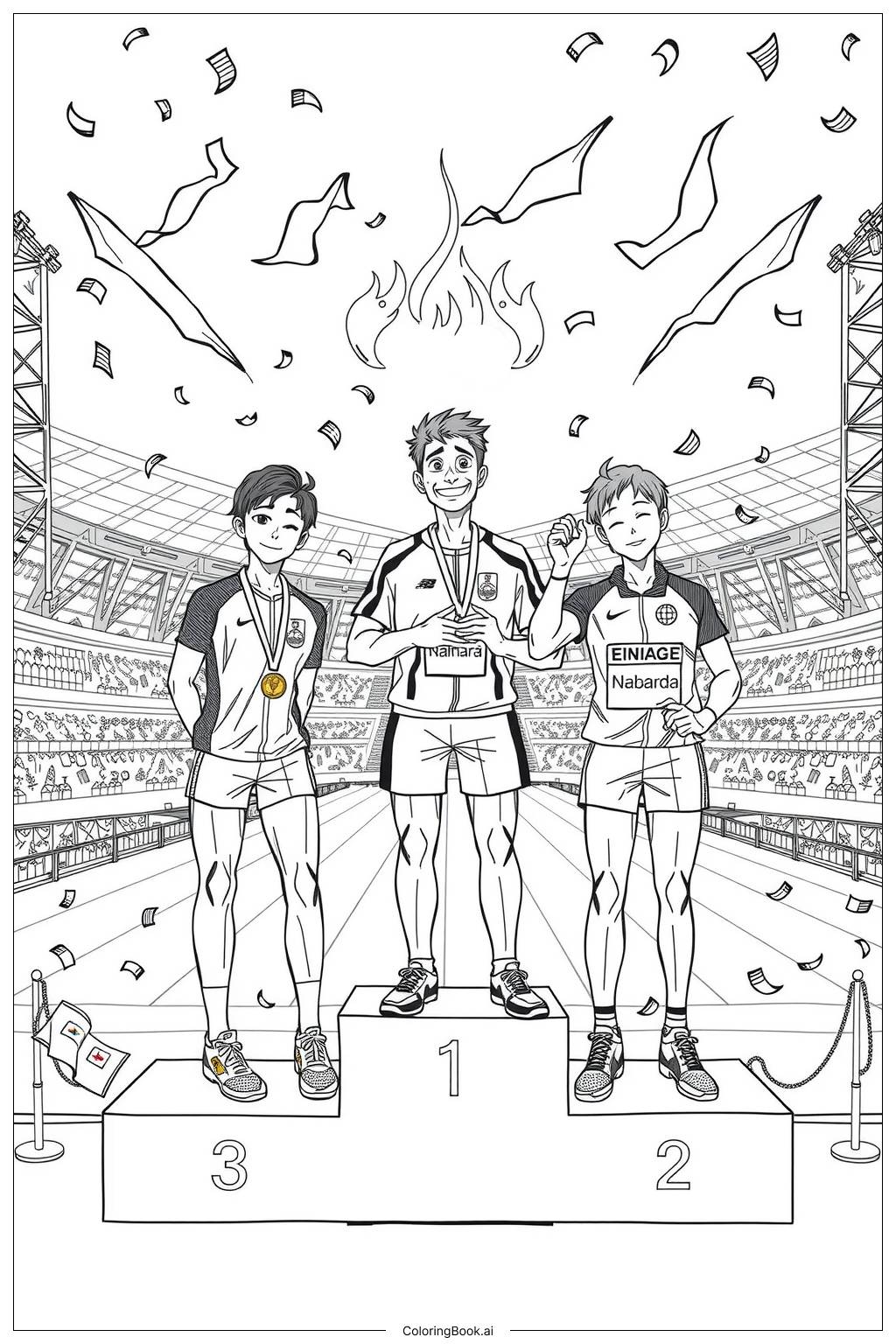
Coloring tips: How to color Olympic Medals Awarded to Champions coloring page well?
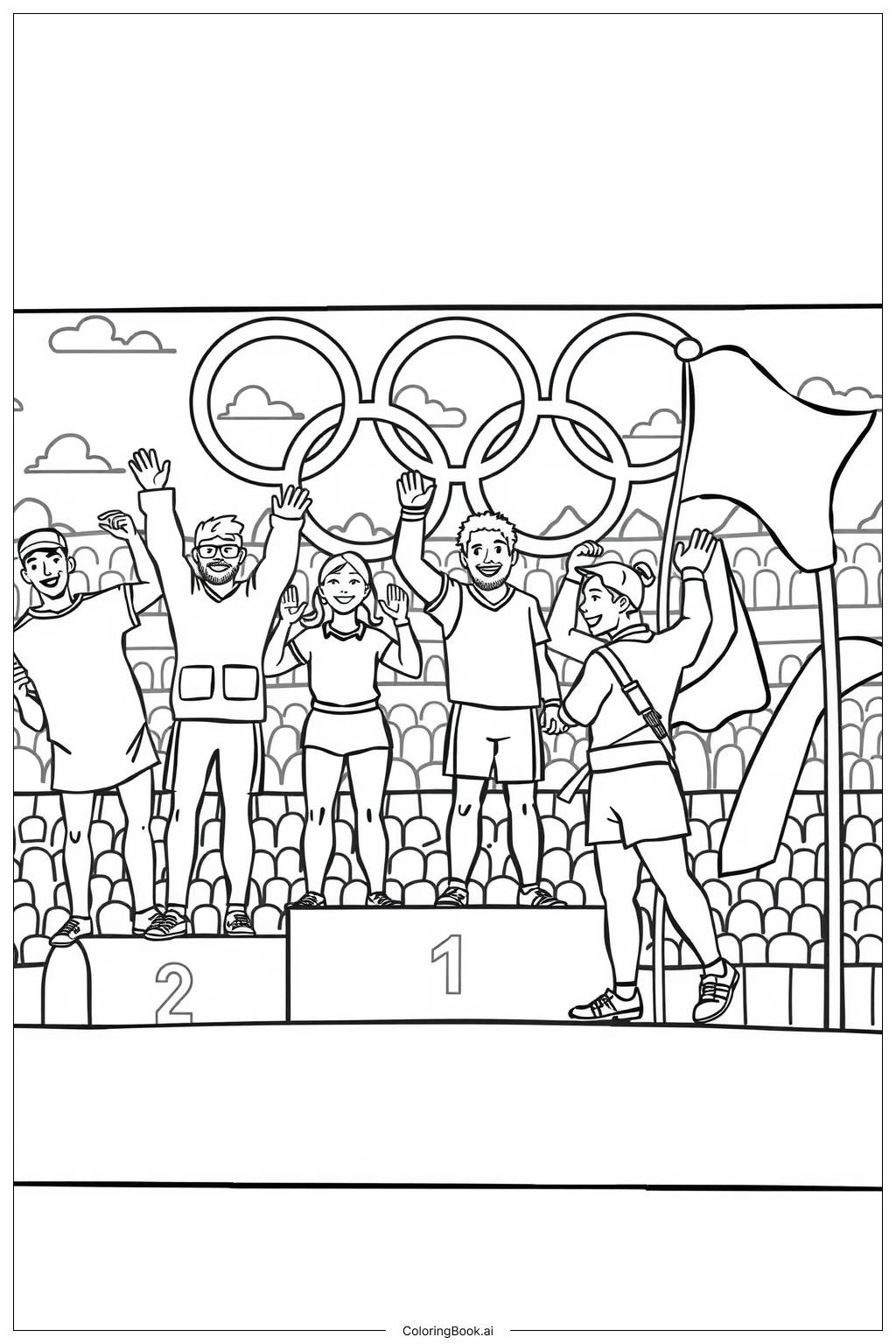
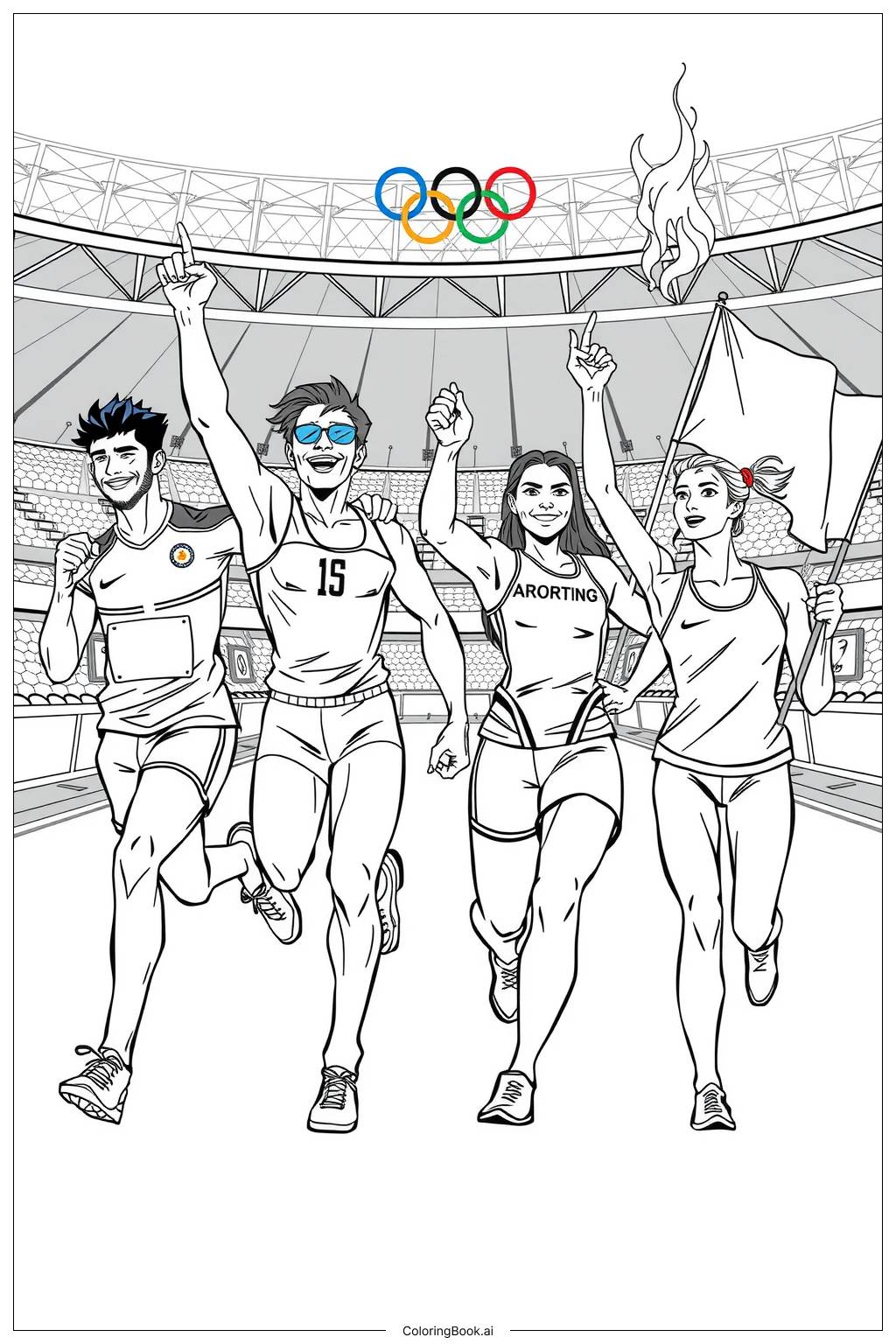
Start with the Olympic rings using their iconic colors: blue, yellow, black, green, and red. For the medal, use gold, silver, or bronze depending on the podium position. A bright, shiny yellow works great for gold medals. Use skin tones you like for the athlete's face and hands. Color the ribbon in your national flag colors to make it personal and fun. The laurel wreath looks great in different shades of green, like lime and forest green, to show depth. Use bold, warm colors like red, orange, and yellow for the star bursts to make them pop. Keep the background light so the champion stands out. Use darker shades along the edges of the podium to give it a 3D look. Have fun mixing colors and making this champion truly your own!
Coloring challenges: Which parts are difficult to color and need attention for Olympic Medals Awarded to Champions coloring page?
• Medal Details: The surface of the Olympic medal contains small engravings, patterns, and text. These tiny details require a fine-tipped colored pencil or marker to fill in accurately without going outside the lines. Rushing this section can cause the medal to look blurry or messy, so take your time with each small element.
• Olympic Rings Precision: The five interlocking rings each need a specific, distinct color. Where the rings overlap, you must decide how to handle the shared space, which can be tricky for younger colorists. Using the correct color for each ring without blending into neighboring ones takes steady hand control and patience.
• Podium Shading and Dimension: The podium has flat surfaces that benefit greatly from shading to look three-dimensional. Applying light and dark tones of the same color on different sides of the podium can be challenging, especially for beginners who are still learning how to blend or layer colors effectively.
• Athlete Figure Proportions: The human figure on the podium includes clothing folds, facial features, and raised arms. Coloring around these curves and contours without smearing or overlapping into adjacent areas demands careful attention. The face area in particular is small and detailed, making it one of the more difficult spots on the page.
• Laurel Wreath Complexity: The wreath is made up of many overlapping small leaves arranged in a circular pattern. Each leaf needs to be colored individually. Keeping the greens varied and consistent across so many tiny shapes requires focus and a good selection of green shades to avoid a flat, uniform look.
Benefits of coloring books: Advantages of drawing Olympic Medals Awarded to Champions coloring page
Coloring this Olympic medals page offers a wonderful range of benefits for children and young artists. It builds fine motor skills as kids carefully fill in small details like the medal engravings, laurel leaves, and Olympic rings. Staying within the lines and controlling the pressure of a pencil or marker strengthens hand-eye coordination over time.
This image also sparks curiosity about the Olympics and world sports, encouraging kids to learn about different countries, athletic events, and what it means to work hard toward a goal. It can inspire conversations about perseverance, teamwork, and sportsmanship.
Choosing colors for the athlete's uniform, ribbon, and background promotes creative decision-making and self-expression. Kids feel a sense of ownership over their finished artwork, which builds confidence and pride.
The focused, quiet nature of coloring also supports concentration and patience, helping children practice sitting with a task from start to finish. Completing a detailed page like this gives a real sense of accomplishment.
Overall, this coloring page combines artistic practice with meaningful themes of achievement and global community, making it both fun and enriching for young colorists.