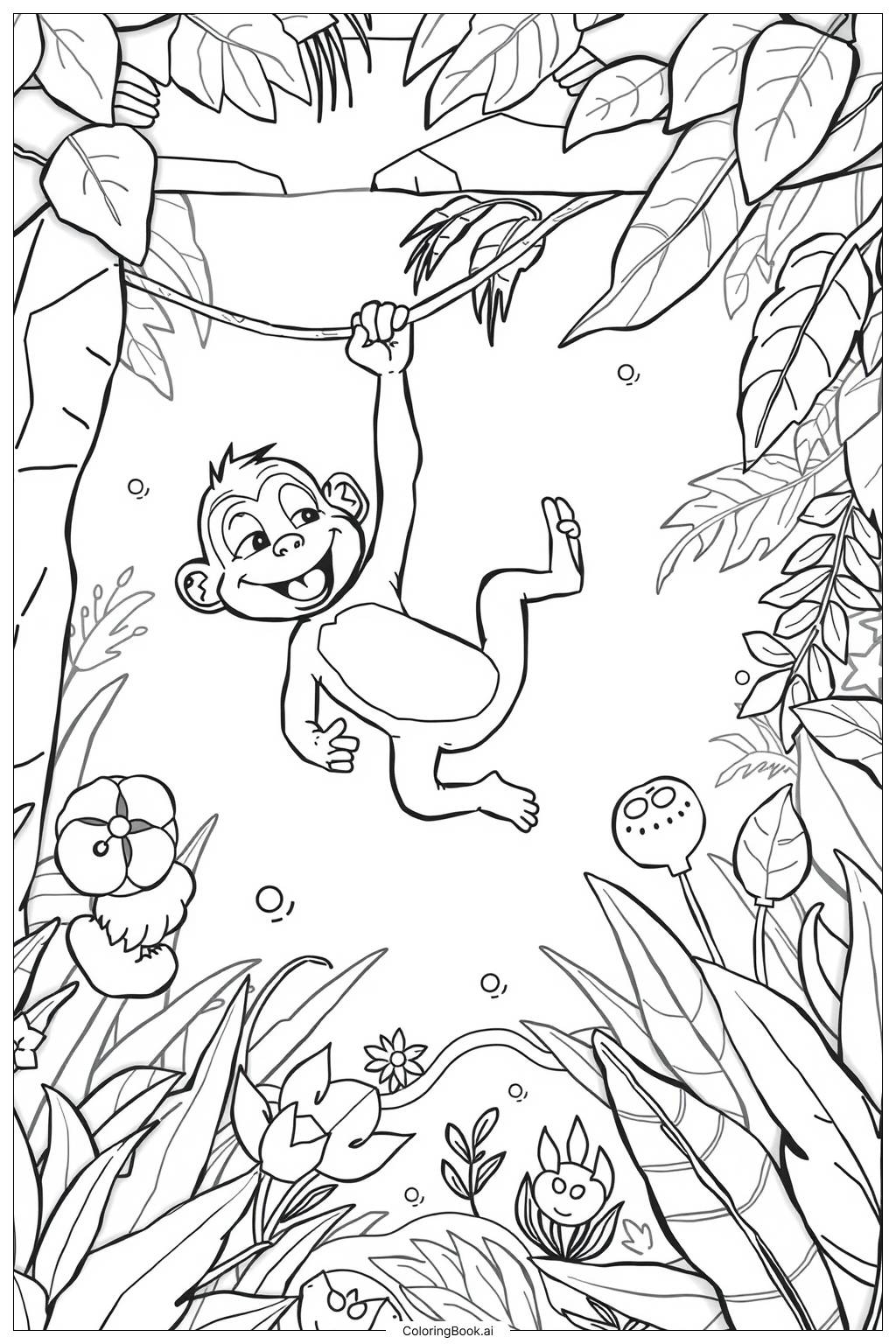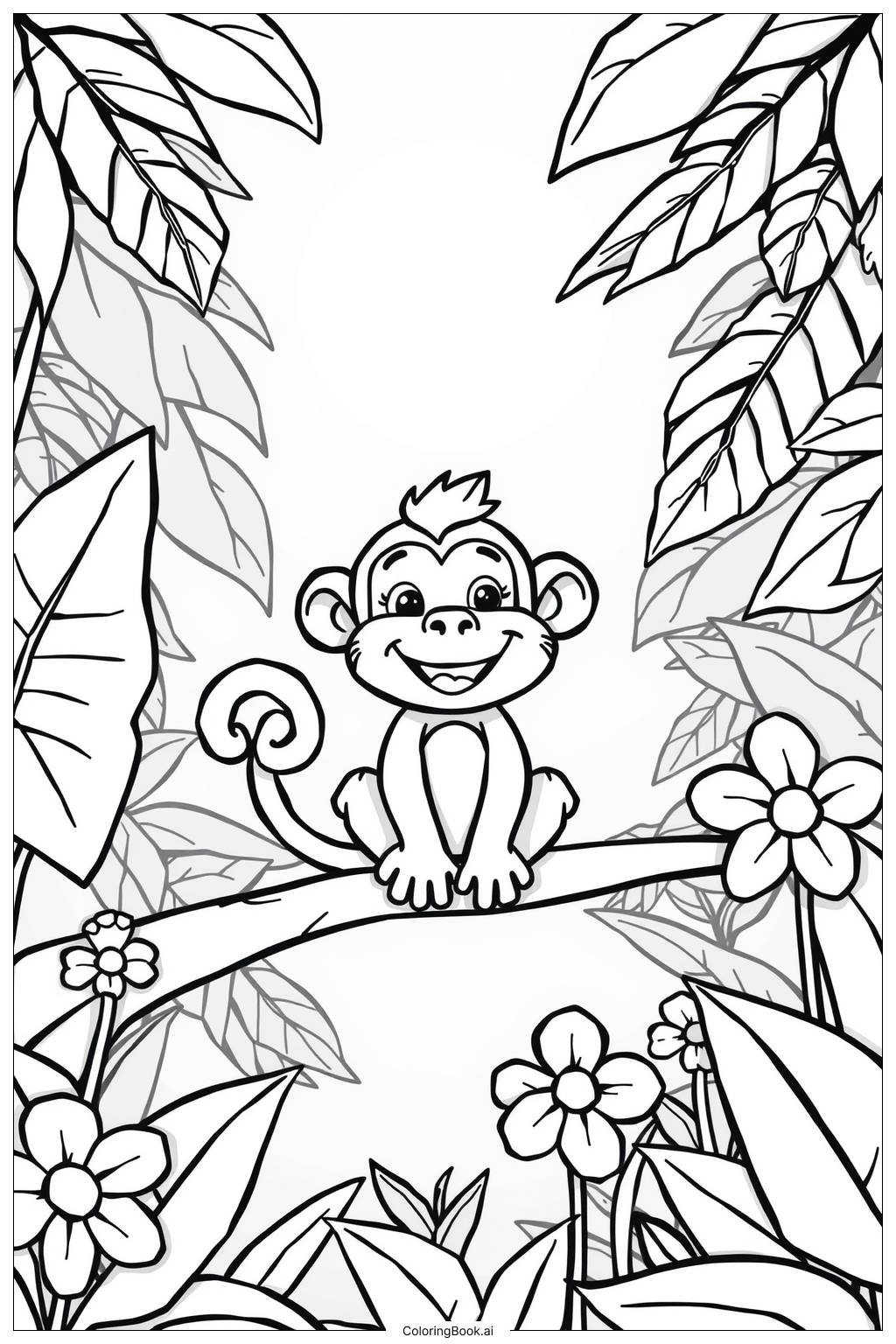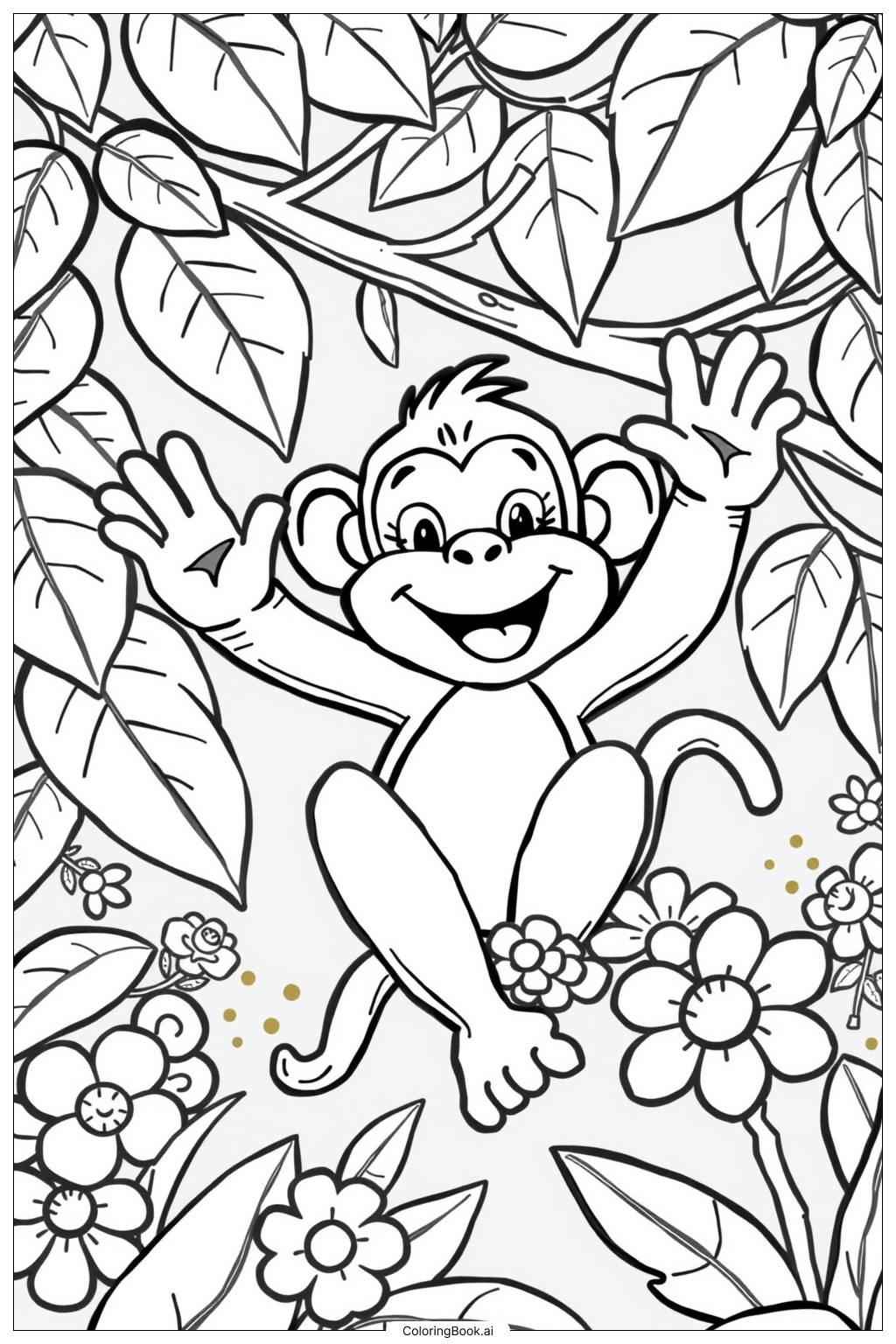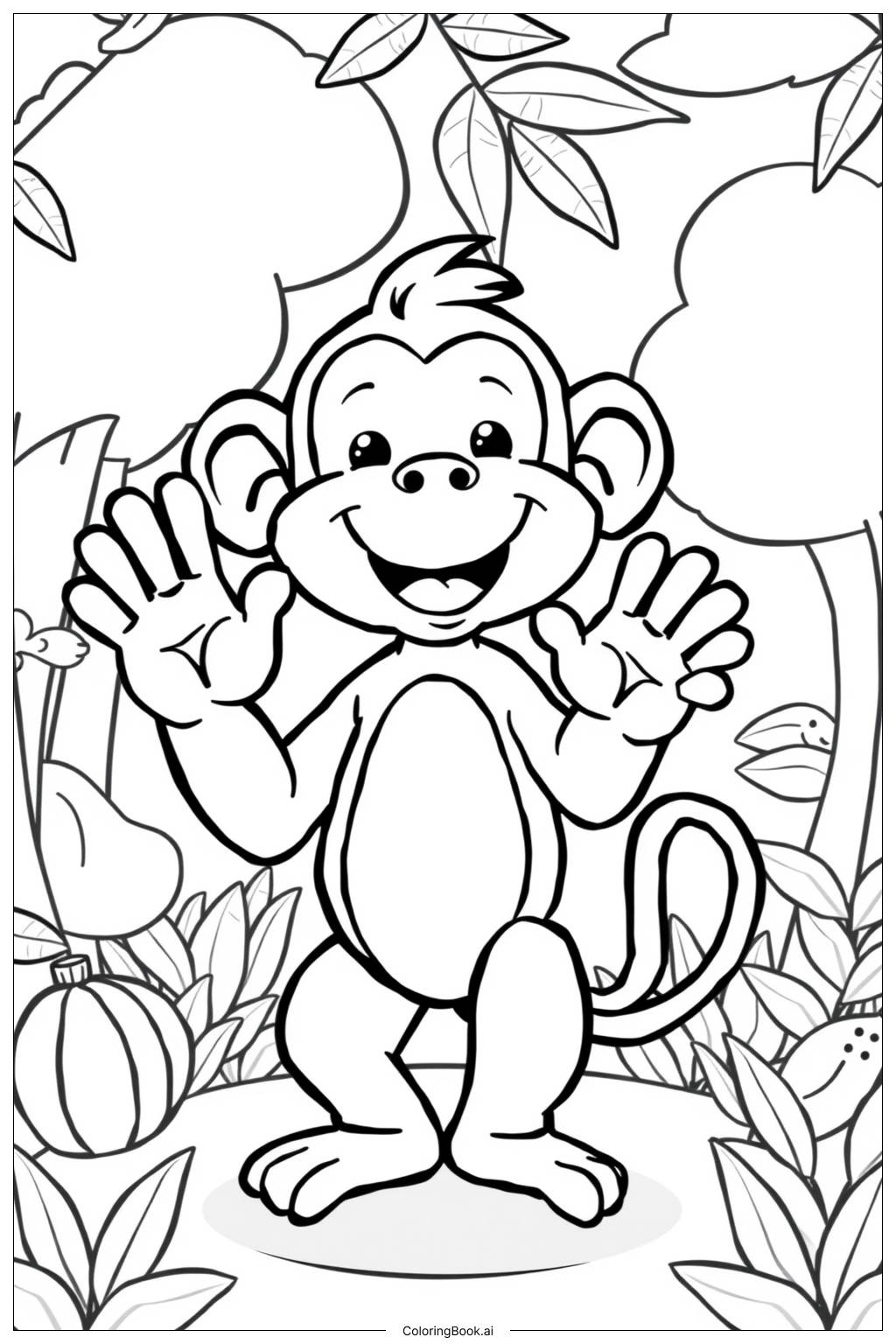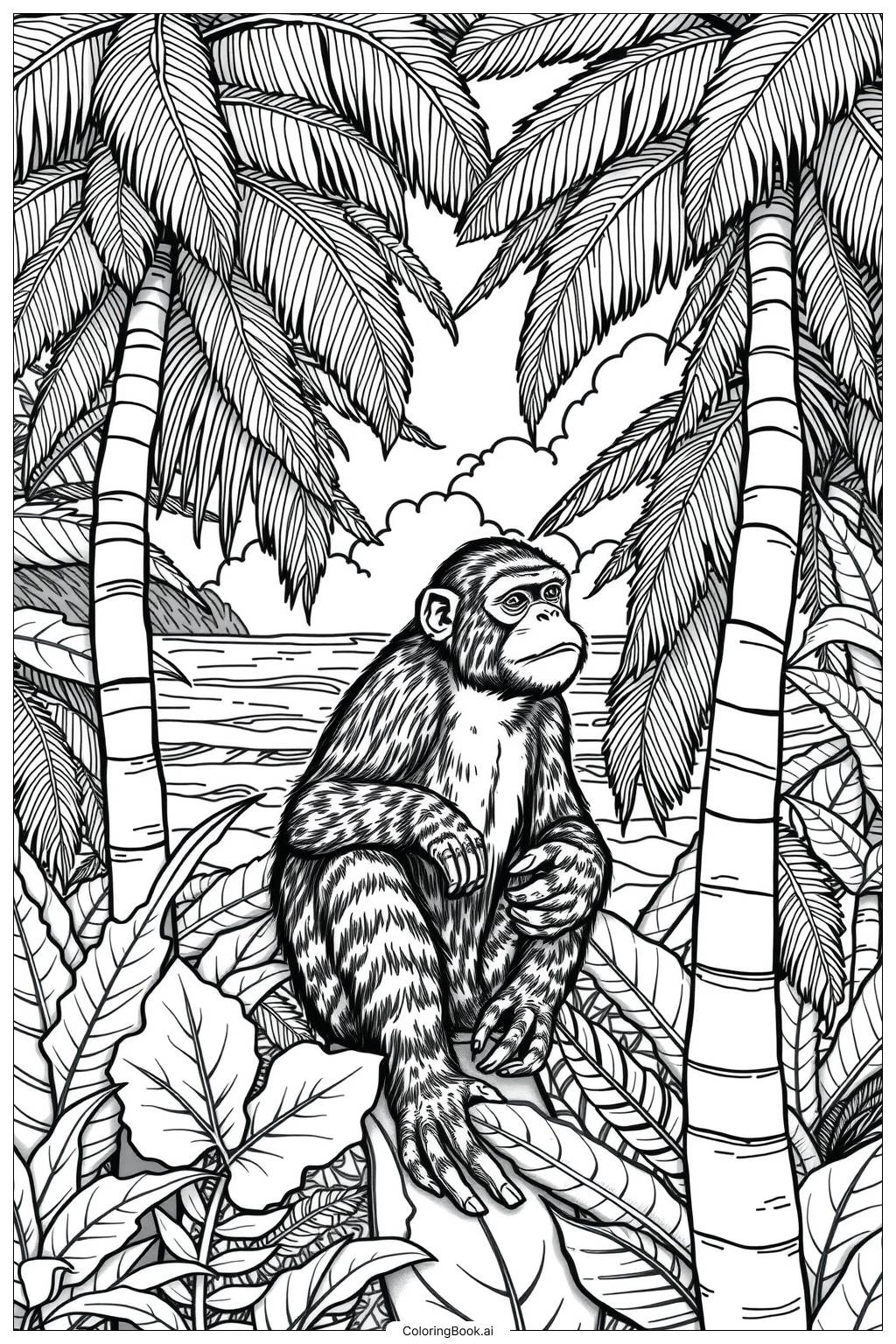
Coloring tips: How to color Monkey with Palm Trees coloring page well?
Start with the monkey's body. Use warm shades of brown for the fur — light tan on the belly and face, and a deeper chocolate brown on the back and limbs. Add a soft peach or cream tone around the eyes and mouth area. For the palm trees, use medium and dark greens for the fronds, layering lighter green at the tips to show depth. Color the trunks in sandy brown with darker streaks for texture. Paint the coconuts in dark brown or olive green. Use a bright sky blue in any open background spaces. Feel free to add a golden yellow sun peeking through the leaves for extra warmth and fun.
Coloring challenges: Which parts are difficult to color and need attention for Monkey with Palm Trees coloring page?
• Monkey Fur Texture: The monkey's body has overlapping lines suggesting thick, uneven fur. Staying within these small irregular shapes while building up light and dark tones can be tricky, especially around the face where detail is concentrated. Take your time and use a sharp colored pencil or a fine-tipped marker for the smallest areas.
• Palm Frond Layers: The palm leaves overlap in multiple directions, creating a complex web of shapes. It is easy to lose track of which frond belongs to which layer. Try coloring each frond a slightly different shade of green — from yellow-green to deep forest green — so the layers stay visually clear and distinct.
• Curved Tail and Limbs: The monkey's tail winds around the palm trunk, and its arms reach in different directions. The curved outlines are narrow and require steady, controlled strokes to fill cleanly without going over the borders. Work slowly and rotate your paper to find the most comfortable angle.
• Coconut Cluster Details: The coconuts are grouped tightly together between the fronds. Each coconut is small and rounded, and leaving a small highlight spot uncolored on each one will make them look more three-dimensional and realistic.
• Background Foliage Balance: The ground cover and scattered leaves at the base of the scene are densely packed. Using two or three alternating greens and avoiding one flat tone will keep this area from looking muddy and will help the monkey stand out as the clear focal point.
Benefits of coloring books: Advantages of drawing Monkey with Palm Trees coloring page
Coloring this monkey and palm tree scene brings a wonderful range of benefits for kids and beginners alike. Working through the monkey's fur encourages children to practice shading and blending, building real artistic skills in a low-pressure, enjoyable way. The tropical setting introduces a variety of natural colors — greens, browns, blues, and warm yellows — giving colorists a chance to explore how colors work together in nature. Focusing on the many small details of leaves, coconuts, and fur helps strengthen hand-eye coordination and fine motor control, which supports everyday tasks like writing and cutting. The act of coloring itself is naturally calming. It slows down the mind, reduces stress, and helps children and adults alike find a peaceful, focused state. Completing the full scene also builds a sense of pride and accomplishment. The fun, playful subject — a happy monkey swinging through the tropics — sparks imagination and can inspire storytelling, creative play, or even further drawing practice. Overall, this page makes learning through art feel like an adventure.