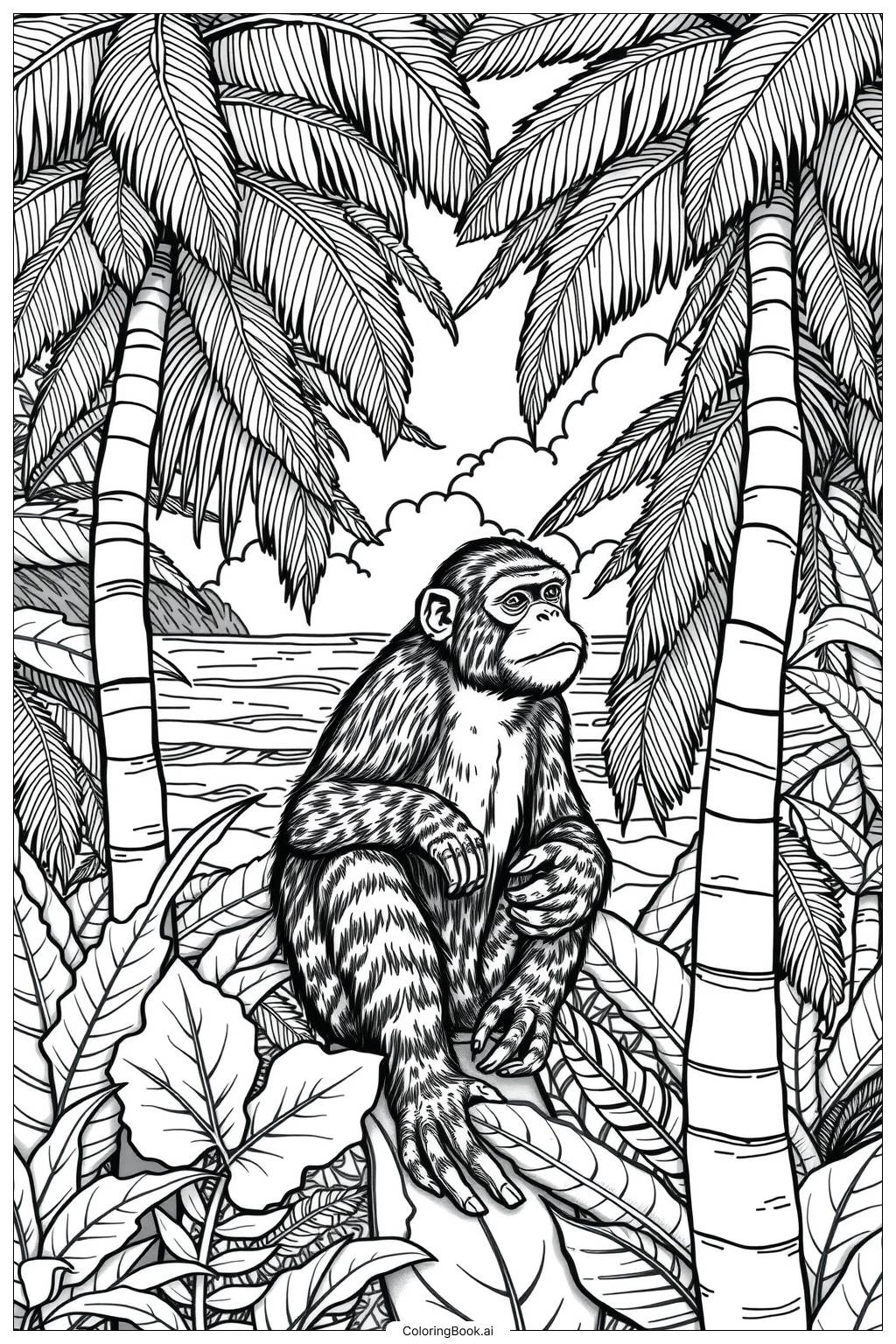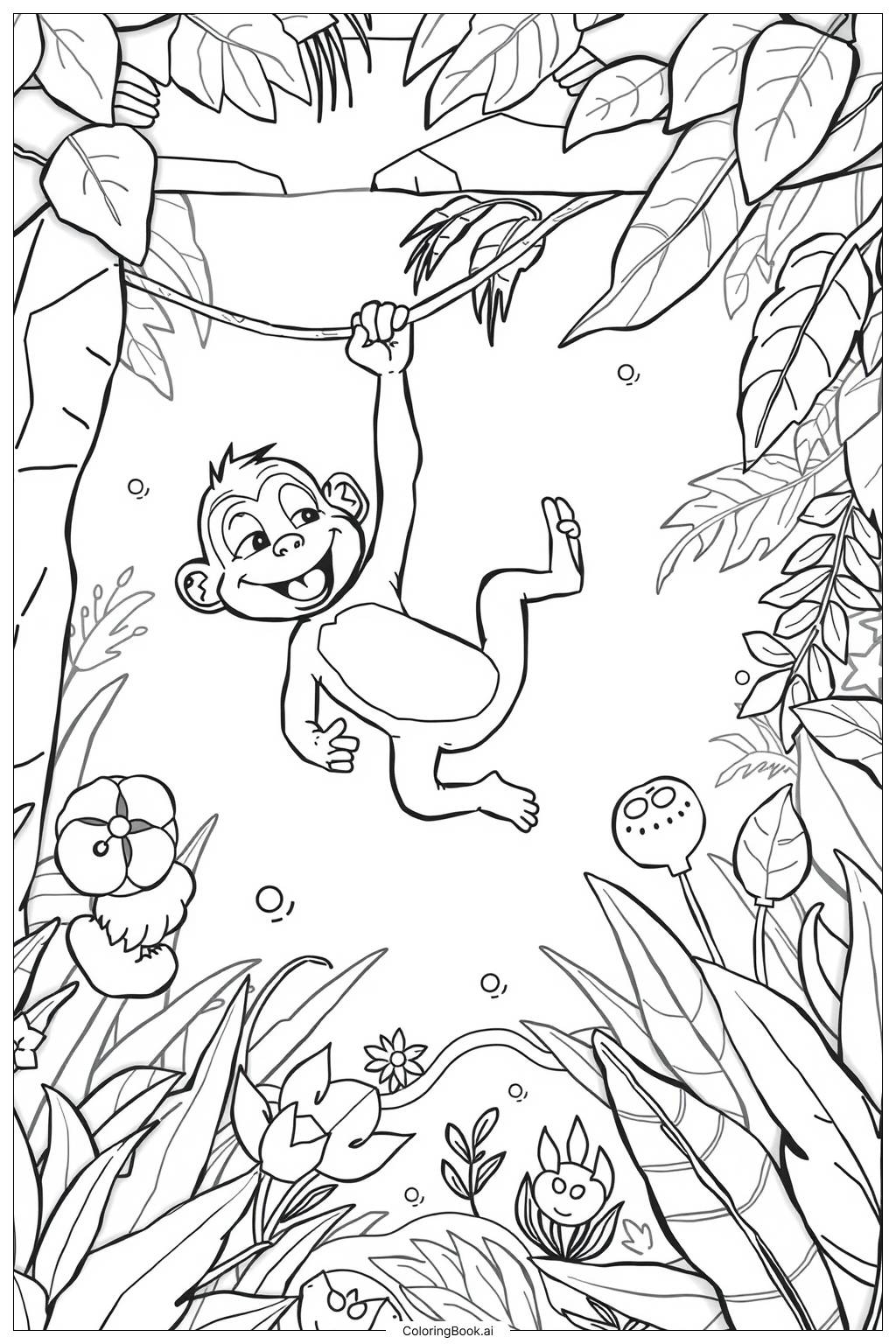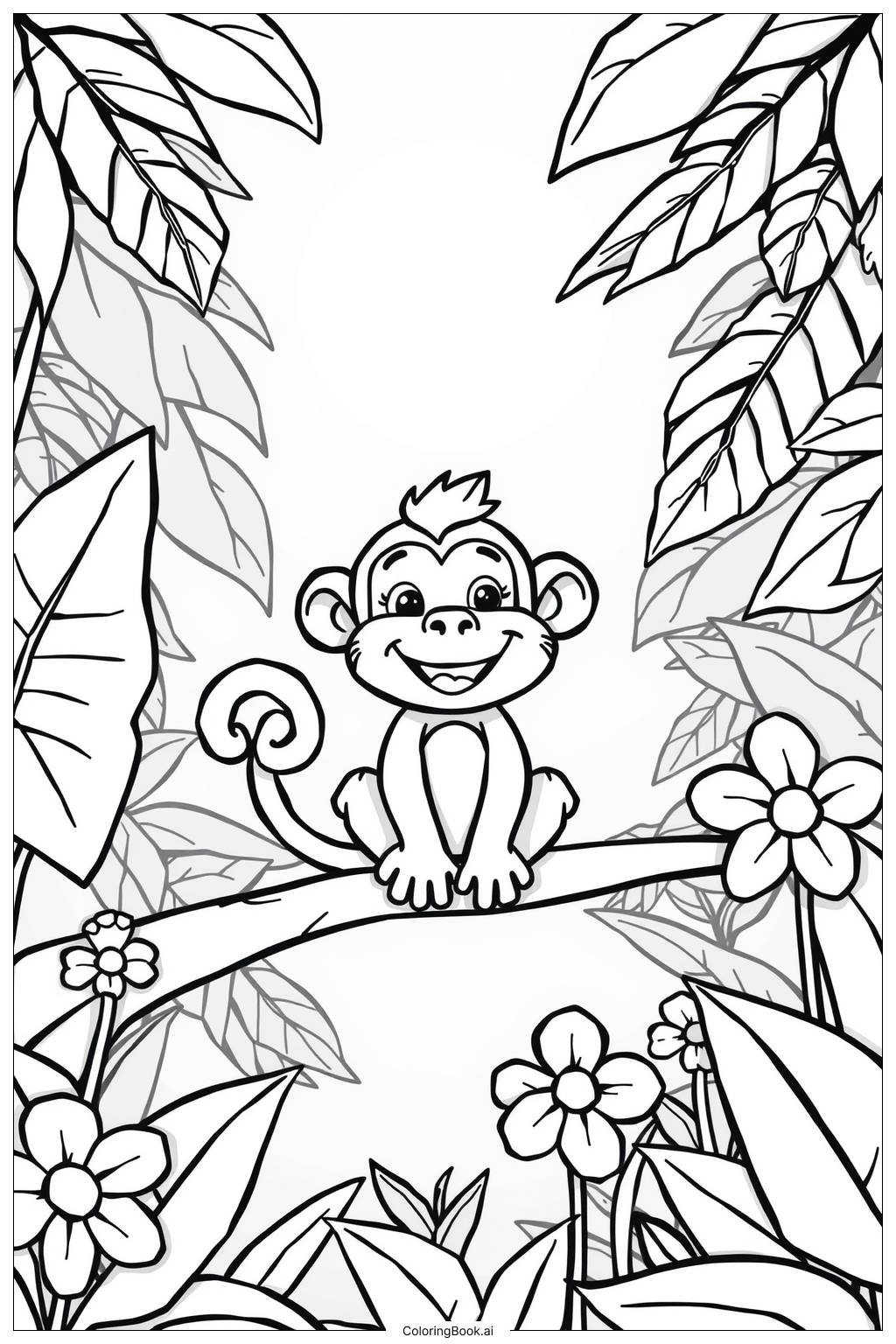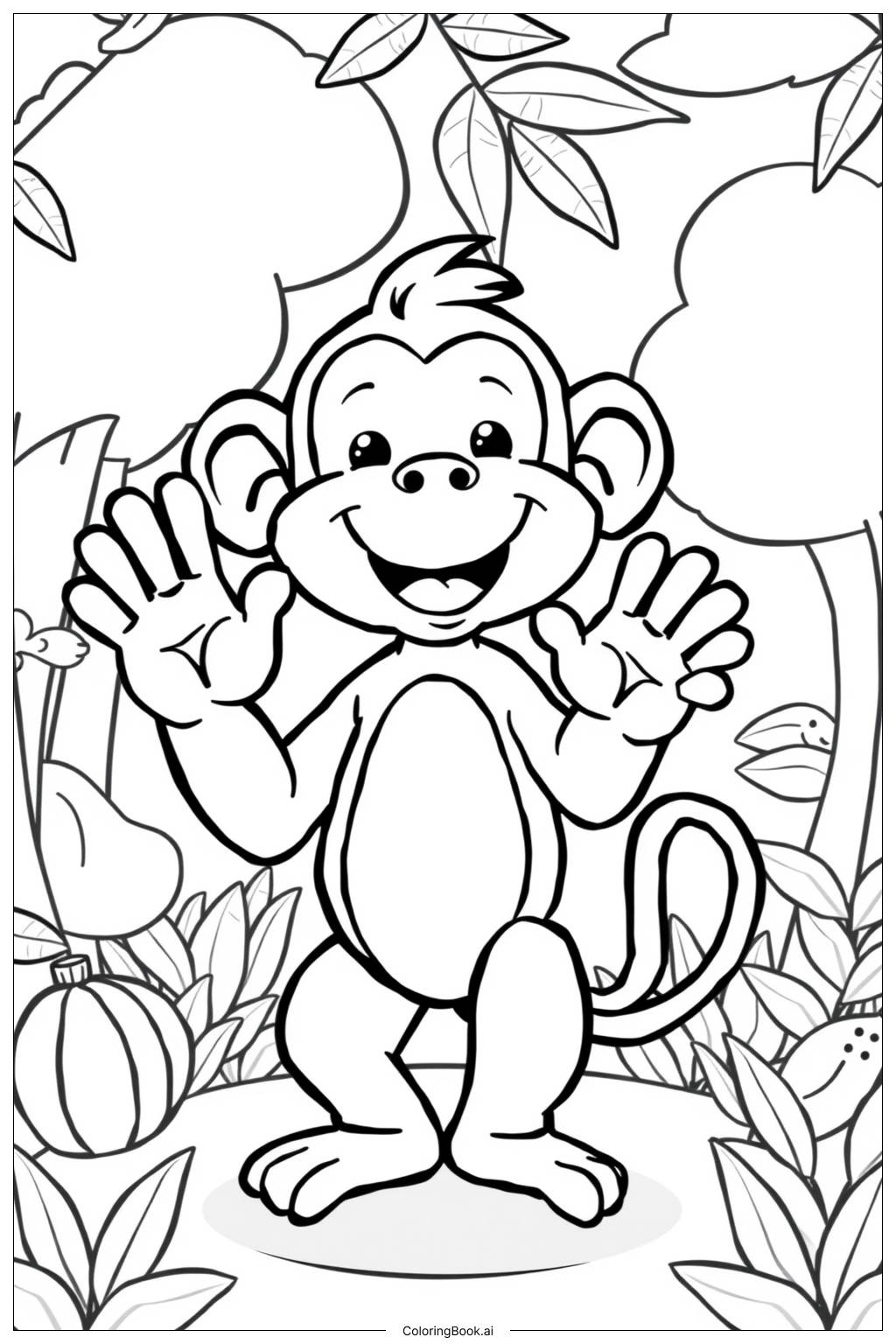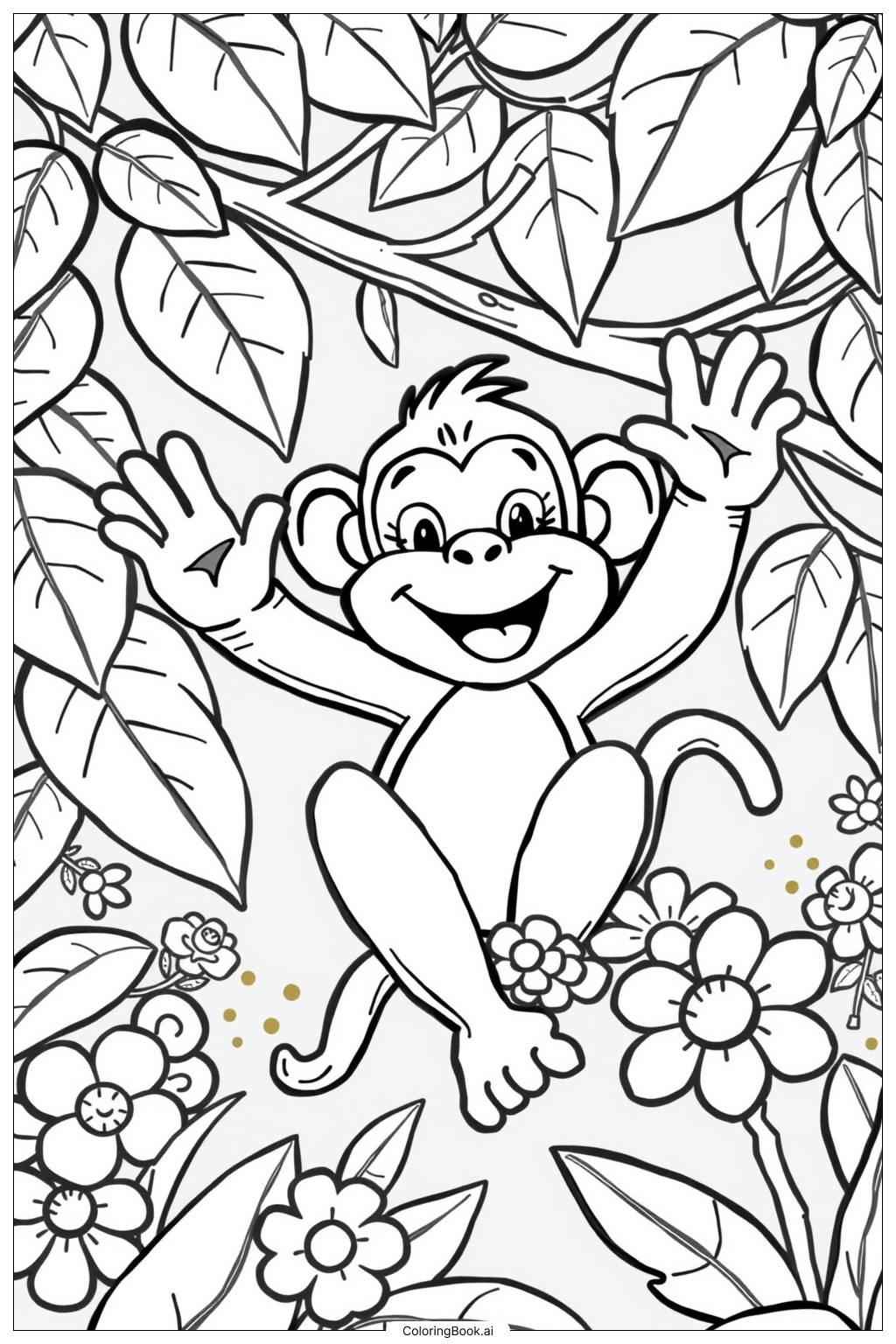
Coloring tips: How to color Monkey Waving coloring page well?
Start with the monkey's body by using warm brown tones for the fur. Try a lighter tan or cream color for the belly and the inner face area to give the monkey a more realistic look. Use a soft pink or peach for the ears and palms. Give the eyes a dark brown or black outline and add a tiny white dot to make them look bright and lively. Color the mouth area with a light pink. For the background plants and branches, use different shades of green to add depth. You can mix dark green and light green to make the leaves look natural. Feel free to add fun colors like yellow or orange highlights to make your monkey look extra cheerful. Remember, there are no rules when it comes to coloring. Make it your own and have fun with it!
Coloring challenges: Which parts are difficult to color and need attention for Monkey Waving coloring page?
• Fur Texture and Shading: The monkey's fur covers most of its body, and creating a natural-looking coat can be tricky. To make the fur look realistic, try using short, light strokes in the direction the fur grows. Blending two shades of brown, one darker and one lighter, helps add depth. Without shading, the body can look flat and one-dimensional.
• Facial Details: The monkey's face has several small features packed close together, including the eyes, nose, and mouth. Coloring these areas neatly without smudging nearby sections requires a fine-tipped tool and a steady hand. Children especially may find it challenging to stay within the tiny outline boundaries. Taking it slowly and using sharp pencils or fine markers works best.
• Belly and Color Contrast: The lighter belly patch needs to contrast clearly with the darker body fur. Choosing colors that are different enough from each other but still look natural together takes some planning. If the belly color is too close to the body color, the two areas blend together and the detail gets lost.
• Background Leaves and Branches: The jungle background includes overlapping leaves and a branch, which can be confusing to color. Deciding which leaf is in front and which is behind requires attention. Using different shades of green for each layer helps separate them visually and adds a sense of depth to the whole scene.
• Tail Outline: The monkey's long, curving tail is a narrow shape that winds through the image. Coloring inside such a thin, curved line without going outside the edges is one of the harder parts of this page, especially for younger colorists.
Benefits of coloring books: Advantages of drawing Monkey Waving coloring page
Coloring this cheerful waving monkey offers a wonderful range of benefits for kids and anyone who picks up a crayon or colored pencil. First, it helps build fine motor skills. Carefully coloring inside the outlines of the monkey's fur, face, and tail strengthens the small muscles in the hands and fingers, which is especially helpful for young children still developing their grip and control. Second, it encourages creativity and self-expression. Choosing colors, deciding on shading, and personalizing the background gives colorists a chance to make the image truly their own. There is no single right answer, which builds confidence. Third, the activity supports focus and concentration. Staying within the lines and planning which colors to use next trains the brain to pay attention to detail. This kind of calm, focused practice is great for reducing stress and anxiety in both kids and adults. Fourth, learning about color combinations through hands-on practice develops early artistic awareness. Finally, finishing the page gives a real sense of accomplishment, boosting self-esteem and motivation to try more creative projects. It is a simple, joyful activity with lasting value.