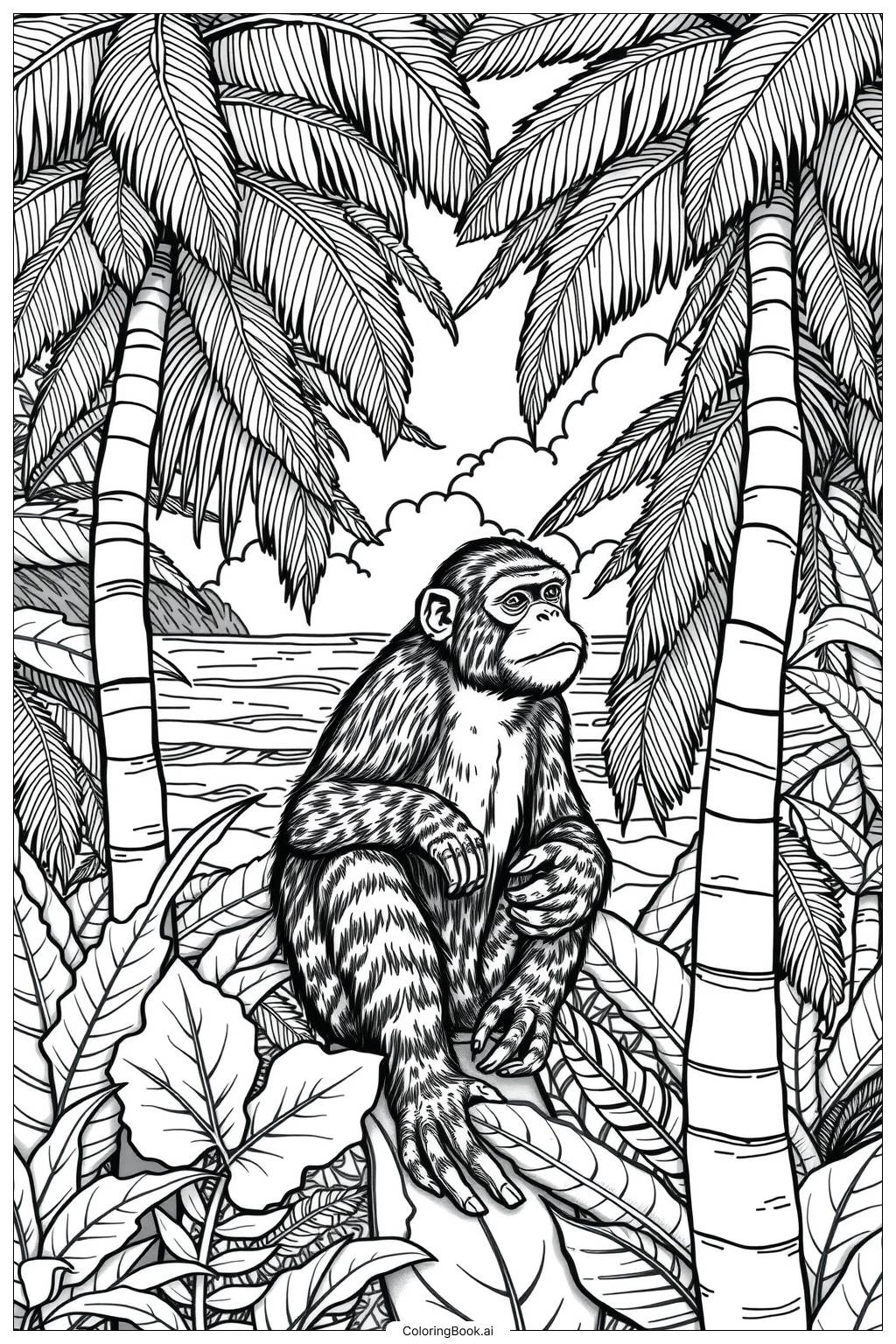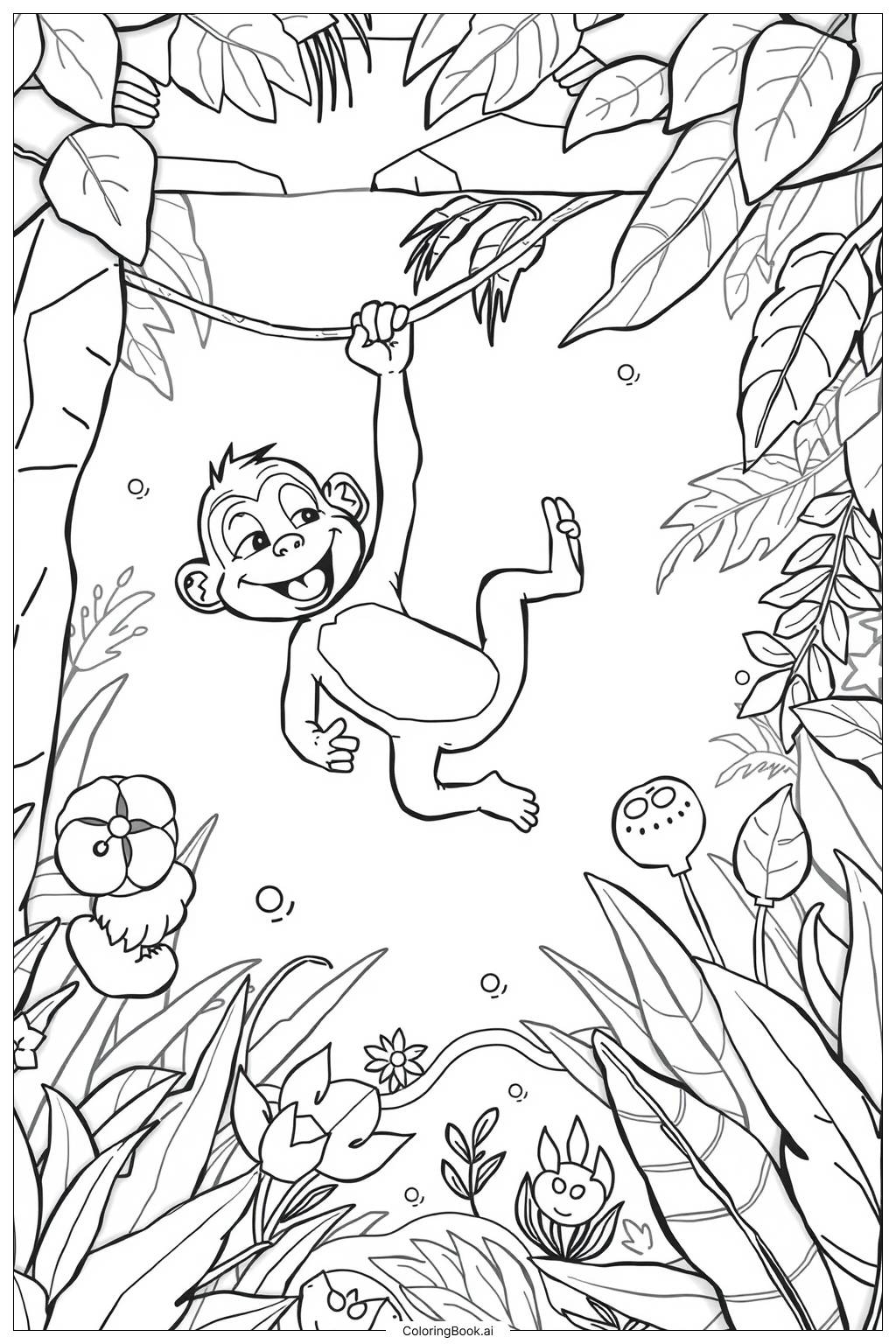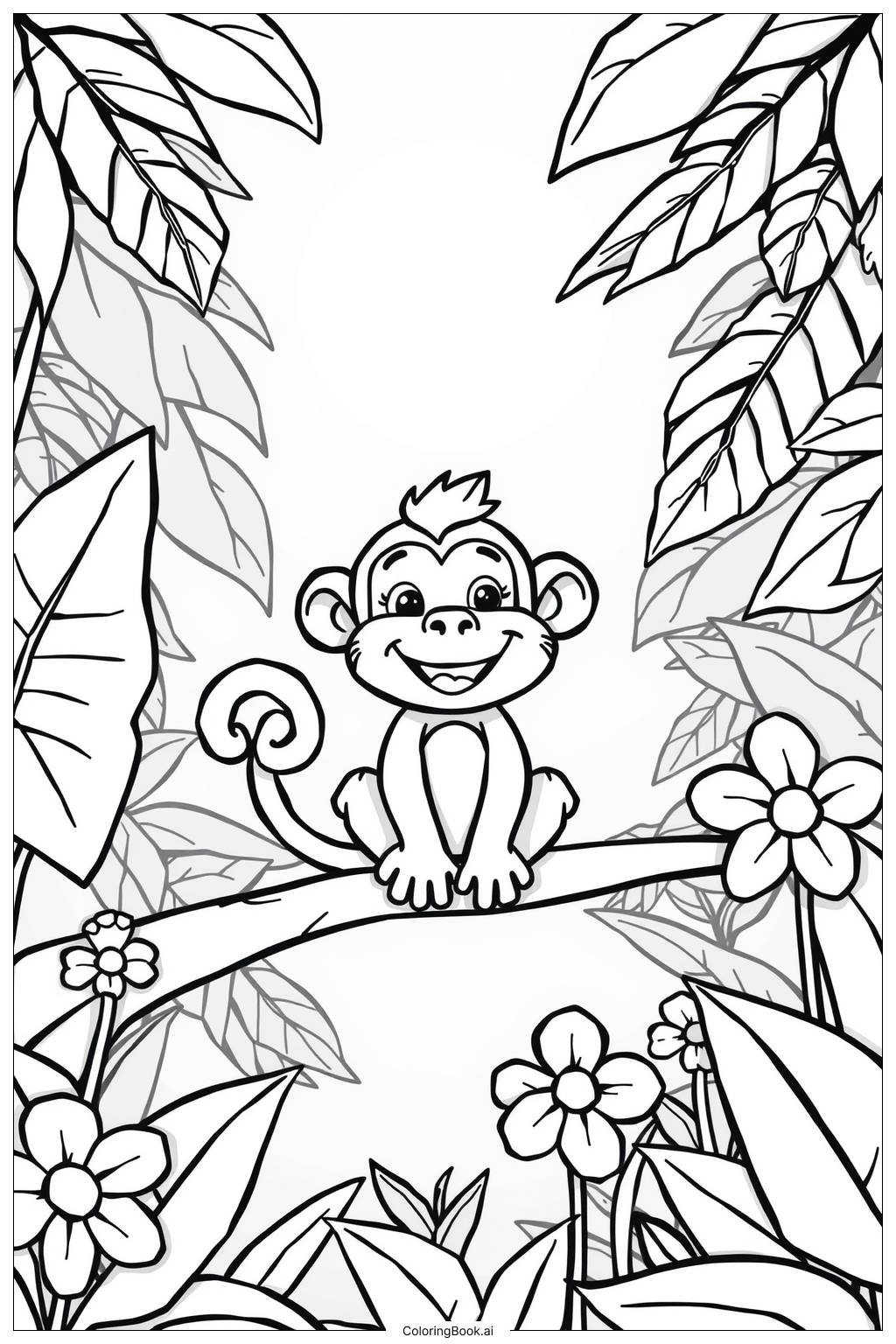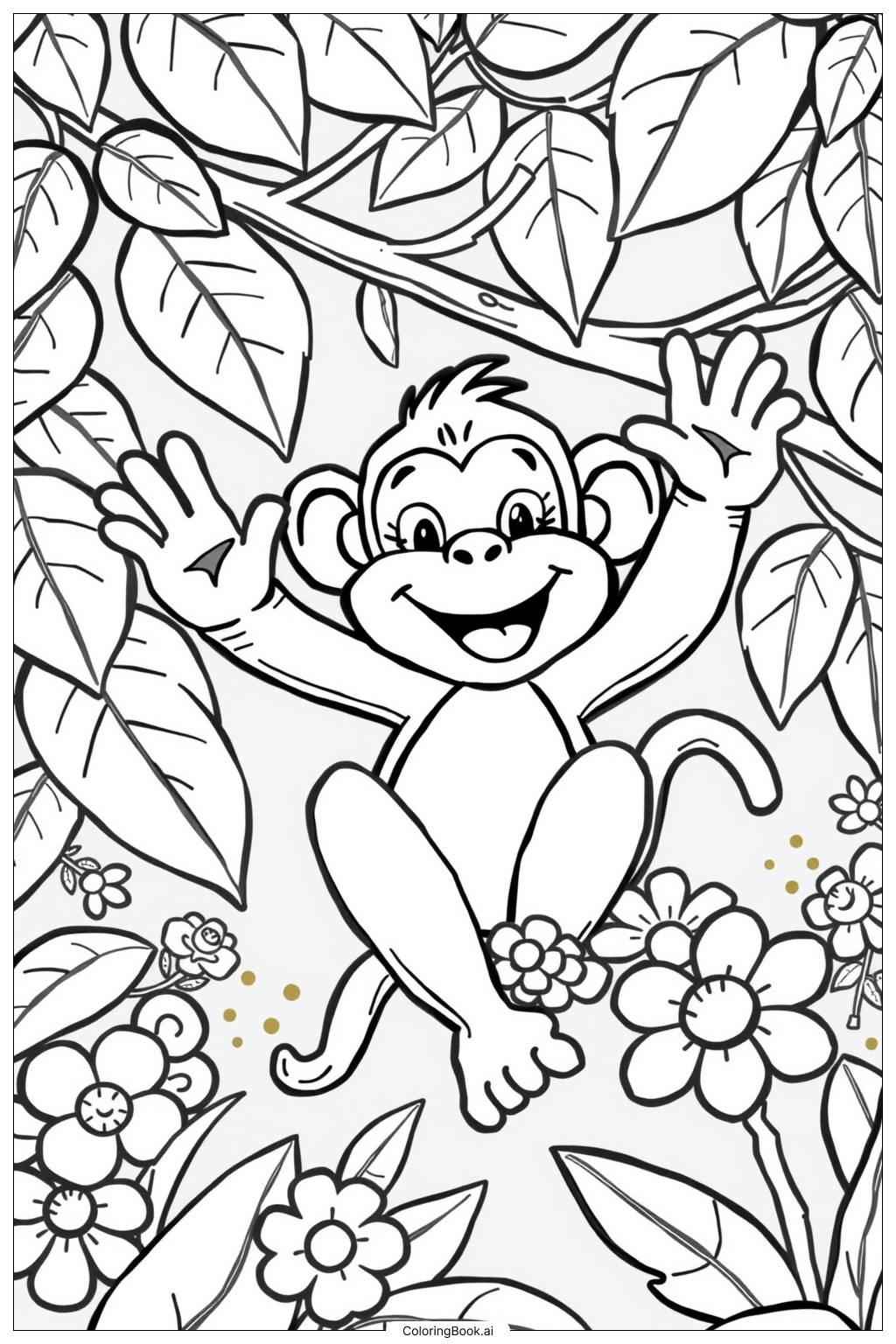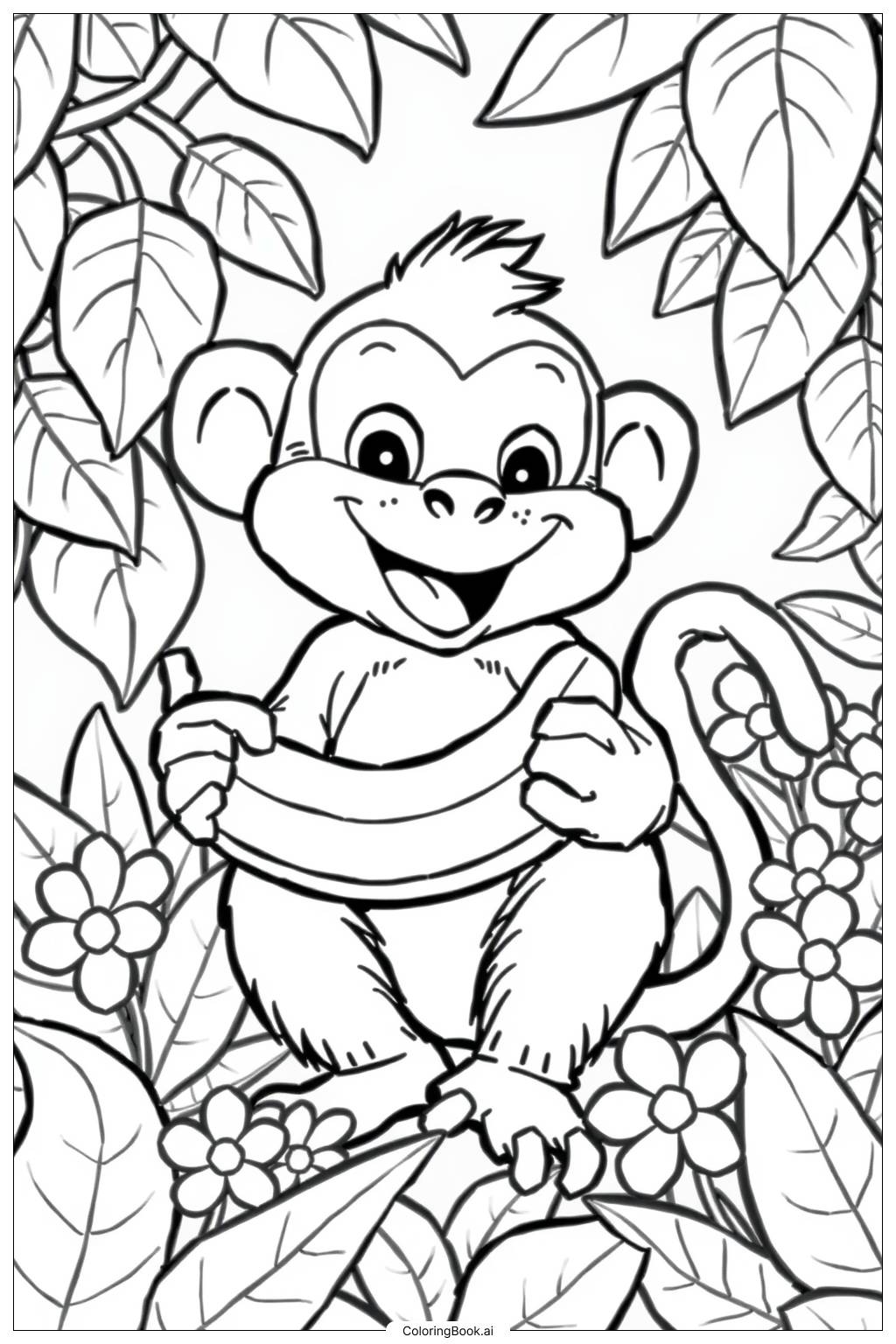
Coloring tips: How to color Monkey Eating Banana coloring page well?
Start with the monkey's body. Use warm shades of brown for the fur. Try a lighter tan or beige for the face, belly, and inner ears to add depth. For the banana, use bright yellow for the fruit and light green or yellow-green at the tips. The peeled sections can be a slightly darker yellow or orange-yellow. Add a warm pink or peach tone to the monkey's palms and mouth area. Use green tones for any leaves or jungle background elements. You can use darker brown lines to shade areas where the fur overlaps or folds. Keep the eyes simple — dark brown or black pupils with a small white highlight to make them look shiny and alive. Encourage kids to mix shades and experiment with colors freely. There are no wrong choices here — even a purple monkey can look amazing!
Coloring challenges: Which parts are difficult to color and need attention for Monkey Eating Banana coloring page?
• Monkey Fur Texture: The fur on the monkey's body has many short, overlapping lines that suggest texture. Coloring each strand individually takes patience. To handle this, use short light strokes that follow the direction of the fur lines. Layering a slightly darker shade on top of a base color can give the fur a realistic, fluffy look.
• Facial Details: The monkey's face has several small features close together — eyes, nose, and mouth. These areas require a steady hand and fine-tipped coloring tools. Using colored pencils or thin markers works best here. Be careful not to color over the white highlight in the eye, as this tiny dot brings the face to life.
• Banana Shading: The banana may look simple, but adding shading makes it look three-dimensional. The curved surface of the banana should be lighter in the center and slightly darker along the edges. The peeled-back skin also has an inner side and outer side that benefit from different shades of yellow.
• Tail and Background Balance: The monkey's long curving tail overlaps with background elements, making it tricky to keep colors from bleeding into each other. Plan your colors ahead of time and use light pencil marks to map out boundaries before applying full color.
• Small Overlapping Shapes: Where the monkey's hands grip the banana, fingers and banana shapes overlap. This requires careful attention to stay within each individual shape's outline, making it one of the trickiest spots on the whole page.
Benefits of coloring books: Advantages of drawing Monkey Eating Banana coloring page
Coloring this fun monkey image brings many great benefits for kids and families. First, it helps children build fine motor skills. Holding a crayon and staying inside the lines strengthens the small muscles in their hands, which also helps with writing. Second, choosing colors for the monkey's fur, the banana, and the background sparks creativity. Kids learn to make decisions and express themselves through color choices. Third, focusing on a detailed image like this one helps improve concentration. Children practice sitting still and paying attention for longer periods. Fourth, completing the image gives kids a strong sense of achievement. Finishing something they created themselves builds confidence and pride. Fifth, coloring is a calm, quiet activity that helps reduce stress and anxiety. It gives children a healthy way to relax after a busy school day. Finally, this image can also be a great conversation starter. Parents and kids can talk about monkeys, bananas, and the jungle together, turning a fun craft activity into a playful learning moment.