Coloring tips: How to color A Simple Drawing Of Luigi coloring page well?
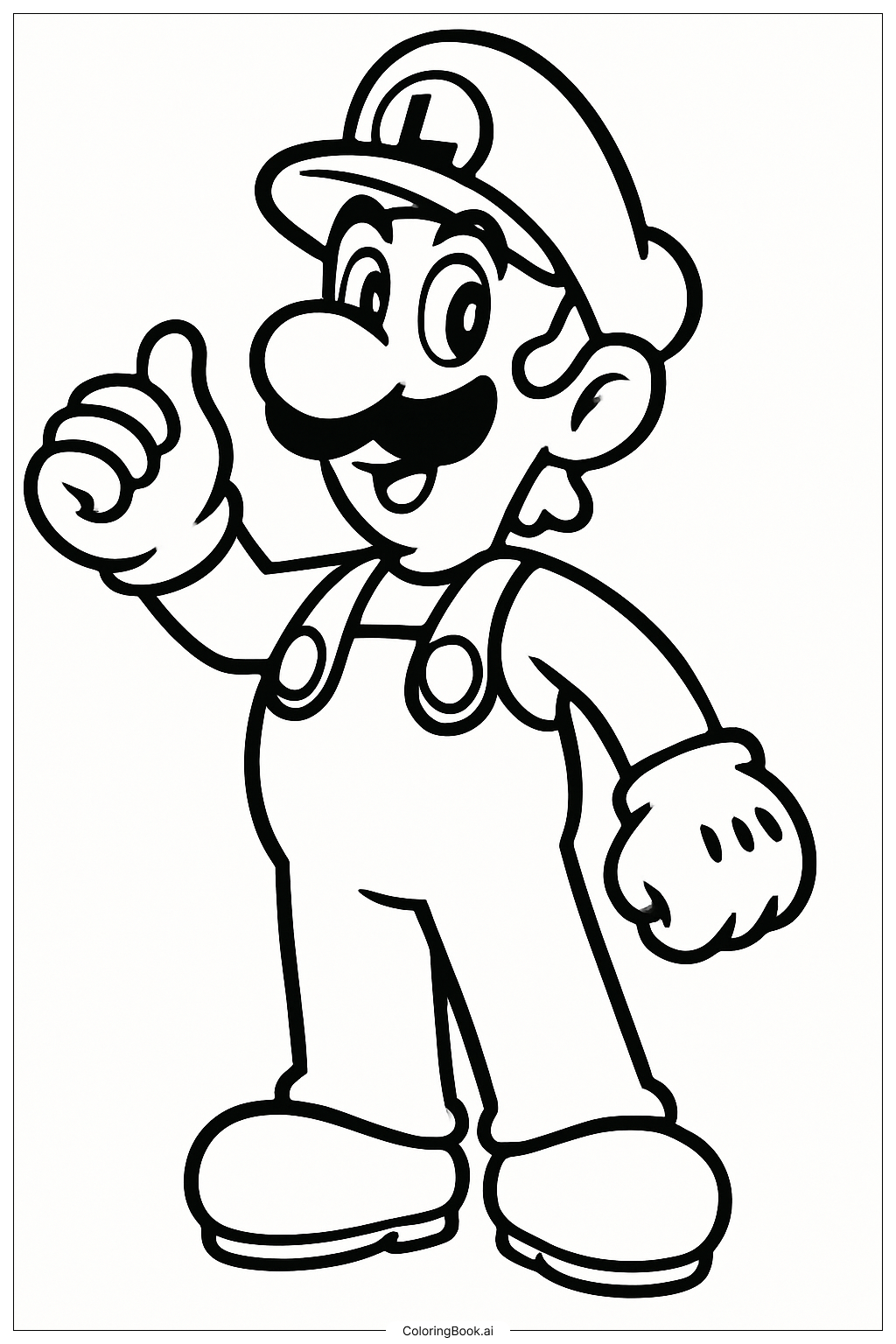
When coloring this image, you can use bright colors to keep Luigi’s cheerful look. His hat and shirt are usually green, so pick a nice green shade for those parts. His overalls are blue, so a good blue color will work well there. Use yellow or gold for the buttons on his overalls. His shoes can be colored brown or black. Don’t forget to color his gloves white to show their clean look. You can also get creative and try different green tones or even add light shadows to make Luigi look more three-dimensional. Remember to color within the lines and have fun exploring different shades!
Coloring challenges: Which parts are difficult to color and need attention for A Simple Drawing Of Luigi coloring page?
• Small Details: The buttons and the L on Luigi’s hat are small and need careful coloring to keep them clear. • Facial Features: Coloring Luigi’s eyes, mustache, and mouth neatly can be a bit challenging due to their size and importance in showing his expression. • Overalls and Shirt Contrast: Luigi’s green shirt and blue overalls need different colors, so choosing shades that contrast well helps prevent them from blending together. • Shoes and Gloves: These parts are smaller and require steady coloring to avoid going outside the lines. • Keeping the Lines Clear: Since the drawing has simple outlines, it is important to color carefully so the lines don’t get obscured, keeping Luigi’s shape distinct.
Benefits of coloring books: Advantages of drawing A Simple Drawing Of Luigi coloring page
Coloring this simple drawing of Luigi helps develop focus and fine motor skills as kids practice staying within the lines. It encourages creativity by allowing children to explore color choices while learning about character design. Coloring the friendly and familiar image of Luigi can boost confidence and make the activity fun and relaxing. It also promotes attention to detail through careful coloring of small features. Overall, this coloring page is great for enhancing hand-eye coordination and providing a rewarding artistic experience for children aged 4 to 16.