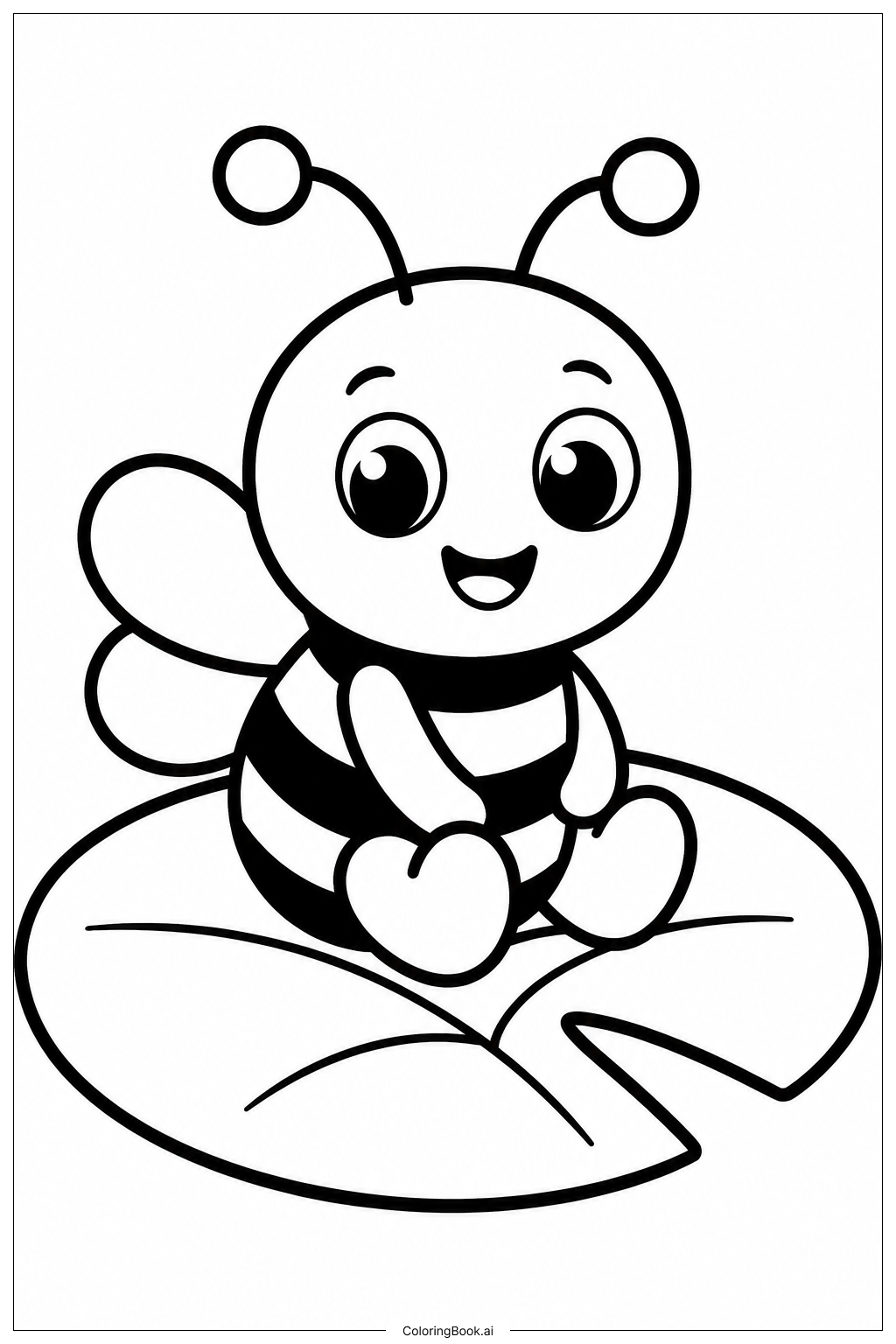
Coloring tips: How to color Lily Pad With Bee coloring page well?
For the lily pad, try using different shades of green to bring it to life. You could use a bright green for the center and darker greens along the veins to show texture. For the bee, classic yellow and black stripes work well, but you can also experiment with softer tones for a friendly look. The wings can be colored with light blues or grays to create a translucent effect. Don’t forget to add soft blues and gentle grays for the water ripples to give depth. Adding a touch of light brown or tan to the bee’s legs and antennae can make it more realistic. Have fun mixing colors to make the scene vibrant and natural.
Coloring challenges: Which parts are difficult to color and need attention for Lily Pad With Bee coloring page?
• Fine details on the bee: The bee’s small stripes and legs require careful coloring to stay inside the lines and maintain clarity. Coloring these tiny parts can be tricky for younger children. • Veins on the lily pad: The delicate lines on the lily pad need subtle shading to highlight texture without making the leaf look too busy. It takes patience to blend different green shades effectively. • Small water ripples: Coloring the fine curves of the water ripples demands steady hand control. Too much pressure might cause the ripples to lose their light and soft appearance. • Wing transparency: To capture the bee’s wing transparency, subtle shading is needed, which can be hard to achieve with standard coloring tools. It involves layering light colors without making the wings look solid or dull. • Balancing colors: Choosing the right combination of colors so that the bee stands out clearly on the lily pad while also making the whole image harmonious requires a good eye for contrast and balance.
Benefits of coloring books: Advantages of drawing Lily Pad With Bee coloring page
Coloring this image helps develop fine motor skills, especially through the small details on the bee and lily pad veins. It encourages children to practice patience and concentration as they work on staying inside the lines. The variety of shapes and textures offers a chance to learn about colors in nature and how they blend. Coloring the bee’s wings fosters creativity in representing transparency, which enhances observational skills. Overall, this image promotes mindfulness by inviting young artists to slow down and focus on a peaceful natural scene, making it enjoyable and educational at the same time.