Coloring tips: How to color Lily Pad Serene Wetland coloring page well?
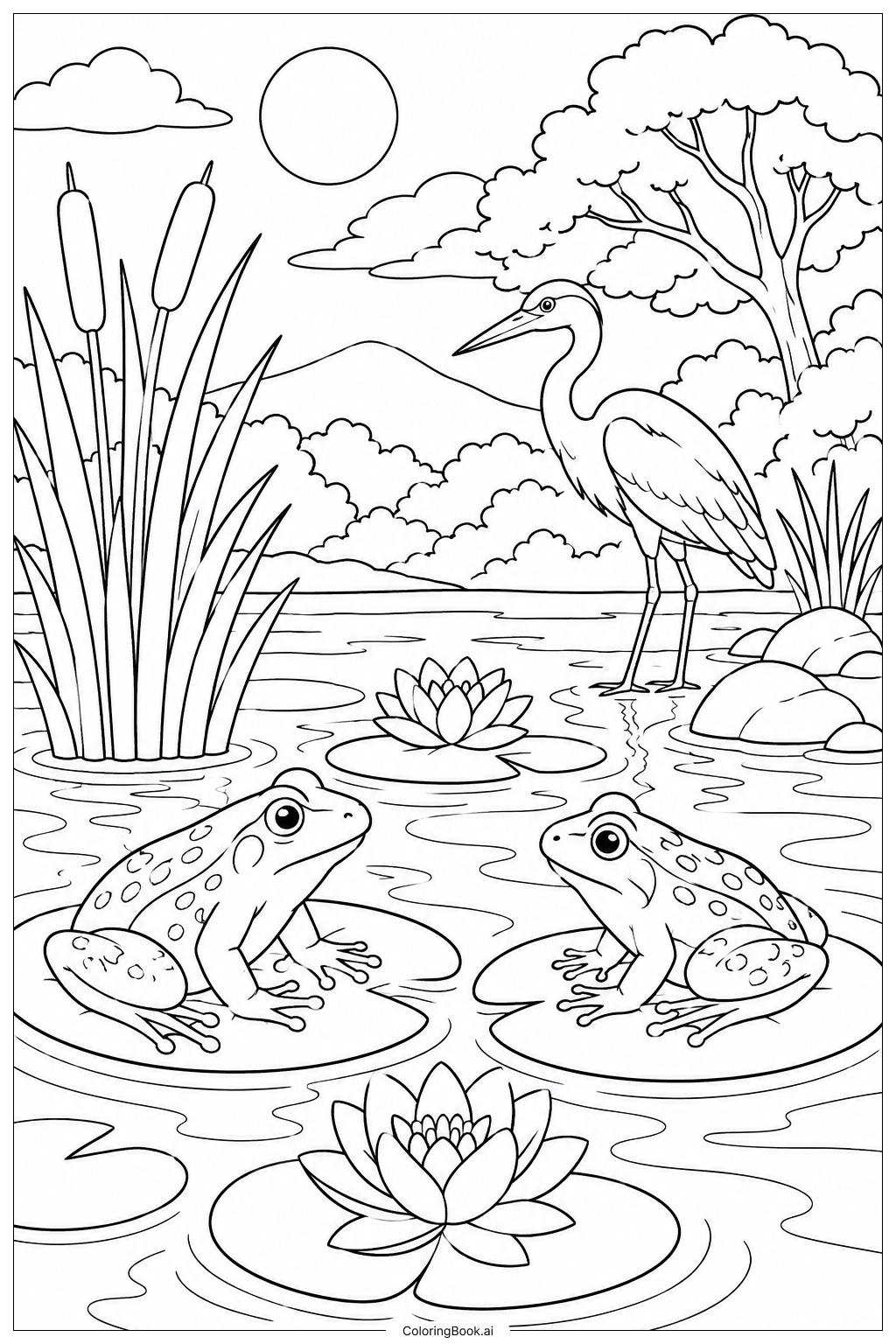
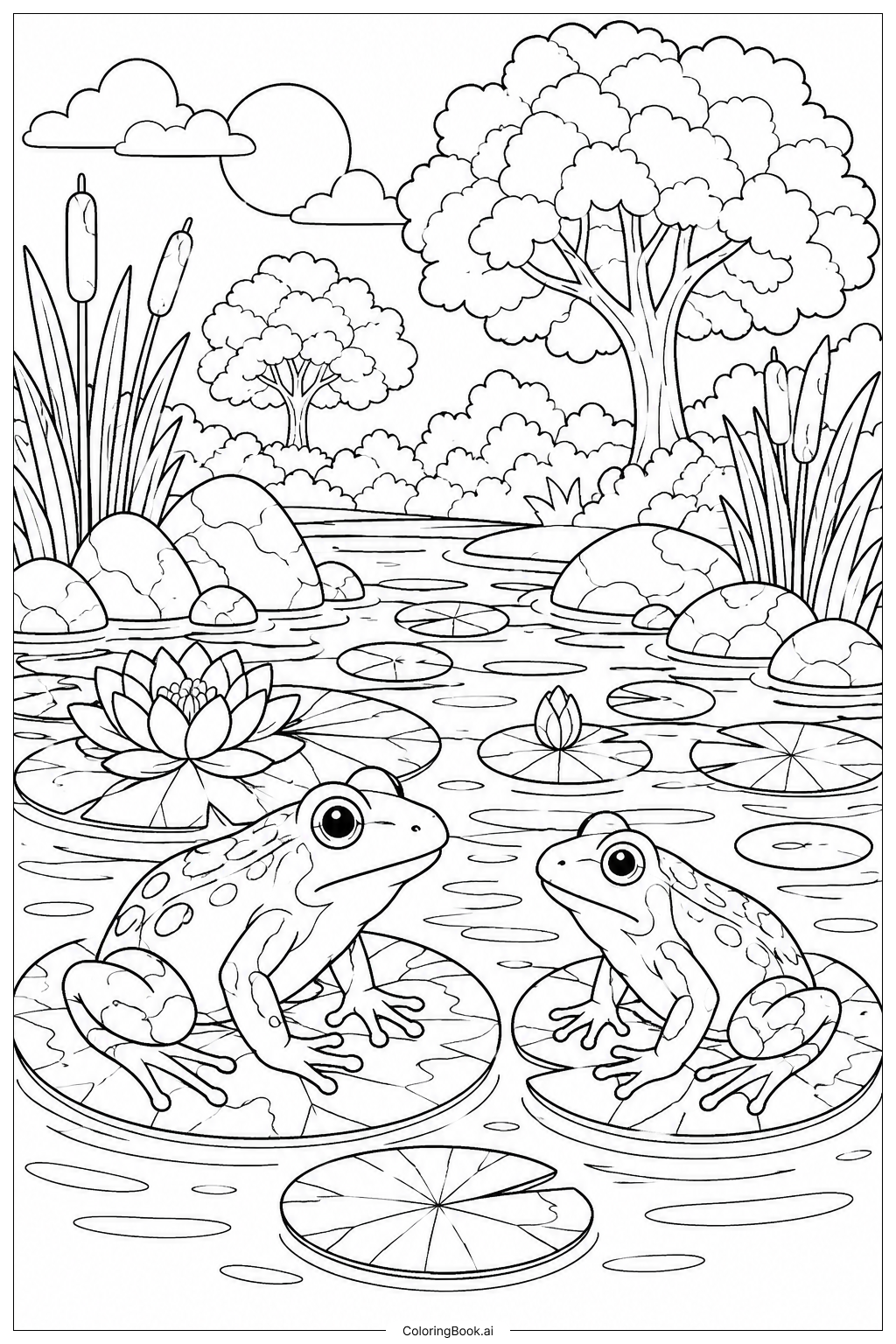
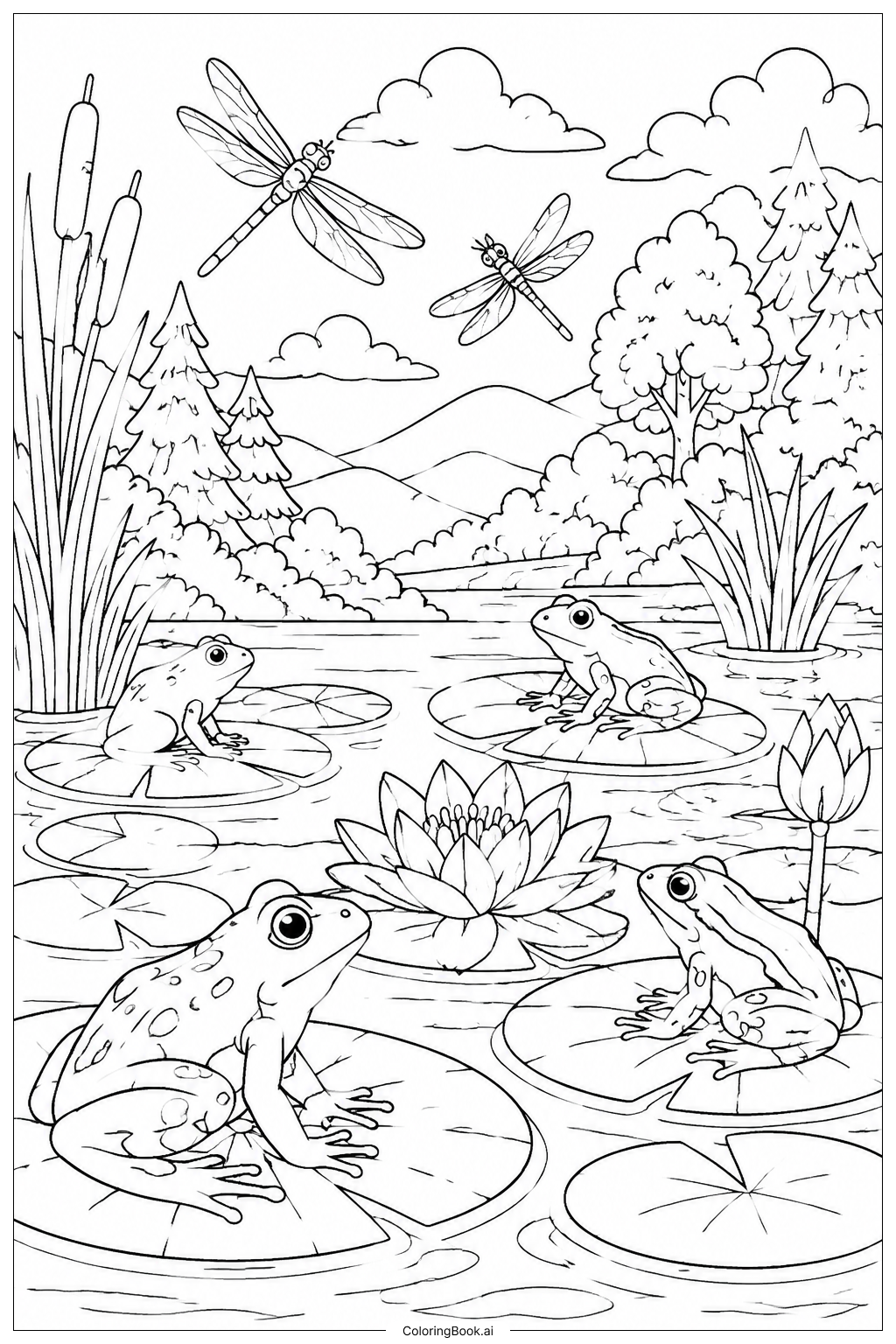
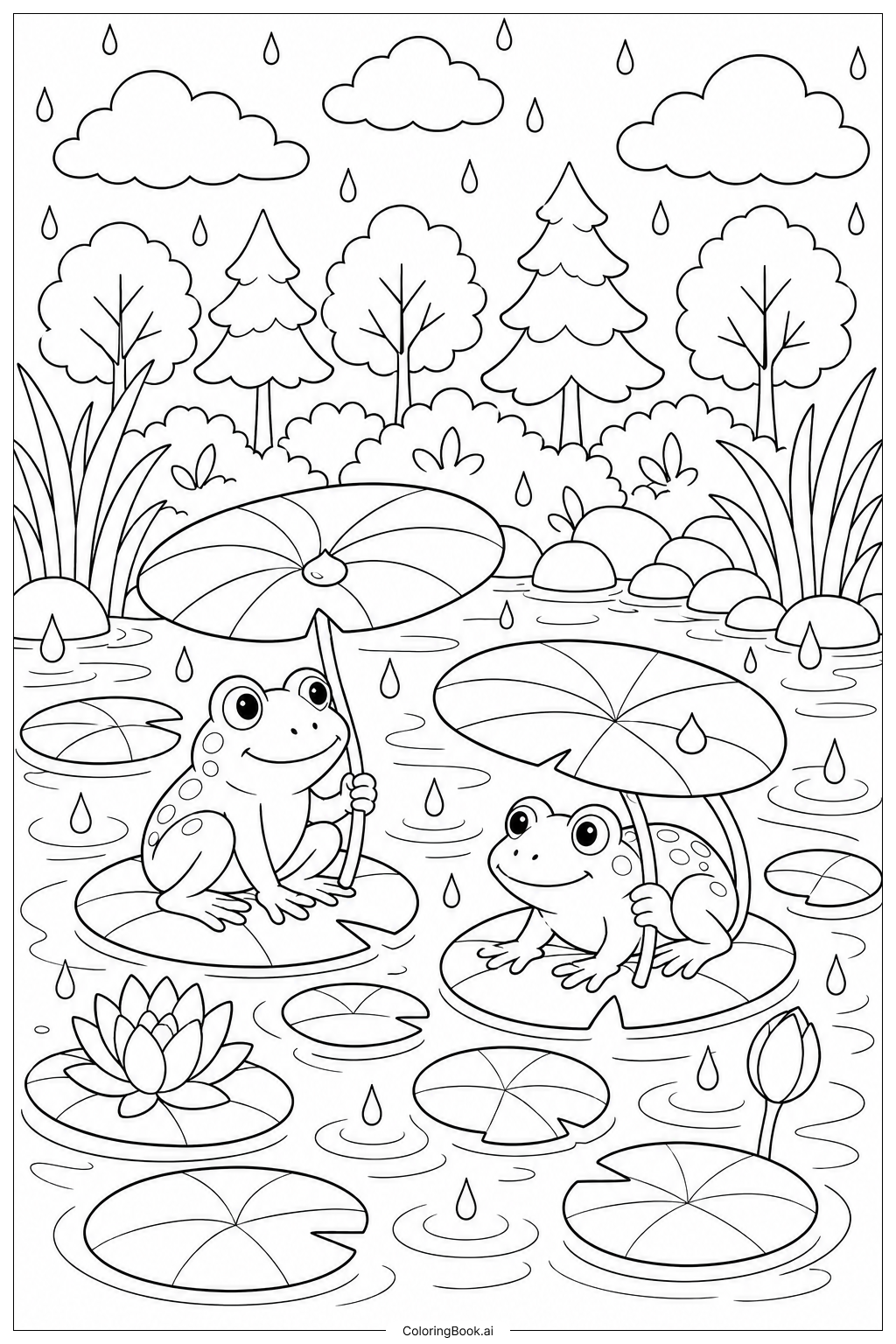
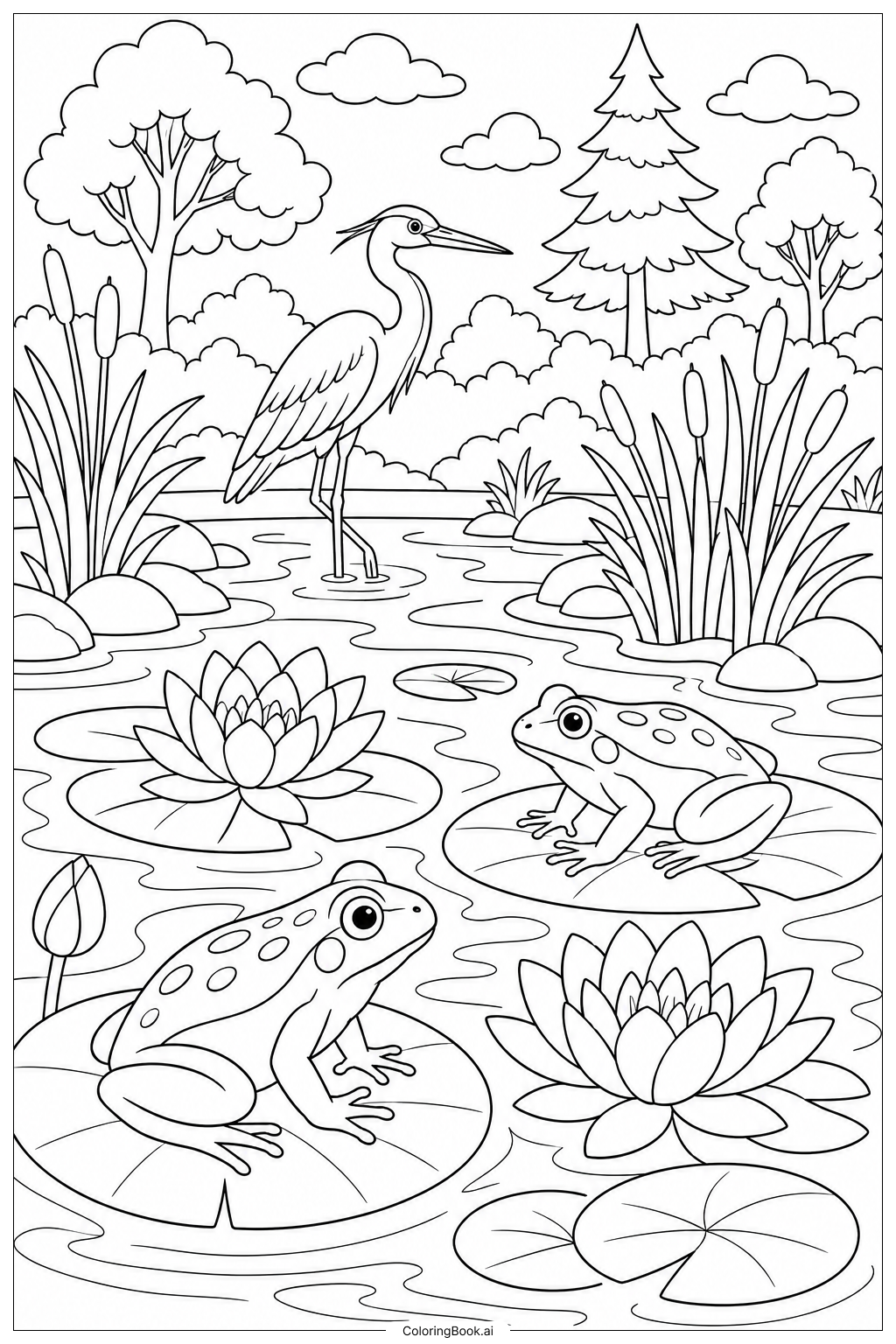
Try using soft greens and light yellows for the lily pads to bring out their gentle, fresh look. Color the flowers with bright pinks, whites, or purples to add pretty highlights. For the water, choose calm colors like soft blues or light turquoise to show its peacefulness. You can add some shading using darker greens or blues around the edges to create depth. Use natural browns and tans for the grasses and reeds to make the wetland feel alive and earthy. Coloring the small frog with bright green or yellow-green will make it stand out. Keep colors light and soothing to match the serene mood of the picture.
Coloring challenges: Which parts are difficult to color and need attention for Lily Pad Serene Wetland coloring page?
• Fine details on lily flowers: The petals are small and layered, which means careful coloring is needed to avoid blending colors together. Staying inside tight spaces can be tricky for younger colorers.
• Texture of lily pads: Capturing the smooth yet slightly veined surface of lily pads requires light shading and blending skills to show dimension properly.
• Water reflections: Showing the water’s reflective quality means balancing lighter and darker blues without over-coloring, which can be challenging for beginners.
• Small creatures: The little frog and insects have tiny parts that need precision. Coloring these clearly without smudging demands steady hands.
• Narrow grasses and reeds: These tall, thin plants have many lines close together. It can be hard to color each cleanly to keep their realistic look.
Overall, this picture challenges colorers to use careful strokes, blending, and shading to bring out natural textures and peaceful atmosphere.
Benefits of coloring books: Advantages of drawing Lily Pad Serene Wetland coloring page
Coloring this wetland scene helps improve focus and fine motor skills because of the varying small details like flowers and grasses. It encourages creativity by letting you experiment with soft, natural colors that capture a quiet moment in nature. The calm subject matter can reduce stress and build mindfulness as you color slowly and thoughtfully. Using different shades to create depth also teaches important techniques like blending and layering. For children and adults alike, this picture offers a chance to connect with nature through art, making it both relaxing and educational.