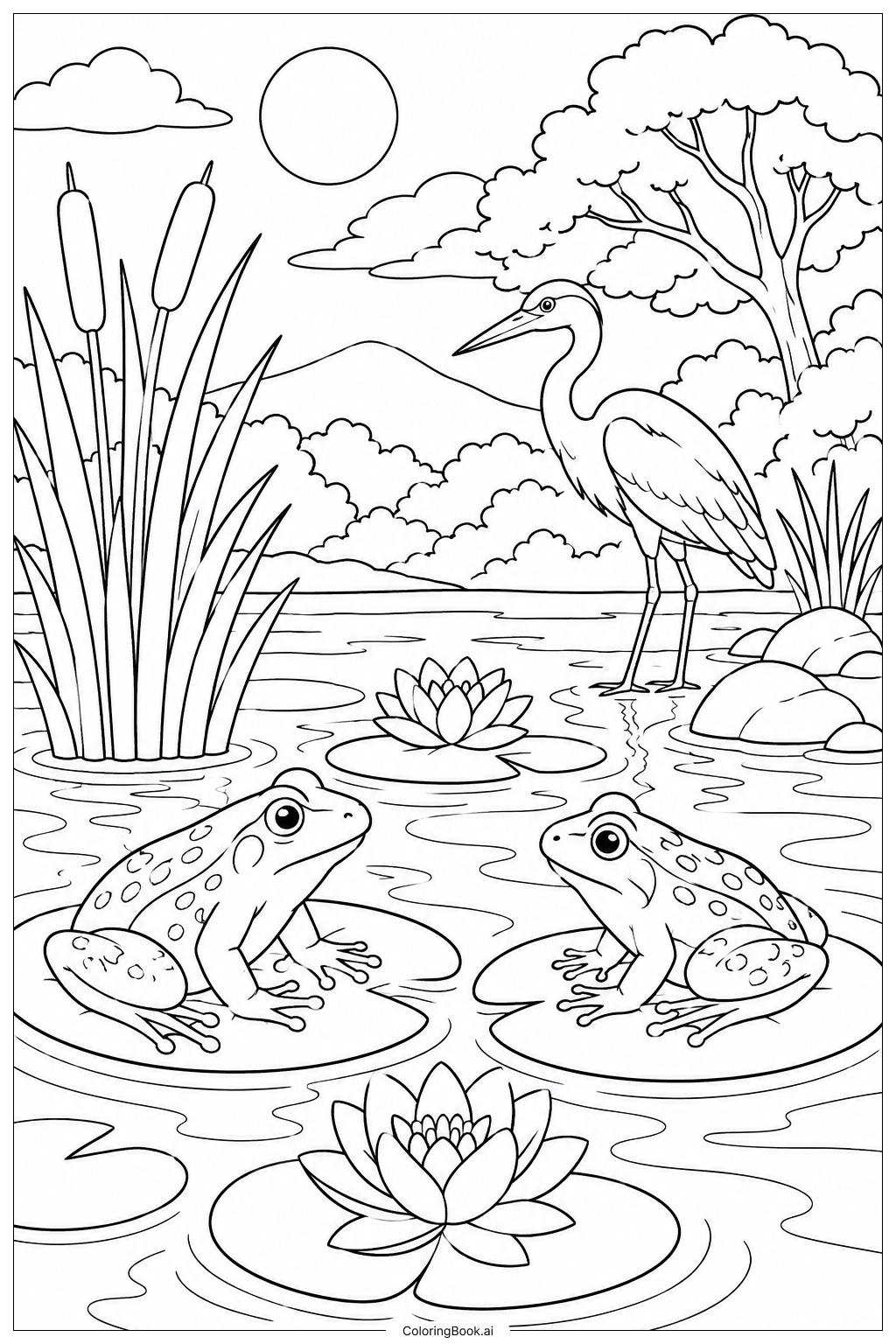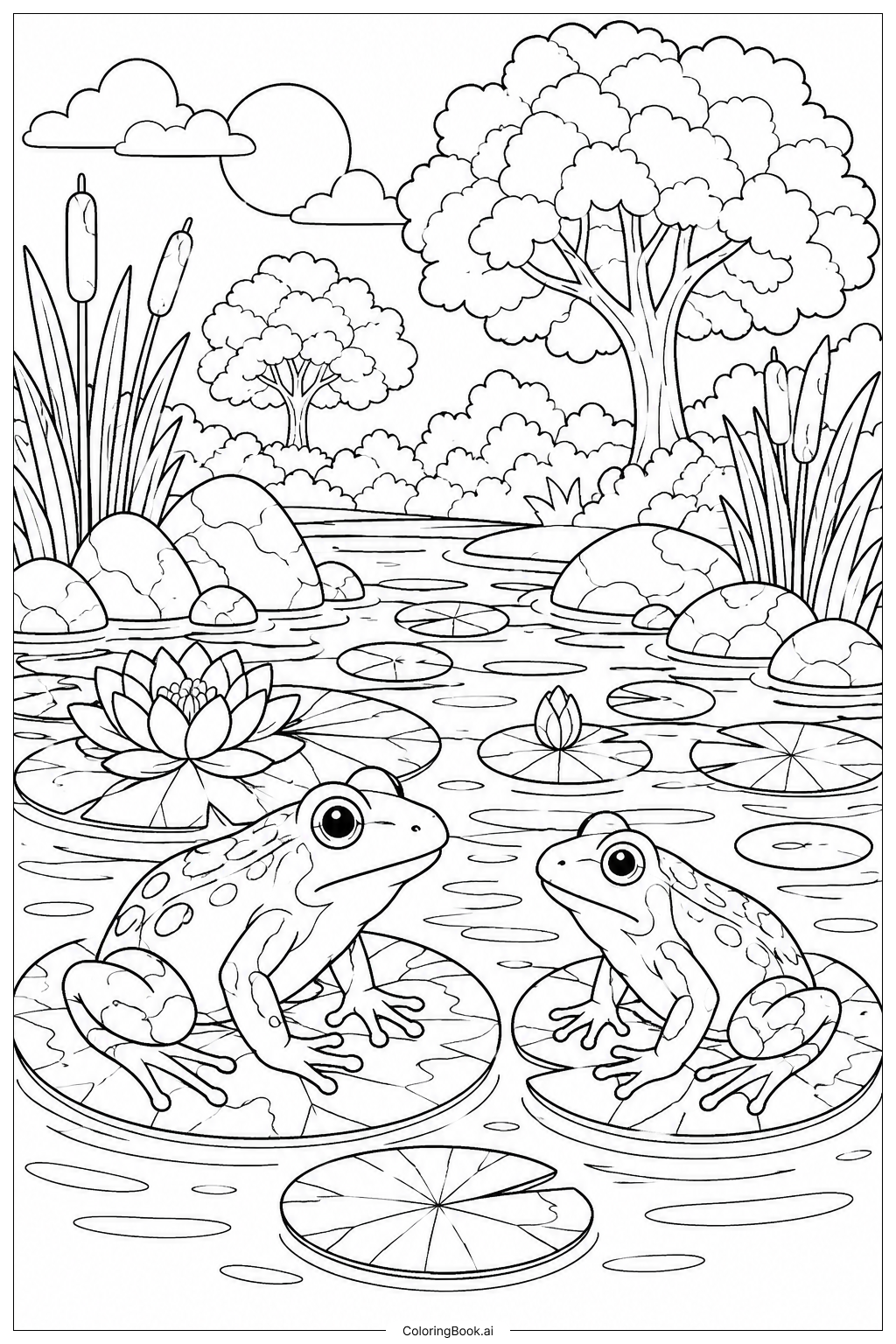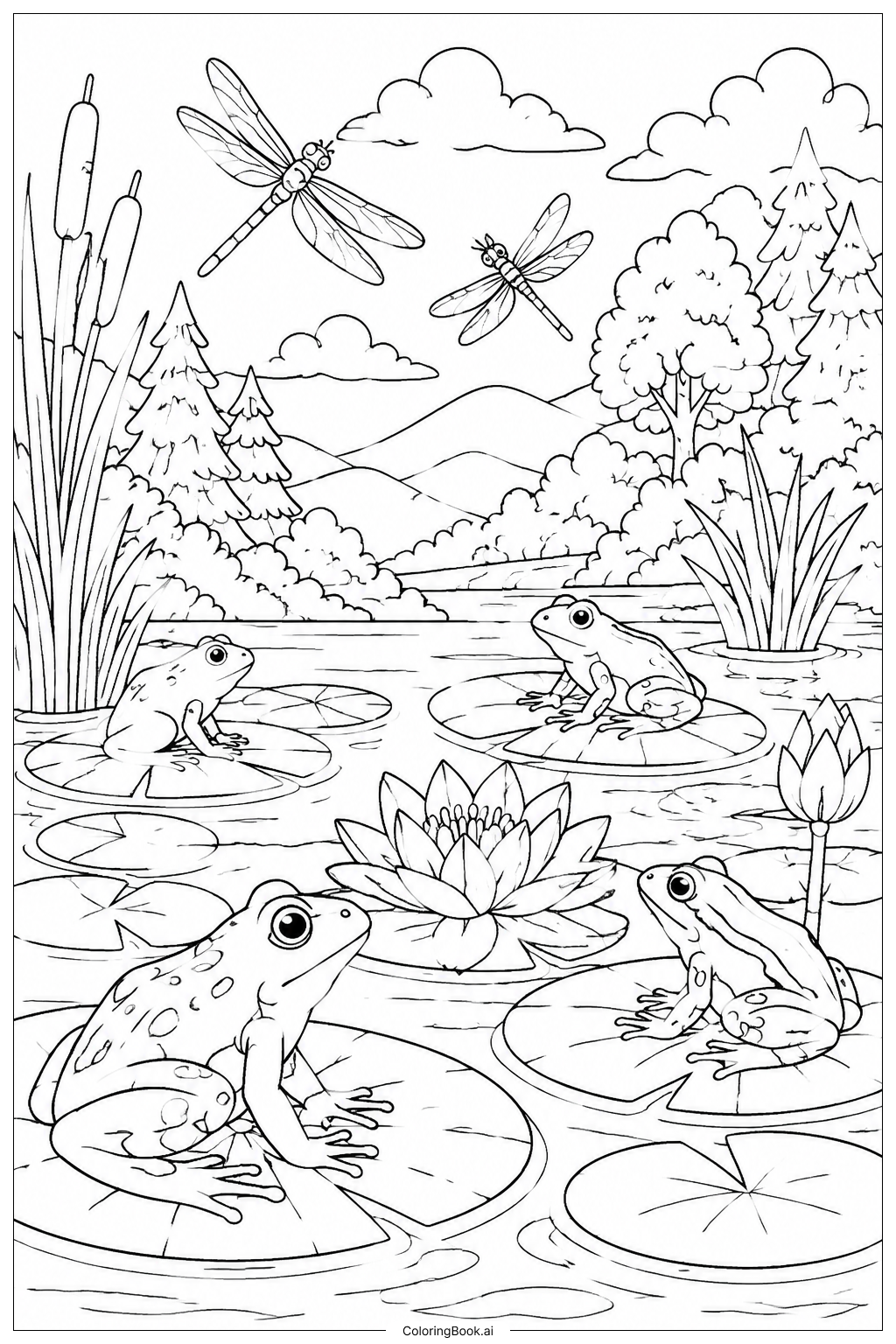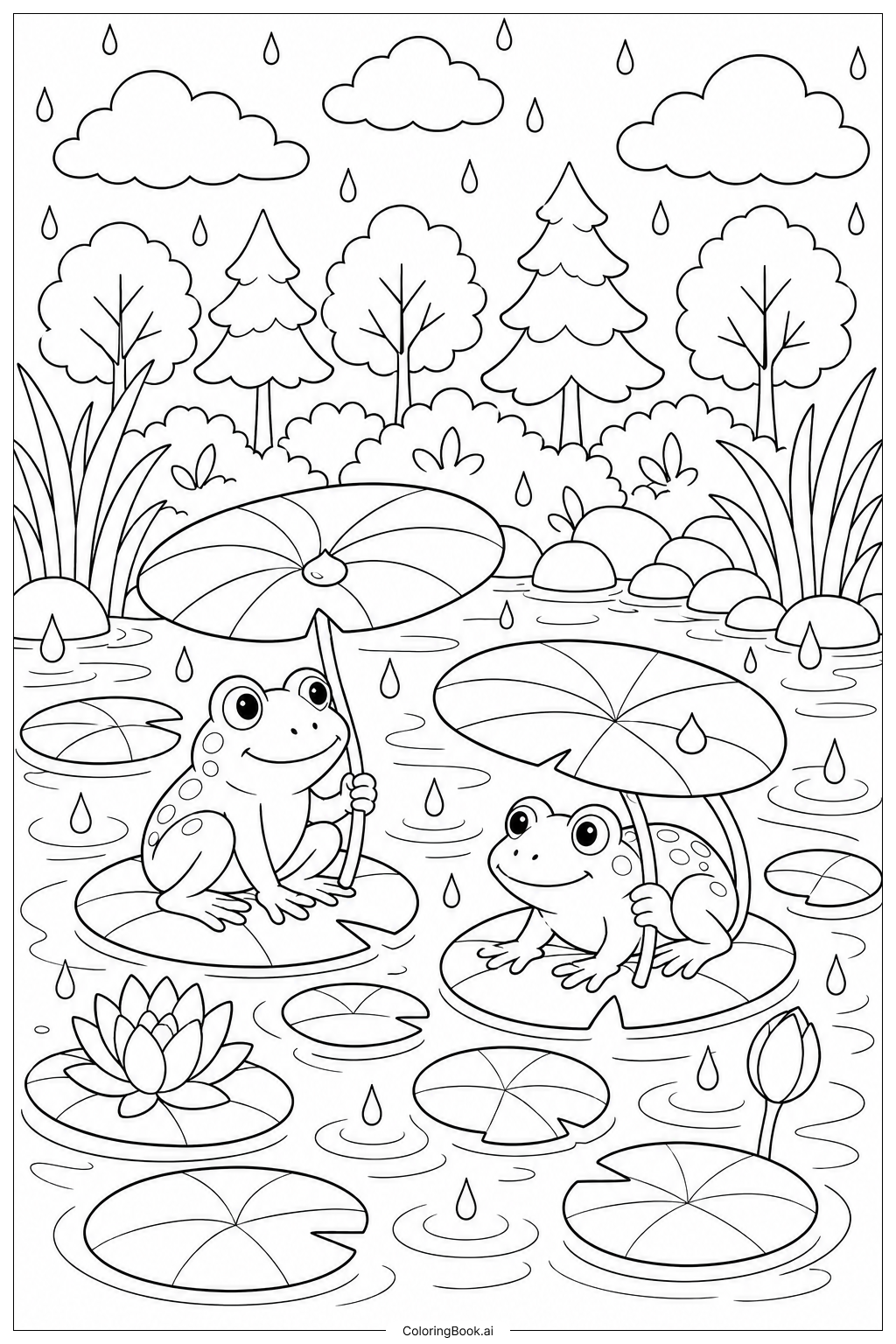
Coloring tips: How to color Lily Pad Frog And Dragonfly coloring page well?
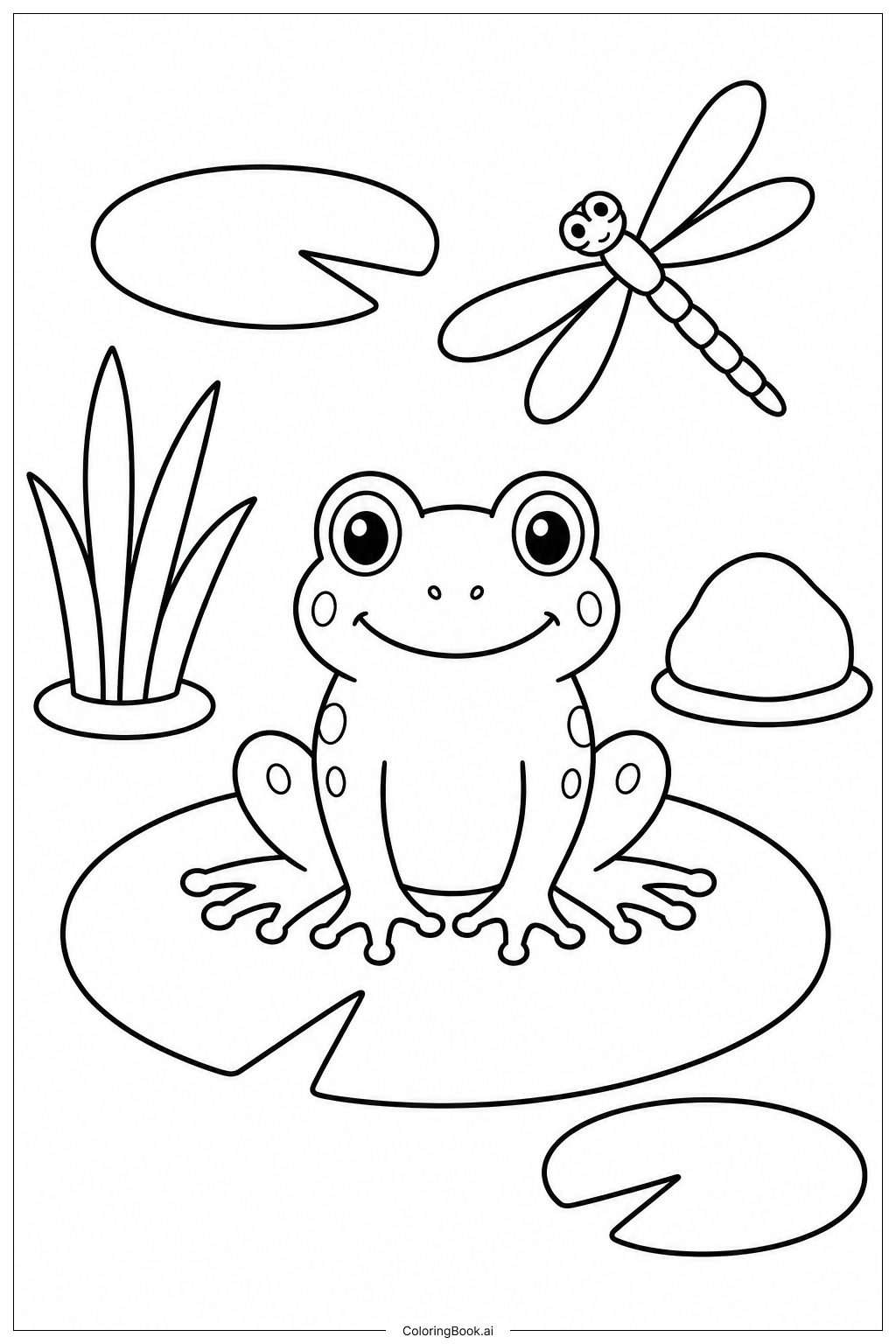
Try using different shades of green for the lily pad to make it look fresh and natural. Color the frog in bright green or a soft yellow-green to make it stand out. Use light blue or soft turquoise for the water around the lily pad to give a calm feeling. For the dragonfly, try using light shades of blue, purple, or even a bit of silver gray to show its delicate wings. Add some yellow or orange at the dragonfly's eyes or body to add contrast. You can also color the reeds and grass in various green and brown tones to create a natural pond environment. Use crayons, colored pencils, or markers for smooth, even colors and don’t be afraid to blend colors gently for a realistic effect.
Coloring challenges: Which parts are difficult to color and need attention for Lily Pad Frog And Dragonfly coloring page?
• Fine Details on Wings: The dragonfly’s wings have thin lines and delicate patterns, which can be hard to color carefully without going outside the edges.
• Curved Shapes: The round shapes of the frog’s eyes and the lily pad’s edges require steady coloring to keep colors inside the lines.
• Varied Textures: Showing the difference between the smooth water, the textured lily pad, and the frog’s skin can be tricky.
• Small Spaces: The small spaces between the reeds and grass blades need precise coloring to avoid smudging into neighboring areas.
• Layering Colors: Blending different shades on the frog and lily pad to create depth needs patience to avoid harsh lines or mixing colors unintentionally.
Benefits of coloring books: Advantages of drawing Lily Pad Frog And Dragonfly coloring page
Coloring this image helps improve hand-eye coordination and fine motor skills because of its detailed elements like the frog’s features and the dragonfly’s wings. It encourages creativity by allowing you to choose colors for natural objects and experiment with blending shades. This activity also promotes focus and concentration as you carefully stay within the lines and color small spaces. Additionally, coloring nature scenes can be calming and promote mindfulness, helping reduce stress and increase relaxation. It’s a fun way for children and adults to connect with the beauty of ponds and wildlife while practicing artistic skills.