Coloring tips: How to color Lily Pad Dragonfly Rest coloring page well?
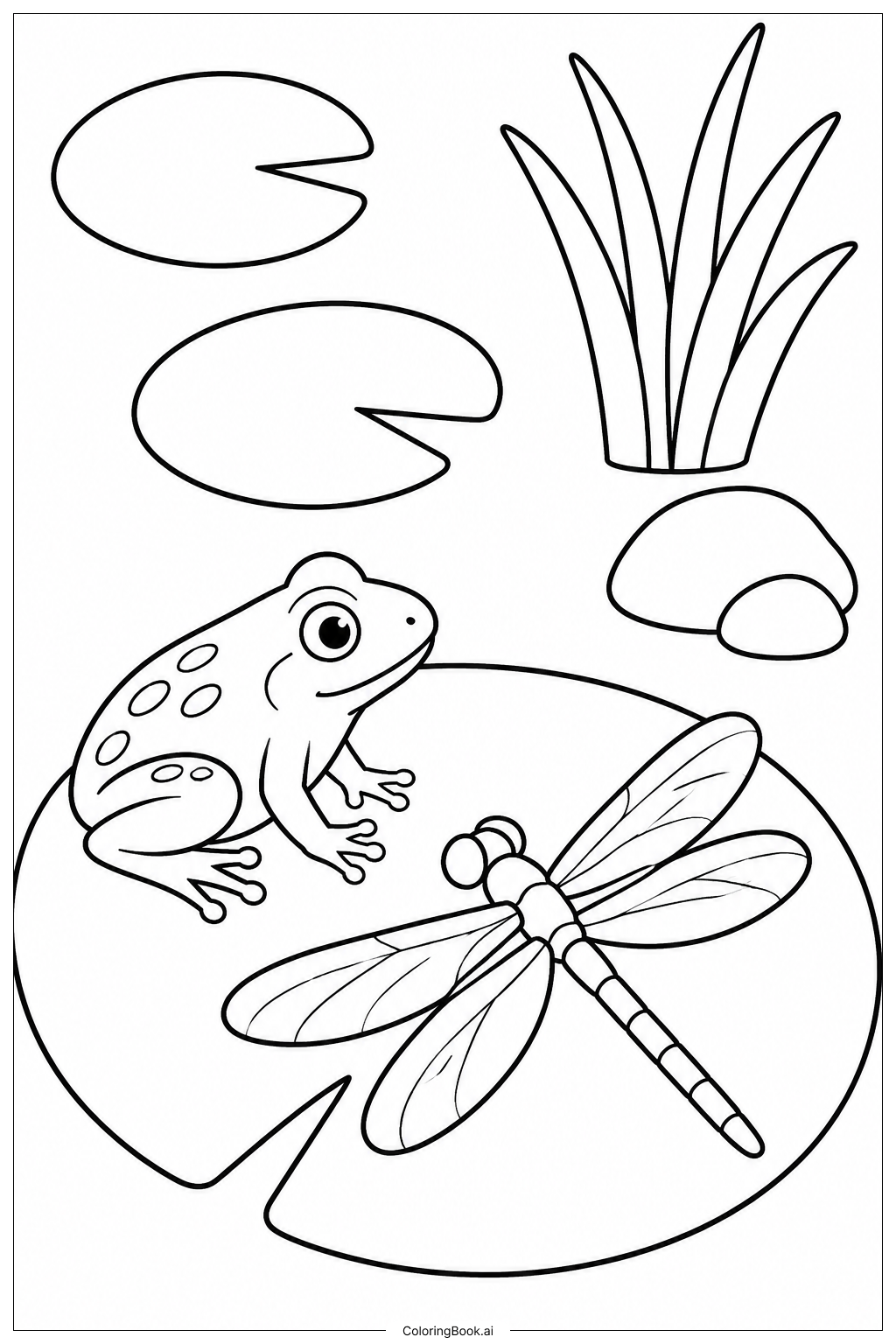
Try using soft greens for the lily pad to bring out its fresh, natural look. Add shades of light and dark green to show the veins and texture of the leaf. The dragonfly’s wings can be colored with light blues or pale purples to suggest their delicate, almost transparent nature. For the body, vibrant colors like deep blue, emerald green, or even iridescent tones can make the dragonfly stand out. Consider coloring the water with gentle blues or aquamarine shades, adding reflective effects with white highlights. Use yellows or pastel colors for the small flowers nearby to make them pop against the green leaves and blue water.
Coloring challenges: Which parts are difficult to color and need attention for Lily Pad Dragonfly Rest coloring page?
• Fine Wing Details: The intricate lines in the dragonfly’s wings require careful coloring to avoid smudging or blending colors unintentionally. Staying within these thin outlines can be challenging for younger children. • Leaf Veins Texture: The lily pad’s veins create a textured look that might be difficult to color realistically without overloading the area with one flat color. It requires balancing contrast through shading. • Small Objects: The tiny flowers and water ripples are small and delicate, demanding precision to color them clearly and attractively. • Creating Depth: To make the water and lily pad appear three-dimensional, shading is needed, which can be tricky to get right for beginners. • Color Transitions: Blending colors smoothly on the wings and water ripples for a natural look may challenge users not familiar with layering coloring materials.
Benefits of coloring books: Advantages of drawing Lily Pad Dragonfly Rest coloring page
Coloring this image helps develop fine motor skills through the careful and precise application of color in small, detailed areas like the dragonfly’s wings and the lily pad veins. It encourages concentration and patience as children learn to stay within the lines and add shading for depth. Exploring natural colors enhances observational skills and an appreciation for the environment. Coloring the combination of water, plants, and insects also sparks imagination about the ecosystem and peaceful natural habitats. Overall, it’s a calming and creative activity that supports both artistic growth and mindfulness.